

The Healing Power of Seaweed and Homeopathy – Exclusive Interview With Jessica Almonte
Discover the inspiring journey of Jessica Almonte, known as The Seaweed Homeopath, who blends homeopathy, kinesiology, yoga, and seaweed therapeutics to create holistic health solutions. From client success stories to innovative workshops and art, Jessica shares how nature, creativity, and resilience shape her mission to help others find balance, vitality, and empowerment.
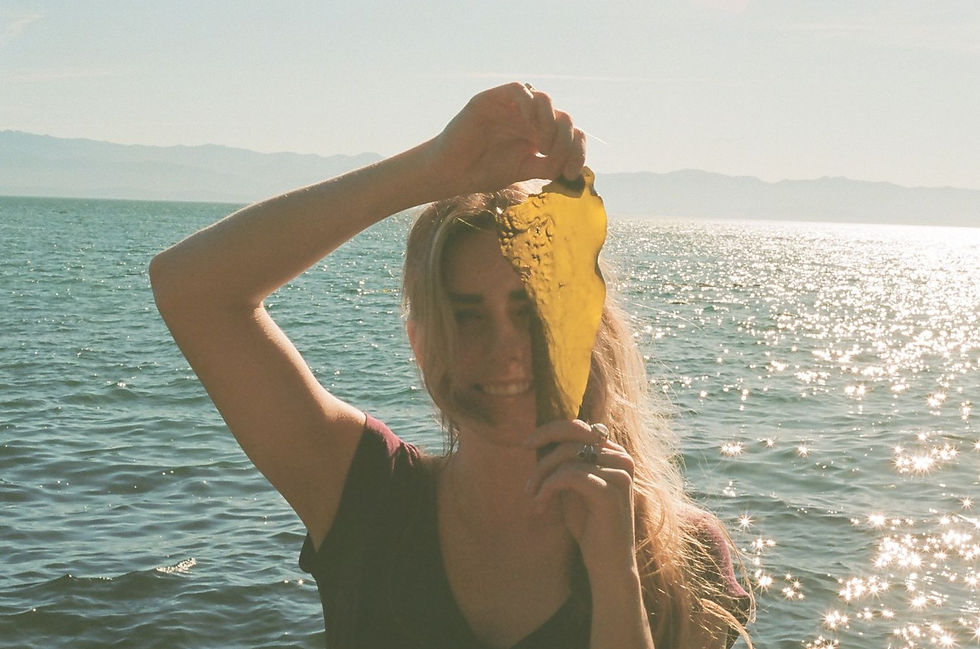
Jessica Almonte, The Seaweed Homeopath
Who is Jessica Almonte? Introduce yourself, your hobbies, your favorites, you at home and in business. Tell us something interesting about yourself.
My name is Jessica Almonte, and I am known in my small town as The Seaweed Homeopath or “Seaweed Jess.” I blend my love for the ocean with holistic health to help people find enrichment, balance, and vitality. Naturally creative and introspective, I have always been inspired by nature, art, photography, and poetry. I find seaweed both magical and whimsical, and snorkeling or free diving into a salad bowl of Pacific Northwest seaweed feels mindless and liberating. When I think of seaweed, I think of nourishment, abundance, resilience, and flow.
At home in Sooke, BC, I am a homeschooling mother of two, drawing daily inspiration from life by the sea. I love foraging and cooking with seaweed, writing poetry, creating cyanotype art, and practicing film photography. I also enjoy reading Amish romance novels (wholesome and comforting), going for runs, surfing, doing handstands, and singing (without an audience). I value creating a calm and steady home, and I have found that raising children without screen time helps keep imagination, innovation, and critical thinking alive in our household.
In my professional work, I integrate homeopathy, kinesiology, and seaweed therapeutics. There are four main components to my business: health, movement, education, and art. I currently offer one-on-one health consultations, yoga, and personal training at Intuitive Movement Clinic, teach seaweed workshops in schools and privately at retreats and events, and sell cyanotype artwork in a local shop. An interesting fact is that I create skincare and food directly from freshly foraged kelp, transforming wild seaweed into serums, scrubs, toners, and pickled delicacies. For me, being near the ocean and drawing health from it is where I feel most creative, vibrant, and restored. My mission is to foster health-centered experiences in my community, whether by bringing containers of fresh seaweed into classrooms or by teaching others how to use this abundant and nutritious resource in daily life.
What inspired you to integrate seaweed into your homeopathic practice?
I had been using Seaflora skincare products for about ten years, but it wasn’t until I uprooted my life in Toronto and moved to Vancouver Island that I truly fell in love with seaweed itself. On a road trip up the island to Raft Cove, I collected seaweed for a portable tent sauna experience, creekside in the middle of the rainforest. For the first time ever, I was applying seaweed right onto my skin, exfoliating with a Turkish towel (Chondracanthus exasperatus), moisturizing with kelp alginates (the slimy polysaccharides that emerge from the blades), and breathing steamed seaweed right into my lungs. I emerged from that tent feeling like a new person. That experience sparked something in me, and since then, I’ve been hooked on foraging and creating my own seaweed-based products.
The real “ah-ha” moment came after doing some research and realizing that seaweed in homeopathy is drastically underexplored. Having also worked in a health food store, I knew that only a handful of seaweed tinctures existed, mainly kelp and bladderwrack. Yet here on the Pacific Northwest coast, there are over 600 species, each with unique properties and potential health benefits. That realization showed me a clear niche, and it’s what led me to establish my practice and brand, The Seaweed Homeopath.
Can you share a memorable client success story that highlights the effectiveness of your holistic approach?
One of my most memorable client success stories is someone who originally followed me from my last job as a homeopath and supplements consultant at a health food store into my private practice. I’ve been working with her for over two years now, and in one of our sessions, she laughed and said, “You say jump and I say how high? Everything you’ve told me to do has worked.” I don’t take the weight of that statement lightly. It is always a privilege and honour to help someone take back control of their vitality, and in my practice, the goal is never for clients to rely on me forever, but to learn how to listen to their own intuition and inner wisdom.
When I first met her, she was very fatigued, unable to eat much, frail, and almost a ghost of the vibrant person she is today. She had been prescribed Thuja by another homeopath, but on a repetitive dosing schedule that required setting alarms through the night. From my studies of the old homeopathic texts, I felt that this approach could overstimulate rather than heal, so I asked her to pause the regimen. After two hours of in-depth case-taking, I prescribed Silicea, a remedy that follows Thuja well and fits her case perfectly. This is where her transformation began. Here is her own testimony in her own words: “In a short period of time, Jessica has helped me to overcome challenges of chronic fatigue, adrenal overstimulation, low quality of life, fears, and feeling hollow, as well as a past of mental health & addiction. I now have energy, feel healthy, and many of my daily symptoms are gone. I feel nourished from the inside out by her diet & lifestyle protocol, and I am able to remain clean and sober as well as cut out other addictive behaviors. The Homeopathic remedy she chose for me has blown me away. The difference is night and day from how I was feeling 6 months ago. She has incredible & intuitive knowledge.” For a while, she took Silicea daily, and now, two years later, she intuitively takes it only when needed, which is the ultimate goal with all my patients.
Her progress extended far beyond her symptoms. She regained energy, confidence, and a sense of purpose. She went on to pursue certifications in nutrition and herbalism, and part of our work together evolved into a kind of life coaching, where I supported her in writing her biography, cover letters, and even provided references. Watching her grow into this new phase of life has been deeply rewarding.
Seeing her journey, from frailty and fatigue to vitality and resilience, captures what I aim for with all my patients: not just symptom relief, but a return to wholeness, self-trust, and empowerment.
How do you balance your roles as a mother, yoga teacher, and homeopath in your daily life?
Balance is definitely key when you’re spinning this many plates. I won’t pretend I have it all figured out or that it’s been easy, but I can share what’s helped me when life feels overwhelming. Ever since I quit my job and took a giant leap into building my own business, it’s been a wild and often stressful journey. To cover the costs of both supporting my family and starting a practice, I picked up cleaning my friends’ Airbnbs. It was a humbling but surprisingly cathartic experience, and fortunately, these weren’t just any rentals. One was a cozy treehouse tucked in the East Sooke forest and the other a vintage Volkswagen van complete with an outdoor clawfoot tub. They became quiet places to put my head down, clean, and reflect on the direction I was heading.
The first thing I’ll share that has helped me stay balanced is my community. As a single parent, building community was essential, and it happened organically, living in a small coastal town through my children’s activities and going to church. Over time, I’ve been blessed with a circle of like-minded friends who feel like extended family. We support and babysit for one another, and have weekly dinners and beach hangs with our kids. These friends are the kind who offer a meal, pick up vitamins and groceries for you, and stay with your sick child so you can go write an important exam. I have been in school over the last year updating my Kinesiology degree as well. I am very grateful to these people in my life, along with my parents, who fly out to British Columbia from Ontario to support me at times when I don’t have reliable childcare for work and deadlines.
Homeschooling has also shaped the way I approach balance. At first, I put a lot of pressure on myself to make sure I was “doing it right.” Reading books like The Happy Child and Unschooled reminded me that living itself is learning. Now, I involve my kids in whatever I’m doing, whether it’s prepping for a workshop, studying for a physiology exam, planning a yoga class, or foraging at low tide. Real learning happens in those organic moments when their curiosity sparks questions. Instead of sticking to rigid schedules, we explore together, and when I don’t know the answer, we research it at the library. We are known at the local branch for taking out an excessive amount of books, and thankfully, they don’t have late fees anymore. My children also attend an alternative nature school a few days a week, which provides a more structured curriculum and allows us to follow the traditional grade system. That time, combined with the weekends, is when I get the bulk of my own work done. Fortunately, I have a positive and flexible co-parenting situation, which takes a lot of stress off. If you are in a similar circumstance, it helps to remind yourself that “it takes a village,” because it absolutely does. When my children or I are unwell, I lean on my naturopath, Dr. Jason Loken, and his wife Téa Shahbazi, and my homeopathic mentor, Jennifer Shelley. It’s okay to ask for help, and often necessary to have another perspective, especially when I’m sleep-deprived or spread thin.
A big part of keeping my children healthy and happy, and in turn myself, is maintaining a zero-screentime household, which I’ve found to be easier than trying to manage “just a little.” Without screens, my kids get bored in the best ways. They daydream, read, listen to audiobooks, build, and create. I subscribe to Better Screen Time email newsletters, which reinforce what I see daily: delayed technology and limited screen time preserve imagination, focus, and brain health. I make an exception for when they are bedridden sick or for a special movie night, both rare, and in that case, I mindfully choose a movie that is age-appropriate, using Common Sense Media. Personally, stepping back from Instagram and social media in general has freed up my own mental energy to focus on what really matters. In the town I live and work in, word of mouth and referrals are more effective than online posting.
Regular exercise is also something that allows me to stay grounded, but instead of trying to reinvent my routine each time, I stick to a simple, mindless workout (with a little variation and appropriate progression) that I know will raise my heart rate and get results. There’s no decision roadblock with this routine; I just show up three times a week, move my body, and leave feeling better every time. For me, balance is less about perfection and more about rhythm. I take time to be alone and introspective because my brain really needs that to organize thoughts and ideas to put into action.
What does "The Seaweed Homeopath" aim to offer beyond traditional homeopathy?
The Seaweed Homeopath goes beyond traditional homeopathy by offering a more holistic, hands-on approach to health that weaves together lifestyle, movement, creativity, and connection with nature. In my practice, I advocate for a shift that encourages people to be active participants in their own healing, drawing from their intuition, environment, and personal inspirations. I educate my patients on how to treat themselves and take control of their health in an empowering way. I have found that when you shift from being the keeper of knowledge to the one who shares and teaches it, the impact naturally ripples outward into your community. There’s a quote by John Harrigan on my fridge that I try to remember daily in life and in work: “Happiness held is the seed; happiness shared is the flower.” I find it’s a great quote for children to grasp as well.
I often encourage patients to begin their day by coating their stomach lining with a warm, gentle miso and seaweed drink that nourishes and energizes, to walk by the beach or in the forest, and even to harvest their own seaweed as a way to foster healthy routines. Many find it empowering to create their own products or artwork from what they forage, turning healing into a tangible, creative process.
Beyond remedies, my consultations include recommendations for supplements, nutrition, and exercise, drawing on my background in kinesiology and yoga. Movement, whether through yoga, functional training, or prehab (targeted exercises that improve mobility, stability, strength, and movement patterns), is an important part of how I help people integrate health into their daily lives.
Education is also central to my business. I bring workshops into schools and community spaces to teach about seaweed’s cultural, nutritional, and therapeutic uses, bridging science with creativity through art practices like cyanotype printing. For me, it’s about sparking curiosity and showing that health can be engaging, accessible, and rooted in our surroundings. Some of my favorite examples include being hired to facilitate a “Girls Gone Mild” bachelorette in Jordan River, where I led a seaweed foraging walk followed by cyanotype art and DIY facials using my own skincare line. I’ve also run a “Suits in Seaweed” workshop, where a Vancouver investment firm invited me to their company retreat to teach seaweed identification, ethical harvesting, simple recipes like kelp stipe pickles and dehydrated feather boa, and skincare, all right on the beach.
Ultimately, The Seaweed Homeopath aims to offer more than a prescription; it is an invitation to explore health through nature, creativity, and lifestyle, with seaweed as both a symbol and a tool for resilience, balance, and vitality.
Tell us about your greatest career achievement so far.
I would say it’s a tie between presenting at the 2025 International Seaweed Symposium and getting my first contract with a local elementary school to teach a seaweed cyanotype workshop. Both were totally different experiences but equally huge for me.
The Symposium felt surreal. I had only established my business in 2023, and when I got the email this year saying I’d been selected as a delegate, I couldn’t believe it. For my poster presentation, I wanted something that captured both the science and the magic of seaweed. Inspired by Oriana Poindexter’s beautiful cyanotype prints in California, I ordered the chemicals on Amazon, blacked out my kids’ bedroom to create a darkroom, and decided to give it a try. I mixed the iron- and potassium-based solution and brushed it onto a large sheet of watercolor paper in the dark, carefully laid my freshly foraged seaweed on top, and then carried it like a newborn through the house to the backyard. Under the sunlight, I watched it change before my eyes from pale green to dark green, to dark blue, to copper. After about 30 minutes, I peeled away the seaweed, rinsed the paper in cold water, and revealed my first print, alive in deep cyan blue, with the white shadows of seaweed dancing across it in intricate detail. I was hooked, and I’ve been cyanotyping my life ever since.
That became the backdrop of my Symposium poster. Instead of sleek charts and digital graphics, I glued my printed-out research in TAN Pearl font onto the print and added mother-of-pearl shells to the corners of every page. It was definitely different from the sea of academic posters, but people loved it. They said it felt “old school” and whimsical, yet still informative. I connected with researchers, investors, farmers, chefs, herbalists, and ocean lovers from all over the world. Many were shocked that I could regularly walk out my back door in Sooke and gather seaweed myself. I got to share my practice of seaweed therapeutics, patient stories, protocols, materia medica, and ideas for expanding the repertoire of remedies made from seaweed in the future. To me, that moment felt like a huge accomplishment.
Two months later, I found myself standing in front of a class of grade two students with a bucket of freshly collected seaweed. One of my personal training clients had seen my Symposium poster and suggested I teach cyanotype art to her class to cover chemical reactions in the curriculum, a topic that is apparently mostly avoided for that age group. That morning, I pulled on my wetsuit booties, waded out at low tide, and collected as many species as I could so each child would have something unique. I even bought a blackout sensory tent so we could mimic a darkroom in the classroom.
The kids were fascinated from the moment I carried in the seaweed. We talked about its cultural and medicinal uses, how to harvest it ethically, the difference between edible and toxic species, and how I use seaweed every day in my own life. I introduced them to the periodic table, talking about iron and potassium, and then showed them how cyanotype printing works. They played with and picked their specimens, ducked into the tent to arrange them creatively onto pre-coated watercolor paper, and then ran outside to let the sun work its magic. While they waited, they played in the field with seaweed, whipping each other with it, giggling, and calling themselves “shadow police” to make sure no one blocked the light on the prints and cyanotyped themselves. I led a few exercise drills to keep them occupied for the last few “unbearable” minutes of waiting.
When the timer went off, each child eagerly grabbed their print and rinsed it in tubs of cold water. The room filled with gasps and laughter as the bright blue prints emerged. Kids shouted out what they saw in their abstract art: “It looks like a shark fin!” “It’s a treasure map!” “It’s an octopus!” Their imaginations ran wild. I walked around and looked at every print, astonished at how beautiful and unique each one had turned out. We talked about experimenting with changing the colors through pH adjustment: baking soda to create green and yellow, lime juice to make it a deeper blue, and soaking it in cooled coffee to produce a vintage sepia tone.
What amazed me most was their level of engagement. Every single child (over 80 of them across four classrooms) was fully absorbed in the process. They handled the slippery, goopy seaweed with curiosity, rubbed the alginates on their skin to feel how hydrating it was, and proudly showed off their finished artwork. Before I left, I reminded them that I had only started cyanotype art two months before (cue the shocked faces), and that the best way to learn something new is simply to start and keep doing it as often as you can. We talked about turning passions into businesses, and the kids eagerly shared their dreams, from lemonade stands to hockey to dance, and how they could grow those into something bigger.
For me, these two achievements, from standing at an international symposium beside a poster imprinted with seaweed to standing in a classroom watching children fall in love with the ocean through art and science, are equally important. One put me out into the world, and the other rooted me in my own community. Both confirmed what I already feel every time I wade into the tide: connection, imagination, and possibility.
Thank you for taking the time to read my story :)
Read more from Jessica Almonte



