The Grief of Losing What You Never Had
Written by Alena Elchaninova, Life Coach
Alena Elchaninova is a London-based International Coaching Federation (ICF) certified life coach, artist, and Pricing Director. Guided by the belief that nothing is broken but much can be seen and integrated, she supports human beings in moving from inner friction and self-abandonment toward greater awareness, personal agency, aligned action, and consciously integrated living.

Sometimes the deepest grief comes from recognising that a relationship never became what we hoped it would be. This article explores the pain of unmet needs, the patterns we adopt to preserve connection, and how we can begin to care for ourselves without erasing who we are.
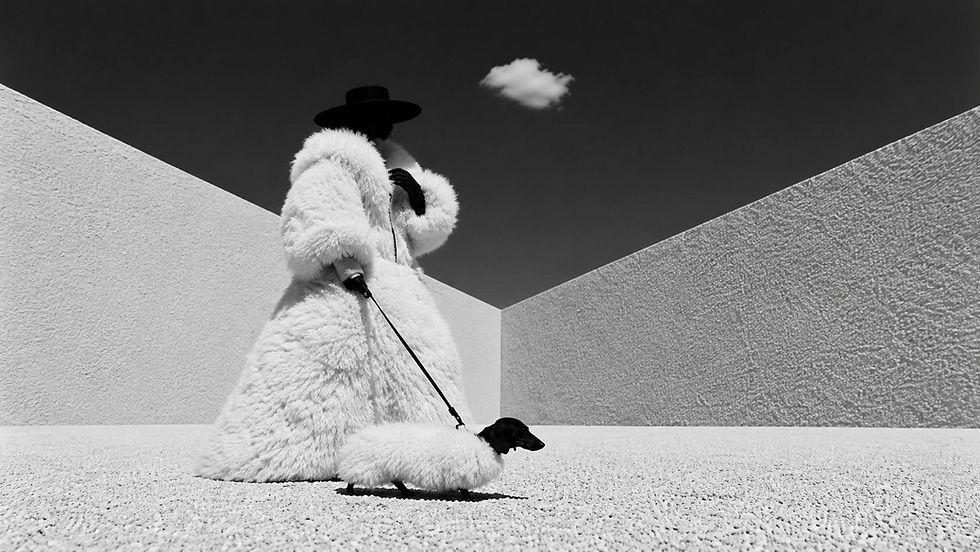
There is a particular kind of grief that comes without an obvious loss.
Nobody has died. Nobody has necessarily left. The people in our lives may still be where they have always been.
And yet, something has ended.
Sometimes we begin to see a relationship for what it really is, rather than what we have always hoped it could be.
We might notice it in the familiar tension in our body before seeing someone, the careful choice of words, the instinct to prepare for a reaction before it has even happened. And suddenly we recognise how long we have been living this way.
It might be the loving, protective older brother we never quite had. The parent whose approval we kept trying to earn. A friendship sustained more by our understanding than mutual care. Or a manager whose recognition we continue to seek, hoping that one day our contribution will finally be enough.
These realisations can be profoundly sad. Not necessarily because anything has changed, but because we are finally allowing ourselves to see what has been there all along.
We are grieving not only the relationships we hoped to have, but also the part of ourselves that kept waiting for them to become something different.
The peace we learned to keep
As children, we do not begin by questioning whether the people around us are capable of giving us the love and safety we need.
We need them to survive, to feel loved, protected and accepted.
But sometimes love comes with conditions that are never openly explained.
We learn that things are easier when we agree. That expressing certain feelings creates tension. That having our own perspective can be interpreted as disobedience, disrespect or rejection.
And we adapt.
We become understanding. Helpful. Careful with our words. Good at anticipating reactions.
Somewhere along the way, we may begin to confuse being loved with being convenient.
We call it respect. Loyalty. Understanding. Being the bigger person.
We may even feel proud of how well we manage difficult relationships, without noticing how little room there has been for us.
The illusion of connection
Imagine growing up with an older brother (or think of someone in your own life).
Someone you hope will protect you, stand beside you and make you feel that there is another person in the world with whom you can simply be yourself.
But instead, you find yourself carefully managing his reactions.
Disagreement becomes a competition. Expressing your own perspective risks anger, dismissal, withdrawal or humiliation. You learn to consider whether what you are about to say is worth the reaction it might provoke. Every single time.
And still, somewhere inside, the hope remains.
One day we will be close. One day he will understand me. One day I will be able to relax in his presence.
Years pass. You build a life. You become independent, capable, perhaps even someone others turn to for guidance.
Yet in certain moments, you find yourself feeling strangely small again.
Until one day, something becomes clear.
You have never really felt safe in this person's presence. Safe to feel, to disagree, to be yourself.
And you begin to recognise your own participation in maintaining this relationship. How often you chose silence over confrontation. How much of yourself you edited to preserve something you called peace.
Not because you were responsible for the other person's behaviour, but because adapting once seemed like the only way to preserve the connection and avoid conflict.
But how much of yourself can you keep editing before there is almost nothing left of you in the relationship? 80%? 90%? And what exactly are you preserving when the connection never felt safe in the first place?
We cannot keep the peace forever when that peace depends on constantly controlling ourselves
Eventually, something in us can no longer cooperate. We begin to hear the part of ourselves we have spent years silencing.
This doesn't feel like love. It doesn't feel like closeness. Not with the other person. And certainly not with ourselves.
The relationship may look exactly the same from the outside. But something fundamental has changed within us. We can no longer pretend that keeping the peace means being at peace.
Compassion becomes self-abandonment
As we grow older, we may become increasingly capable of understanding why people behave as they do.
We recognise their difficult childhoods, their fears, their disappointments, their unresolved pain.
We go through therapy, attend training, study human behaviour, perhaps even become coaches ourselves. We learn to recognise patterns, understand trauma and see the protective responses behind another person's behaviour.
We may develop genuine compassion for the very people whose behaviour has hurt us.
And this understanding matters.
It can soften resentment. It can help us recognise that another person's behaviour is not necessarily a reflection of our worth.
Understanding becomes another way of staying
We explain their behaviour through their history. We recognise their wounds, their fears, their limitations. And because we understand, we continue accommodating, sometimes without noticing that our compassion has become another reason to silence ourselves.
Understanding another person's wounds does not make us responsible for living within them.
We cannot allow our understanding to become an excuse for someone else to avoid facing themselves.
And somewhere in all this understanding, we may have forgotten to extend the same compassion to ourselves.
What happened to our feelings while we were so busy explaining theirs?
What did it cost us to keep making sense of behaviour that continued to hurt?
The grief of finally seeing
There is a particular sadness in recognising how much of our lives we have spent trying to earn something that should never have required us to disappear.
We grieve not only the relationship we never had, but the years we spent believing we could make it possible.
And perhaps most painfully, we grieve the version of ourselves who kept waiting, adapting and hoping that one day things would be different.
We can recognise the love that existed and grieve the love that did not.
And we can allow ourselves to feel that loss without turning it into another problem we need to solve.
Learning not to abandon ourselves
Recognising the truth does not mean we immediately know how to live differently.
We may understand that we are no longer responsible for another person's emotions, yet still feel anxious when they become upset.
We may know that disagreement does not make us wrong, yet feel our chest tighten before expressing a different opinion.
We may decide not to participate in a familiar dynamic, yet feel an almost automatic urge to explain ourselves, apologise or restore the peace.
Our bodies remember what our minds have begun to question
And this is where awareness becomes more than understanding.
We begin to notice the moment we make ourselves smaller. The tension before we speak. The guilt that appears when we choose not to intervene.
Instead of immediately obeying these feelings, we can become curious.
What am I afraid will happen if I disagree?
What am I still trying to protect?
And what would it mean to take my own experience as seriously as I take theirs?
We can feel afraid and still choose to speak. Feel guilty without automatically taking responsibility. Allow someone else to be disappointed without abandoning ourselves.
This does not mean we stop needing other people. We are relational beings. We need connection, affection, care and belonging. No amount of self-awareness removes that need.
But we can begin to recognise that love does not require obedience, and that caring about someone does not mean accepting humiliation as the price of maintaining the relationship.
We can love our parents without becoming responsible for everything that happens to them. We can care about a sibling without surrendering our right to be ourselves. We can value a friendship while acknowledging what it cannot offer.
And not every relationship has to end simply because we are no longer willing to participate in it in the same way.
Sometimes the relationship changes. Sometimes distance becomes necessary. Sometimes we discover that there was more room for us than we had allowed ourselves to believe.
We cannot control how another person responds when we stop playing our familiar role.
But we can begin to trust ourselves not to disappear in order to manage their response.
What remains
I don't think this kind of realisation necessarily makes life easier. At least not immediately.
There can be profound loneliness in no longer participating in relationships the way we once did. We may still love these people, still wish things had been different and still feel the absence of what we needed.
But we do not have to turn that sadness into gratitude or convince ourselves that everything happened for a reason.
There may have been genuine love, meaningful moments and shared experiences. People are rarely only one thing.
The existence of something good does not erase what was missing. And what was missing does not mean everything else was false.
Acceptance does not require forgiveness, reconciliation or distance. It means seeing a relationship as it is, without continuing to organise our lives around the hope that it will become something else.
And perhaps the deepest change is not in how we see others, but in how we begin to relate to ourselves.
We can finally stop asking the younger part of us to try harder, be easier to love or find another way to make everything work.
We cannot make the people we love become the people we needed them to be. It is not our business.
But we can stop abandoning ourselves in the hope that one day they will.
If you recognise yourself in these patterns, my coaching offers a space to explore them through awareness, compassionate self-inquiry and embodied reflection. Not to fix who you are, but to discover what becomes possible when you no longer have to abandon yourself to maintain connection.
Read more from Alena Elchaninova
Alena Elchaninova, Life Coach
Alena Elchaninova is a London-based ICF-certified life coach, artist, and Pricing Director working at the intersection of self-awareness and practical life change. She supports individuals who feel internally conflicted despite functioning well on the outside, helping them move from self-abandonment to self-trust, personal agency, and clear, conscious action. Her work explores inner narratives, emotional and somatic awareness, and the integration of different parts of the self, translating insight into grounded, aligned change. She brings both structure and depth to the process of meaningful realignment.