The Art of Feeling Everything – Creative Flow for HSPs & Empaths
Written by Sinead Rafferty, Career & Alignment Coach
Sinéad Rafferty is a Career & Alignment Coach for highly sensitive people (HSPs), empaths & neurodivergent professionals. She has 17+ years of experience empowering the genius of others. Founder of The Purpose Pathway™ online course & community, she is passionate about the strength of high sensitivity & the impact of empathic leadership.

For Highly Sensitive People (HSPs) and Empaths, the world is never experienced in half-measures. A single piece of music can bring tears. A painting can stir a deep knowing inside. A walk in nature, under the right sky, can feel like a soul-level encounter. A single line in a poem, the swell of a film score, or the brushstroke in a painting can move you so profoundly.
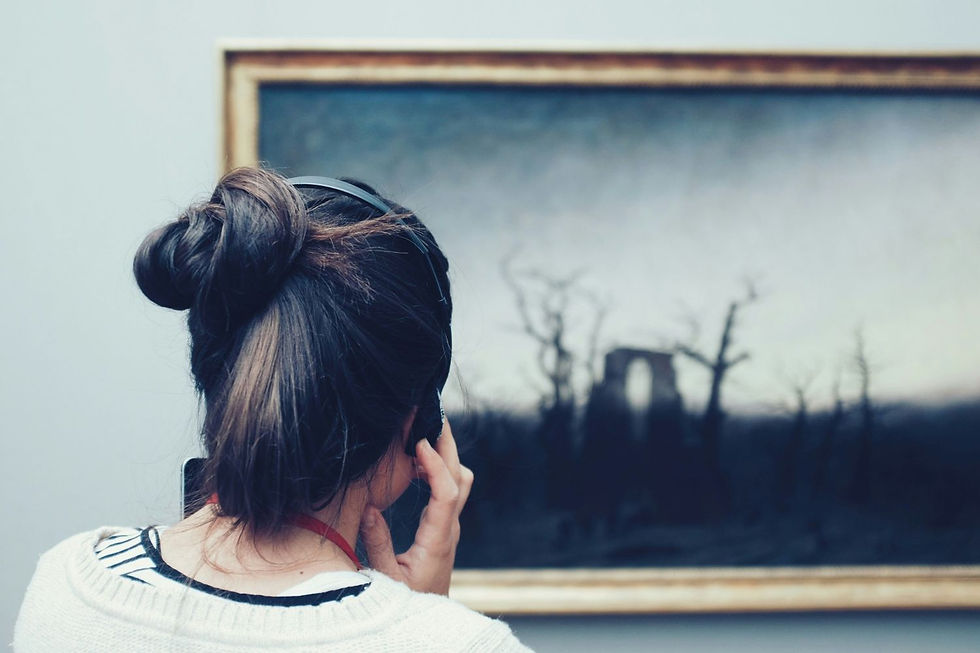
You might have cried during a commercial, had to leave a gallery to breathe, or gotten goosebumps just walking under trees at twilight.
This is the quiet magic of being an HSP: you feel everything more deeply, and you walk through the world with your heart open. And while that can sometimes feel like a burden, it’s also one of your greatest privileges.
You see what others miss. You feel what others can’t name. You express what others struggle to say.
And through that, you offer healing, meaning, connection, and beauty. Let’s explore what makes the HSP relationship with art and creativity so unique, and how you can tap into your natural creative flow while navigating the blocks that all too often arise.
The HSP creative edge
Our environment doesn’t just influence us as Highly Sensitive People, it shapes us profoundly.
In today’s fast-paced world of endless scrolling, constant pings, and the pressure to do more, faster, it’s easy to get pulled into surface-level stimulation. These fleeting dopamine hits tug us out of center, leaving us scattered, reactive, and disconnected.
For sensitive nervous systems, this isn’t just tiring, dilutes focus, clouds intuition, and distances us from what truly nourishes us. While the modern world feeds on urgency, HSPs thrive on depth and intentionality. That’s not only our saving grace; it’s our creative advantage.
We are wired to slow down, to feel more, to notice more. This capacity is not a flaw, it’s a form of intelligence. And when channeled into creativity, it becomes a superpower.
Whether you’re a creative, educator, coach, healer, artist, scientist, musician, writer, dancer, or visionary entrepreneur, your sensitivity is a powerful gateway to resonant expression. Your depth isn’t “too much”, it’s attuned, aware, and astute.
This emotional intensity is more than a reaction; it’s an invitation. The world doesn’t simply pass by; it moves through us, stirs us, lingers in our hearts.
Creativity isn’t just about reacting in the moment; it often emerges from the quiet space that follows. It’s not just about responding to life’s beauty or pain, it’s about letting those impressions root deeply within, and then rise as meaningful expression: art, ideas, solutions, or stories that move and inspire others.
The HSP creative advantage
Here’s why HSPs are naturally wired for creative depth:
Deep emotional sensitivity: Your inner emotional world is vivid and complex. This gives your artistic expression weight, beauty, and truth.
Heightened awareness: You notice nuance and subtleties, light, tone, texture, silence. Your attention to detail creates rich, layered output.
Empathic connection: You feel what others feel, sometimes before they do. This allows you to speak to the emotional depth of your audience.
Vivid imagination: Your mind is alive with scenarios, stories, and visions. Creativity doesn’t have to be forced, it’s always just below the surface.
Sensitivity to beauty: You see beauty where others might overlook it: the winter sea in its raw, forceful power, the quiet energy that passes between two people, the way sunlight filters through autumn leaves, the tone of someone’s voice when they feel seen, these moments become the raw material for meaningful, soulful expression.
Inherent curiosity: You ask questions others skip over. You want to understand. And this seeking becomes the fuel for exploration and innovation.
Reflective nature: You turn inward often, which means your art is informed by your truth. Your work resonates because it’s honest.
The need for meaningful expression: You feel better when you express and feed your soul. It’s how you stay connected to yourself.
Adaptability & openness: You’re willing to try things differently. You evolve. This flexibility allows your creativity to breathe.
Strong intuition: You often just know when something feels right or true. Building deep trust with your intuition leads to your most powerful work.
Together, these qualities form a creative blueprint that is uniquely yours.
7 ways to enhance creative flow for HSPs
To nurture your creativity, environment, and energy matters deeply.
When your energies are grounded, you can reach higher states of consciousness, fuel your imagination, tap into deep emotions, subtle nuance, and expansive thinking.
Your heightened sensitivity is your greatest asset to creative flow, if you allow it to be.
Here’s how to support it:
Quiet and solitude: Alone time is essential. It is not negotiable or a nice-to-have; it is a game-changer. It gives you space to hear your thoughts and listen to your inspiration.
Beauty and atmosphere: A candle, a playlist, a walk in nature, these seemingly small things can unlock entire worlds of creativity.
Rhythmic movement: Gentle movement like yoga, dance, qigong, or walking can free stuck energy and invite ideas to flow again.
Emotional & energetic safety: Feeling safe and grounded allows for creative flow. Your creativity blossoms in spaces where you can be raw and real.
Courageous authenticity: Creativity asks us to be brave. To express what’s real, even when it’s vulnerable. For HSPs, authentic expression isn’t just healing, it’s an act of quiet rebellion against conformity. When you show up bravely, as your true self, you are validating yourself and those who resonate with you.
Intuition-led practices: Letting go of rigid outcomes and trusting your intuitive process helps your creativity evolve and stay alive.
Meditation & mindfulness: Creative flow emerges most naturally in states of presence. Meditation and mindfulness quiet the external noise and help you return to your inner world, where clarity, inspiration, and imagination live.
These practices ground your nervous system and open space for intuitive ideas to surface.
Being in flow is being in alignment, it is a combination of actively seeking your next challenging and expansive move, balanced with the art of allowance, allowing your creative path to unfold.
And always remember, being in flow feels good, so always follow what feels good.
7 blocks that impede creative flow
Awareness is powerful. When you name the blocks that dim your creative light, you loosen their grip.
With acceptance, not judgment, you can dissolve resistance and return to flow with greater ease and self-compassion.
Here are 7 common ones:
Overstimulation: Too much noise, pressure, or social input can shut down your creative channel.
Flow doesn’t follow the crowd: When you override your natural rhythms to keep pace with the world’s hustle, ignoring your energetic ebbs and flows, you disconnect from your strengths. Creativity doesn’t thrive in comparison; your flow is unique.
Perfectionism: You care deeply, which can make you afraid to “get it wrong.” This can freeze your flow.
Criticism (real or imagined): Even the thought of being judged can cause HSPs to pull back from sharing their art. And self-criticism is often the worst form. Be a friend to yourself!
Energy depletion: Burnout, fatigue, or emotional overload from lack of boundaries can dry up your creative well.
Disconnection from meaning: If the work feels empty or irrelevant, you may lose the drive to create altogether.
Emotional clutter: When unprocessed emotions pile up, they cloud your inner space and dull creative clarity. Creativity needs breathing room, space to emerge.
Reclaim your creative voice
You don’t have to be a “professional artist” to claim your creative identity. Creativity is a birthright, not a job description.
Start by asking:
Where do I feel most creatively alive?
What feels heavy and what feels light?
What have I been afraid to express?
And then start small. Doodle. Sing. Write. Photograph. Move. Cook. Build. Record. Make playlists. Create rituals. Play with textures. Return to what made you feel free as a child.
The goal isn’t perfection, it’s expression. It’s alignment.
Let your authentic expression come through you. Let your heart speak clearly. Let your sensitivity lead the way.
The world needs what you have to offer. Your deep thinking & creativity is a gift and how you express it in the world is entirely unique. Your creative expression soothes humanity & inspires those around you. Your innovative spirit improves the life experience of so many.
Don’t hide your creativity. Don’t downplay your sensitivity. It is not a weakness or liability; it is a gift. And the more you honor it, the more you, and the world, benefit.
Read more from Sinead Rafferty
Sinead Rafferty, Career & Alignment Coach
Sinéad is a visionary coach on a mission to uplift and empower the impactful contributions of purpose-driven, ambitious, highly sensitive (HSP) & neurodivergent professionals. Passionate about the role of empathic leadership in today’s society, Sinéad sees sensitivity as a powerful force and one with great purpose. She guides her clients through an aligned, authentic approach to embodying sensitivity in meaningful ways, so they can apply their innate skills and strengths to their work. Her unique approach aims to not only bring balance to the depth and intensity of the trait of high sensitivity but also to achieve truly original, creative, and evolutionary contributions in the world.