The Adire I Almost Dismissed – Lessons From My Return to High School
Written by Taiye Aluko, Relationship Coach
Taiye Aluko helps individuals and couples find purpose in life and happiness in marriage. An excellent encourager, she is passionate about seeing people unlock their personal power and attain the best version of themselves.

An unexpected lesson in potential, effort, and togetherness at my school’s 50th anniversary celebration. I nearly wrote off a piece of fabric before I had even worn it. It was the adire chosen as our aso ebi for my secondary school's 50th anniversary celebration. I didn’t like how it looked, and I liked how it felt even less. Yet a few days later, I was proudly wearing that same fabric, posing for photographs and telling anyone who cared to listen how lovely it was.
I had changed my mind. Quite spectacularly, too. Somewhere between the tailor’s shop and the group photographs, I picked up three lessons I hadn’t expected to learn in Benin City.
Back to the school that shaped us
I left Federal Government Girls’ College, Benin City, affectionately called Fediben, in 1985. Although I had returned since graduating, it had been close to twenty years since my last visit. So when the school’s 50th anniversary celebrations came around, I was eager to make the journey.
I wanted to walk through the grounds I remembered, feel the excitement of being back in the ancient city of Benin and, above all, see classmates I had not set eyes on since our school days.
Women arrived from different parts of Nigeria. Many of us were now mothers, some even grandmothers. We had built careers, raised families, and lived very different lives. But something happened as soon as we found one another. We were schoolgirls again.
Squeals of recognition, hugs, old nicknames, and stories we could still tell as though they had happened the previous week filled the air. Some faces were instantly familiar. With others, it took a name or a remembered incident before everything clicked. Soon, we were laughing over things that would have made little sense to anyone who hadn’t been there.
The organisers had arranged matching anniversary T-shirts for our first day. We wore them to the school, where the students welcomed us with excitement and curiosity. There were career talks, cultural performances, lively conversations and, naturally, endless photographs.
I returned to my hotel that evening exhausted and happy. The next day, we would wear our anniversary adire. That was where my unexpected education began.
A fabric I wasn’t keen on
For readers unfamiliar with Nigerian celebrations, aso ebi refers to a common fabric or outfit worn by friends, family, or members of a group to mark an occasion and show a sense of belonging. Adire is a traditional Yoruba resist-dyed textile, often recognised by its distinctive patterns.
Ours came in the school colours, a lovely idea in principle. In practice, when I first collected mine, I was not impressed.
I remember looking at it and thinking, “What is this?” The texture, the appearance, the overall feel– none appealed to me. As we might say in Nigeria, ko make e rara! In other words, it wasn’t doing it for me at all.
Still, I reasoned, shebi it’s only for one day? Shebi is a common Nigerian conversational expression, used here in the sense of “after all”. I would make something presentable, wear it, and move on.
Now, I have different categories of tailors. Some get the important occasions and expensive fabrics. Others get the simpler assignments. This adire went to my dependable, cheap-and-cheerful tailor. I wasn’t about to invest too much money in a fabric I had already dismissed.
Imagine my surprise when I collected the finished outfit. It looked good. Very good, in fact. My tailor had chosen a flattering style and made something I was genuinely pleased to wear. I stood there admiring the same fabric I had been so unimpressed with days earlier. That was lesson number one.
Lesson 1: Don’t write off what you haven’t worked on
I had judged the fabric in its raw state. My tailor had looked at it and considered what she could make of it. The difference wasn’t in the material. It was in what she did with it.
That observation made me think about how quickly we sometimes form conclusions. An idea is still rough, so we decide it won’t work. A colleague is inexperienced, so we overlook what they might contribute. A project gets off to a slow start, and we lose interest before giving it a fair chance.
I encounter versions of this in my work as a coach and relationship counsellor. People sometimes become so focused on what is missing that they stop noticing what they can work with. Yet a different approach, a difficult but necessary conversation, or a willingness to develop a skill can change what happens next.
This isn’t an argument for persevering with everything. Some relationships are unsafe. Some investments should be abandoned. Wisdom lies in knowing when to walk away.
But before we conclude that something has no value, perhaps we should ask whether we have actually given it a chance. My tailor didn’t replace the fabric. She worked with what I had given her.
Lesson 2: Potential isn’t always obvious at first glance
My second lesson followed naturally from the first. The appearance of raw material doesn’t tell the full story of what it might become.
We admire confident speakers without seeing the awkward first presentations. We admire established businesses without seeing the mistakes and adjustments along the way. We meet couples who understand one another and may never know how intentionally they have learned to communicate, listen, and repair disagreements.
I had looked at the adire and seen an ordinary piece of fabric. My tailor had seen possibilities for its shape, fit, and finish. Of course, those possibilities would have remained just that without someone willing to do the work.
Potential matters, but so does what we do with it. The same applies to people. Think of the young colleague who hasn’t yet found their confidence, the child whose strengths haven’t become obvious, or the person who has something valuable to contribute but needs the space and encouragement to try.
We cannot know everything about a person’s ability from the stage at which we first meet them. That thought stayed with me. It reminded me to be less hasty in my judgements, including the judgements I make about myself.
Lesson 3: We looked even better together
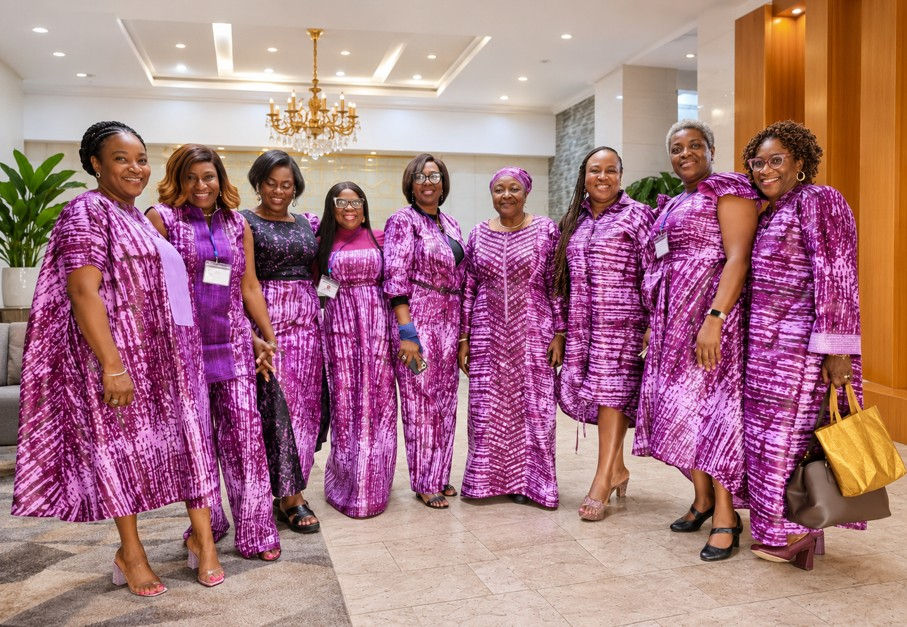
If the finished outfit had surprised me, the next morning surprised me all over again. As we gathered to leave for school, women appeared in their different adire creations: dresses, skirts, blouses, flowing styles, fitted styles, simple designs, and elaborate ones. I kept admiring the creativity around me. How could the same fabric look so different, and so beautiful, on everyone?
Then we assembled for group photographs. That was when it really came alive. Each outfit looked lovely on its own, but seeing us together was something else. The school colours linked us, while the different cuts and styles reflected our individual tastes.
“This our fabric is fine o!” someone exclaimed, expressing in unmistakable Nigerian fashion just how beautiful our fabric looked. “What a great choice!” another woman said. There I was, enthusiastically agreeing. Me, who had complained about the fabric!
We posed, changed positions, laughed, called more people into the photographs, and posed again. I have no idea how many pictures we took. I only know that the joy of being together was written all over them.
Looking at those photographs, I saw the third lesson. We can achieve something remarkable when we bring our individual contributions together.
I thought about marriages, where two people may have different temperaments, strengths, and ways of doing things. One person may be methodical, the other more spontaneous. Their differences need not become a contest. With understanding and mutual respect, they can complement one another.
I thought about workplaces, where a team gains something when people with different experiences can contribute without being expected to think alike. I thought about communities, where the ability to work towards a common purpose can matter more than our individual preferences.
We don’t have to think alike to work well together. Our outfits were not identical. That's what made the sight interesting. We had all gone on to live different lives since 1985. Yet for those few days in Benin, the school we shared brought us back together. The adire made that connection visible.
The second look
I went to Benin expecting laughter, nostalgia, and the pleasure of seeing old friends. I had all three. I also came home thinking about a fabric I had almost grudgingly agreed to wear.
It had taught me to question my first impressions, pay attention to possibilities, and appreciate what people can create together.
Since then, I have wondered what else I might have dismissed too quickly. An idea that needed more thought? Someone whose strengths I hadn’t recognised? An opportunity I hadn’t examined closely enough?
Perhaps you have something in mind too. My adire was not the luxurious fabric I would ordinarily have chosen. It didn’t need to be. In the hands of my tailor, and later in the company of my Fediben sisters, it became something I was delighted to wear.
So, please, look again at that thing you’ve been disdaining. You might be surprised. As for me, I thoroughly enjoyed rocking my adire aso ebi, and to think I nearly wrote it off!
Read more from Taiye Aluko
Taiye Aluko, Relationship Coach
Taiye Aluko is your guide to personal and professional transformation. With over two decades of counselling experience, she understands that our personal and professional lives are deeply intertwined. Taiye helps individuals navigate these interconnected spheres, empowering them to achieve clarity, fulfillment, and lasting success.