Struggling With Ongoing Head and Neck Pain? Explore Causes and 11 Tips to Stop the Pain
Kicki Hjortmarker is known for her broad knowledge and extensive experience working with the human body and mind to heal injuries and chronic pain conditions. She is the founder of Swedish Balance, dedicated to helping people live a balanced life pain-free.

I frequently meet people who wonder what causes their neck pain and headaches that won’t stop and what they can do about it. You can do a lot on your own, but you need to be consistent. Neck pain and headaches can have many causes and may persist for many reasons. Structural imbalance, arthritis, and injury are among the top causes.
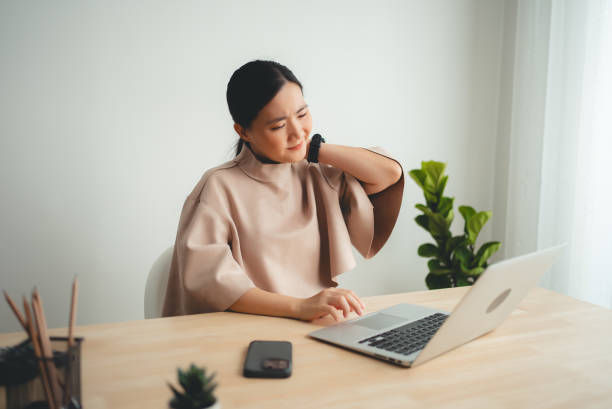
Why won’t my neck tension go away?
Let’s say you have a hamstring injury. It doesn’t seem to have anything to do with your headaches and stiff neck, but it might have everything to do with them. Tension in your hamstring may have started pulling on your pelvic bone, creating imbalances and tension in your muscles and fascia that extend all the way up to your head. Trigger points may develop along this path of tension and can worsen the pain. Trigger points in the upper back and neck often cause tension headaches.
So, you need to heal the dysfunction and root cause that led to your neck tension and headaches in the first place.
11 tips on how to combat neck pain and headaches
Limit your time on the phone: Hold your phone higher and support your arms if needed. This reduces strain on your neck and helps prevent excessive trigger point formation.
Relieve tension with decompression: Use a decompression device gently, or roll up a towel under your neck to support its natural curve. Relax for 10 minutes.
Pressure points: Press with your fingers under the occiput, the lowest part of your head at the back, and see if you find tension and tender spots. You can gently press these spots until the pain is relieved. If you don’t feel any difference, these points may not be contributing to the pain, or you may be pressing too hard or too gently. Next, press the pressure point between the base of your thumb and index (pointer) finger. This may help alleviate your headache.
Stretch the neck and open the chest: For the front of the neck, lie down on your stomach and put your clasped hands under your chin. If it feels good, you can apply gentle pressure upward and back. Be gentle! Chin tucks are also an effective way to stretch and strengthen your neck.
To stretch the side of the neck, gently lean your head to one side and place the weight of one hand on the side of your head that you are trying to stretch. You can also stand up and tilt your head back, looking up and back. If possible, clasp your hands behind your lower back to simultaneously open up your chest.
Lean toward ease: If stretching doesn’t work, do the opposite. Lean into the direction the body wants to take you. When you feel your muscles pulling you in one direction, move in that direction. This applies no force, and that might be what your body needs most to let go of tension.
Choose anti-inflammatory foods: Choose whole foods and a low-carb diet. When you have a flare-up, stop eating grains, crackers, sugary chocolates, rice, pasta, and bread, and avoid wine. Use cayenne pepper for taste, olive oil and vinegar for dressing, and enjoy steamed leafy greens.
Drink lots of unsweetened fluids: You can flavor water with lemon, cucumbers, or other low-sugar fruits and vegetables.
A well-balanced workout: A leg workout can include lunges, hiking, and walking. Use caution! Moderation is key. If you do a strenuous workout, it may have the opposite effect and make things worse. For a Pilates core workout, always support your neck with your hands when needed. Make sure you’re not using your neck instead of your abdominals! If you do, make the movement smaller.
Strengthen your back without straining your neck muscles. You can do this simply by lying down on your stomach and lifting your head, shoulders, and, if possible, your ribs. Use your hands under your shoulders for support if needed.
Make sure your shoulders are aligned, not hiked up or rolled forward. Strengthen the shoulder muscles to return them to their proper position. One gentle way to do this is to hold your arms out in a T-position, bring your scapulae (shoulder blades) together, then reach your arms toward each other behind you.
Strengthen your neck muscles carefully and only when your flare-up is over. You can do this by applying gentle pressure to your head with your hand while making sure to keep your head still. Chin tucks are also very helpful.
Meditate: Stress leads to tension in the body, commonly in the neck. Under stress, the nervous system speeds up your breathing and makes it more shallow. Shallow breathing brings tension to the neck and upper back. Meditation will help you slow your breath and regulate your nervous system.
What is the best sleeping position for headaches? The best sleeping position is the one in which you can fully relax. Your neck and upper back muscles should feel completely at ease. To do this, use cushions, rolled-up blankets, and towels to provide support for your arms, legs, neck, and the natural curves of your spine. Then choose to sleep on your side or back. The point is to find comfort and be at ease.
Improve ergonomics: Make sure to sit properly when working, reading, or watching television (TV). Do not slouch or cross your legs for too long. If you have a desk job, you want to make sure all your joints are properly aligned and follow the 90-90-90 rule.
If this doesn’t work, you feel you need guidance, or you want faster healing, get professional help! Myofascial release, such as neuromuscular therapy (NMT) with trigger point therapy, craniosacral therapy, and Pilates, can support the healing process tremendously!
Prepared to achieve a pain-free life?
Read more from Kicki Katarina Hjortmarker
Kicki Katarina Hjortmarker, Holistic Bodyworker
Kicki Hjortmarker has a solid background in the hands-on healing field, treating people with injuries and chronic pain conditions. With a holistic approach, she integrates Neuromuscular Massage Therapy, Craniosacral Therapy, Hypnotherapy, Reiki, Pilates, and more. To practice the artistry of mind/bodywork and massage therapy has been Kicki's lifelong passion. It started with the awareness of her own body as a child and ballet dancer, and, later, as a gymnast who developed chronic lower back pain whilst on the Swedish National Team in Rhythmic Sports Gymnastics. Decades later, she overcame nerve damage and temporary paralysis in one hand. This taught her to trust the healing power of body and mind, and that the body prefers holistic healing methods over conventional treatments. Her mission is to encourage and inspire others to do the same. To trust the healing power of body, mind, and spirit!