Stronger When Wet – What Shrimp Shells Are Teaching Luxury Design
Updated: Apr 13
Written by Monserrat Menendez, Interior Designer
Monserrat is an entrepreneur, interior architect, and sustainability advocate, as well as the founder of Senom Design, a firm dedicated to merging innovative design with sustainable solutions. With over a decade of experience across residential, commercial, and international projects, she specializes in bringing clients’ visions to life through thoughtful, high-impact interiors.

A breakthrough biomaterial is quietly rewriting the rules of how we think about surfaces, durability, and the true cost of beauty in the spaces we inhabit. There is a particular kind of client who has always understood that the most luxurious choice is rarely the most obvious one. They choose natural linen over synthetic velvet. They select hand-fired terracotta over mass-produced porcelain. They ask where something comes from, and they mean it. This client is about to have a very interesting conversation about shrimp shells.
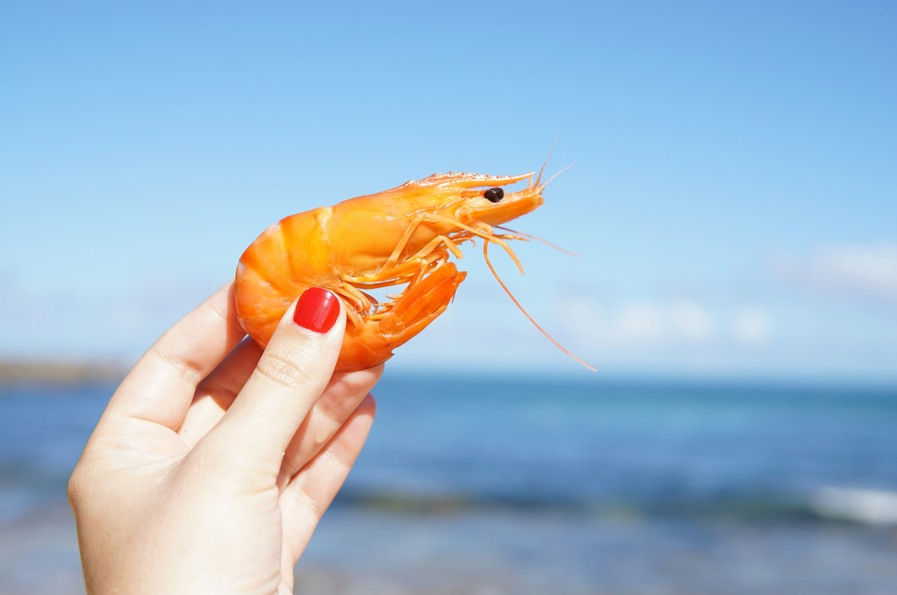
In February 2026, researchers at the Institute for Bioengineering of Catalonia published findings in Nature Communications that should be on every luxury designer's radar, a chitosan-based biomaterial, derived from shrimp shell waste, that becomes up to 50% stronger when exposed to water. Not weaker. Stronger. By incorporating nickel into the biopolymer structure, the material turns moisture into a structural advantage, a quality that most of our conventional building and furnishing materials spend enormous energy trying to fight.
The implications for how we design, specify, and story-tell around materials in high-end interiors are significant. For clients who want their homes to be both beautiful and meaningful, this is exactly the kind of conversation worth having.
A different philosophy of durability
The conventional logic of luxury materials is essentially about resistance. We seal stone to protect it from moisture. We treat wood to repel humidity. We laminate, coat, and engineer surfaces to perform despite environmental conditions, not because of them. The entire vocabulary of premium finishes, water-resistant, stain-proof, weatherproof, is the vocabulary of defense.
What makes this chitosan research so philosophically interesting is that it proposes something different, a material that works with its environment rather than against it. The researchers describe this as using moisture as part of the material's structural system. That is a quiet but profound design idea.
"The most sophisticated spaces have always borrowed their logic from nature. This research suggests that the next frontier isn't just drawing inspiration from the natural world, it's designing with materials that are genuinely part of it."
For those of us who have spent careers selecting materials, this resonates. The most enduring luxury spaces I have encountered, whether in the Hamptons, in the Basque Country, or in the design districts of Mexico City, tend to have this quality of rightness in context. The stone feels like it belongs to the place. The wood breathes with the seasons. The textiles respond to light. These are not accidents. They are the result of designers choosing materials that participate in their environments, not merely occupy them.
Where biobased materials meet the high-end interior
So, where does something like a chitosan film actually live in a luxury space? The honest answer is that we are at the beginning of this conversation which is precisely when designers need to be paying attention.
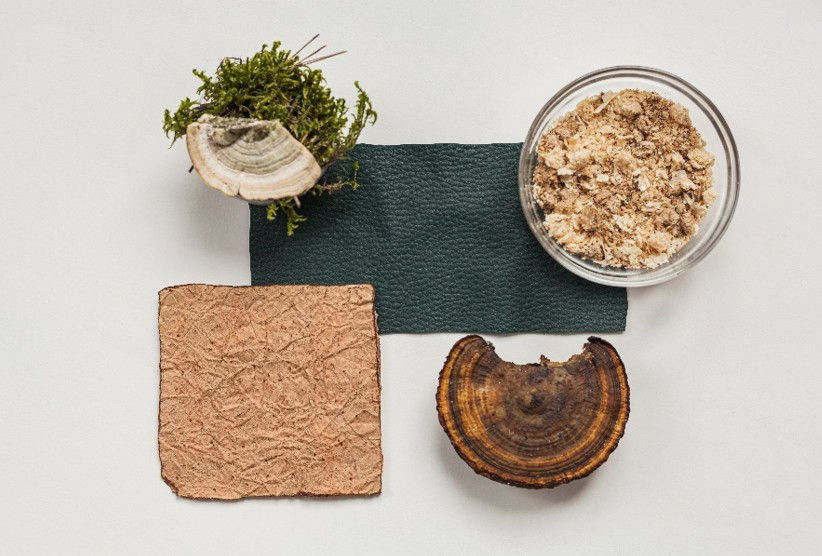
The most immediate applications are likely in areas where bioplastics and polymer films already play a role, protective coverings for custom millwork during installation and transit, packaging and wrapping for high-value FF&E pieces, architectural membranes and temporary building enclosures, and experimental surface applications in hospitality and installation design. These are not the headline moments, but they are where material culture shifts. The materials that prove themselves in support roles become the materials that, a decade later, are standing front and center.
Beyond logistics and packaging, the performance characteristics of this material, durability under moisture, biological origin, and potential biodegradability align well with a growing category of luxury residential applications, outdoor, and transitional spaces. Covered terraces, pool pavilions, lake house interiors, coastal properties. These are environments where conventional materials struggle precisely because of humidity and wet conditions, and where the maintenance burden on clients is highest. A material engineered to strengthen under those conditions would represent a genuine premium proposition, not simply a sustainability credential.
In the hospitality sector, the opportunities are even more apparent. Spa environments, resort pool decks, wine cellars with controlled humidity, wellness facilities, these are spaces where the intersection of biological materials and moisture resilience could be transformative. The luxury hospitality market has been particularly receptive to materials with compelling provenance stories, and 'derived from the sea, strengthened by water' is as compelling as it gets.
The provenance conversation
Here is where the luxury market angle becomes genuinely interesting. The high-end design world has been grappling, imperfectly and unevenly, with the question of what luxury means when we factor in environmental cost. Clients who think carefully about what they eat, where they travel, and what they wear are increasingly asking the same questions about their homes. The design industry's response has sometimes been superficial, green certifications applied to spaces that still source globally without transparency, 'sustainable' labels on materials whose supply chains remain opaque.
What biobased materials like chitosan offer is something more substantive, a story that is traceable, biological, and tied to real circular economy logic. Shrimp shell waste is genuinely abundant. It is a byproduct of an existing food industry. The transformation of that waste into a high-performance material is not a greenwashing narrative. It is a closed-loop system that luxury clients, increasingly sophisticated about these distinctions, will recognize and value.
"Provenance is the new craftsmanship. Clients who once asked 'who made this?' are now asking 'what is this made of, and what did making it cost the world?'"
In my work as a sustainability consultant alongside my design practice, I have watched this shift accelerate. The clients leading it are not compromising on quality, they are redefining it. They want materials that perform beautifully, age gracefully, and carry a story they can be proud of. A surface derived from ocean waste, engineered to become more resilient over time, tells exactly that story.
Designing with what's coming
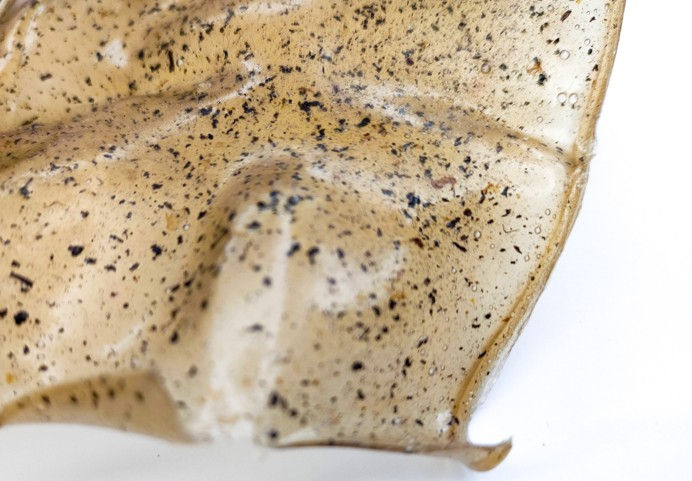
The chitosan material from IBEC is not yet a product you can specify from a showroom. But the most influential designers have always worked at the intersection of what exists and what is becoming. Right now, biomaterials are becoming very quickly. Mycelium composites are appearing in furniture and acoustics. Algae-based dyes are entering textile production. Agricultural waste is being pressed into boards and panels that perform at architectural scale.
What this research contributes to that trajectory is a principle, that biological materials can be engineered not just to be 'good enough' alternatives to conventional products, but to possess performance qualities that synthetic materials cannot match. Stronger when wet is not a consolation prize. It is a competitive advantage.
For designers working at the luxury end of the market, the question is not whether to engage with this shift. It is how to engage with it without losing the rigor and beauty that define premium work. My approach has always been that sustainability and luxury are not in tension. They are, at their best, expressions of the same underlying value, care. Care for the person inhabiting the space. Care for the artisans and makers in the supply chain. Care for the environment that makes all of it possible.
The material that becomes stronger in water, made from the shells that the sea once claimed, is a small but genuine expression of that care. Worth watching. Worth specifying. Worth telling your clients about, especially the ones who already understand that the most luxurious choice is rarely the most obvious one.
Read more from Monserrat Menendez
Monserrat Menendez, Interior Designer
Monserrat is an entrepreneur, interior architect, and sustainability advocate, as well as the founder of Senom Design, a firm dedicated to merging innovative design with sustainable solutions. With over a decade of experience across residential, commercial, and international projects, she specializes in bringing clients’ visions to life through thoughtful, high-impact interiors.
She is the U.S. Brand Ambassador for U Green, an organization that helps companies become more profitable while empowering people and brands to follow a consistent path toward sustainability through transformative education and specialized consulting. As an Executive Contributor to Brainz Magazine, she shares her expertise in design, sustainability, and innovation. Her mission is to create spaces that are not only beautiful but also responsible and forward-thinking.