Speaker, Advocate & Unapologetic Disruptor of Broken Health Systems – Interview with Debi Wimberley
Updated: Oct 19, 2025
Debi Wimberley knows what it’s like to be told there’s nothing more that can be done and to refuse to accept that answer. A survivor of decades of chronic pain, lung disease, and a cascade of rare diagnoses, she transformed personal adversity into a mission to empower others. Drawing on her background in medical technology, oncology, and hospital labs, Debi reclaimed her health by studying the Endocannabinoid System (ECS) and incorporating Medical Cannabis into her care. Today, she’s a nationally recognized educator, speaker, and founder of Effective Cannabis and the Effective Cannabis Newsletter, platforms dedicated to delivering fact-based education and practical tools for patients, professionals, and advocates. From her TEDx talk to her co-authored book ECHO This: Empowering Conversations of Hope and Opportunity, Debi’s work is changing the way people understand health and proving that ‘impossible’ isn’t a diagnosis.
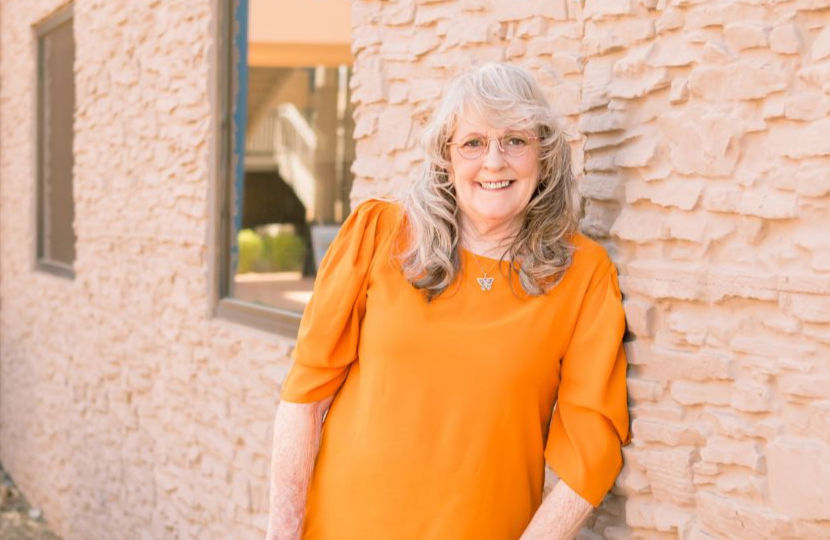
Debi Wimberley, Medical Cannabis Educator
What is your work inspired by?
My work is inspired by the belief that no one should feel powerless in their own health quest. After decades of chronic pain and rare diagnoses and being told by the medical system there was nothing more they could do, I discovered the Endocannabinoid System (ECS), your body's master regulatory network, discovered only in 1988 but present in every human, constantly working to maintain balance in your immune system, nervous system, and virtually every physiological process. That is when the impossible started to feel possible for me. That personal breakthrough fuels everything I do today, speaking, writing, and educating patients, professionals, and advocates on how to unlock their body’s natural healing potential.
I’m driven to turn hard science into hope, showing people how to reduce reliance on medications, manage pain, and take charge of their wellness with confidence. Every workshop, lecture, and platform I create is designed to give others what I wish I’d had sooner, a trusted map, real data, and a community of experts who refuse to settle for ‘there’s nothing more we can do.’
I’ve seen firsthand how lives transform when people understand the ECS. That’s why I work with clinicians, researchers, and advocates who are just as committed to reshaping health from the inside out. The question I love to ask is, "What could your health or your impact look like if you had the right tools, knowledge, and partners?"
How do they address the needs of your target audience?
I meet my audience where they are often frustrated, overwhelmed, or searching for answers the traditional system hasn’t provided, and give them what they need most, clarity, confidence, and a path forward.
For patients, I translate complex science about the Endocannabinoid System into practical steps for regaining control of their health, whether that means managing pain, reducing medications, or simply feeling well again.
For professionals, I provide trusted tools, vetted data, and a platform to speak with authority about cannabinoid therapies, helping them build credibility and reach the people who need their expertise.
Instead of pushing one-size-fits-all solutions, I equip people to design their own health map. My workshops, speaking series, and the Effective Cannabis platform empower patients, clinicians, and advocates to transition from confusion to action, and from isolated efforts to a connected movement.
The real impact? People stop asking, ‘What now?’ and start asking, ‘What’s next', and how far can we go?
In your experience, what are some common misconceptions about your industry?
I see a lot of confusion around Cannabis, and that confusion keeps people from getting the help they need. Here are some of the biggest misconceptions I address in my talks, writing, and workshops:
‘Cannabis is just about getting high.’ Not true. When you learn how your Endocannabinoid System (ECS) works, you see Cannabis as a tool to restore balance, not just a way to get intoxicated.
‘All Cannabis products are the same.’ They’re not. Potency, cannabinoid ratios, and formulation matter, and without guidance, people end up guessing. My goal is to replace guesswork with education.
‘If it’s natural, it must be safe.’ Even natural therapies need proper use. Dosage, quality, and drug interactions matter, which is why education and advocacy are so critical.
‘Medical Cannabis isn’t real medicine.’ The science behind cannabinoids and the ECS is real, robust, and growing. The problem isn’t lack of evidence, it’s lack of awareness.
‘The industry is fully legal and regulated now.’ In reality, laws are inconsistent, product testing is uneven, and patients are often left to figure things out on their own.
‘Cannabis cures everything.’ It doesn’t. But when used correctly, it can dramatically improve quality of life, reducing pain, cutting medication reliance, and helping people feel well again.
‘You have to use Cannabis to benefit from ECS knowledge.' False and one of the most limiting beliefs I encounter. Your ECS responds to various natural approaches, including specific foods, exercise patterns, breathing techniques, sleep optimization, and stress management strategies. Cannabis is just one tool in a much larger toolkit. Understanding your ECS opens up a world of natural health optimization that anyone can access.
This is why I do what I do, to help people see past the noise, learn how to work with their bodies, not against them, and take back control of their health. That’s exactly what I share in my Effective Cannabis Newsletter and my upcoming program, so no one has to navigate this alone.
For readers inspired by this conversation and eager to start their journey, what first steps would you recommend?
The first step is to get to know the system in your body that no one ever taught you about, the Endocannabinoid System (ECS). Once you understand how it works, you can take the wheel on your health instead of just reacting when something goes wrong. And here's what surprises most people, your body has been sending you signals through your ECS all along, that's why certain foods make you feel better, why movement shifts your mood, or why stress hits you so hard. Learning to read these signals changes everything.
That’s why I started the Effective Cannabis Newsletter. It’s where my team and I share clear, science-backed guidance, real stories, and practical steps you can use right away. Because here's what I've learned, facts alone don't create transformation, but when you combine science with the gift of story, everything clicks. Your body has been trying to tell you something all along, and once you learn to listen to that story, real healing begins.
And because so many people have asked for a deeper, step-by-step approach, I'm opening enrollment soon for Your Health Storybook, an adventure where story, curiosity, and science meet to help you write your own health narrative through ECS education. If you want to be among the first to receive an invitation, you can sign up today to join the waitlist to unlock exclusive and early-access experiences available only to insiders.
Start with good information, surround yourself with people who are just as committed to their health as you are, and you’ll be amazed at how quickly things can change.
Remember, you already have the most sophisticated healing system ever discovered, you just need to learn how to work with it.
Read more from Debi Wimberley