

Rediscovering Who You Are After Breast Cancer
Veronika Bubenickova is the Founder of Lotus Journey, a breast cancer survivor, author, Lifestyle Oncology Practitioner, and Transformational Breast Cancer Coach. Following her own diagnosis at 39, she now helps women navigate breast cancer and recovery by supporting the physical, mental, emotional, and spiritual aspects of healing.

There is a phrase we hear repeatedly after cancer treatment: “getting back to normal.” We talk about getting back to work, getting our energy back, getting our confidence back, and eventually getting our old life back. It is understandable. When something as disruptive as breast cancer enters your life, the idea of returning to the person you were before diagnosis can feel deeply comforting. But what happens when you realise you don't actually want all of your old life back?
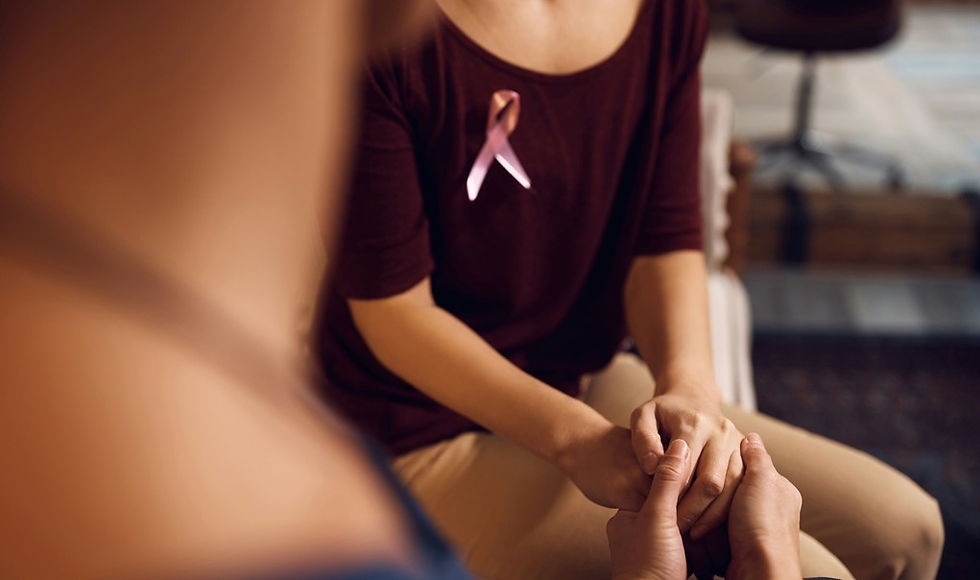
This was one of the most profound realisations of my own breast cancer journey. My diagnosis at 39 interrupted the life I thought I was building and forced me to look at myself differently. After chemotherapy, surgery and radiotherapy, I could not simply press a reset button and return to the woman who had existed before cancer. Too much had happened, and I had changed.
At first, that can feel like another loss. Over time, however, I began to see something else. Perhaps recovery wasn't asking me to find my way back to my old self. Perhaps it was giving me an opportunity to discover who I wanted to become next.
When cancer disrupts your identity
Identity is something we rarely think about until it changes. We know ourselves through our careers, relationships, appearance, bodies, families, independence and the roles we play for other people. Then cancer arrives and can disrupt several of those things at once.
Suddenly, you may become “the patient.” Your body becomes the subject of medical conversations, examinations, and procedures. Your calendar revolves around appointments. People ask about your health before asking about anything else. Even when this comes from love, cancer can gradually occupy an enormous amount of space in your identity. Then treatment finishes, and another question appears: "If I am no longer primarily a patient, who am I now?"
For some women, the answer comes naturally. For others, it takes months or years. There is no correct timeline and no requirement to reinvent yourself. But there can be enormous freedom in recognising that you are allowed to question aspects of the life you had before.
I stopped trying to go backward
Before breast cancer, I had spent years building a successful corporate career. From the outside, many parts of my life looked exactly as they were supposed to look. Yet my cancer experience became part of a much deeper reassessment of how I wanted to spend my time, what mattered to me, and what kind of contribution I wanted to make.
Eventually, that journey led me towards the work I do today, supporting women affected by breast cancer. It led me to write Diary of a Soul Reborn, to train in Lifestyle Oncology and therapeutic and complementary approaches, to speak publicly about breast cancer and to create Lotus Journey.
None of that means cancer was a gift I needed to receive. I would never tell another woman that she should see her diagnosis that way. There is an important difference between romanticising suffering and recognising that we can create meaning from what has happened to us.
I could not change the fact that cancer had entered my life. I could decide what I wanted to do with the life that followed it. That distinction became incredibly important to me.
Who were you before everyone told you who to be?
Serious illness has a way of stripping away some of the noise surrounding our lives. When our sense of time and certainty is challenged, questions we have successfully avoided can suddenly become difficult to ignore.
Am I happy?
Do my relationships nourish me?
Does my work still mean something to me?
Where am I constantly saying yes when I want to say no?
Whose expectations am I living according to?
What have I been postponing?
Perhaps the most uncomfortable question of all: if I stopped trying to be the woman everyone expected me to be, who would I become?
These questions do not necessarily demand dramatic answers. Transformation can be remarkably quiet. It may mean changing careers, but it can equally mean protecting your weekends. It may mean leaving a relationship, but it can also mean learning to communicate your needs within one. It might mean travelling somewhere you have always wanted to visit, returning to creativity, changing how you care for your body, or simply becoming more selective about where you invest your energy. The important part is that the choices begin to feel like yours.
Learning to choose yourself without guilt
For many women, this can be one of the most challenging parts of rebuilding life after cancer. We are often very good at caring for other people. We become partners, mothers, daughters, colleagues, friends, carers and problem solvers. Being needed can become such a familiar part of our identity that prioritising ourselves feels uncomfortable or even selfish.
Cancer challenged some of my own patterns around achievement, responsibility, boundaries and putting my needs aside. My emotional healing therefore became about more than processing what had happened medically. I also began looking at the patterns I had carried into my life long before diagnosis.
Where was I overriding myself?
Where was I searching outside myself for something I needed to develop within?
Where was I staying connected to people, situations, or expectations that no longer felt aligned with who I was becoming?
Learning to choose yourself does not mean becoming selfish or withdrawing from the people you love. Healthy self-prioritisation allows us to participate in relationships without continually abandoning ourselves to maintain them. There is an important difference between love and self-sacrifice.
Your body may be different, but your femininity is still yours
Identity after breast cancer is also inseparable, for many women, from the body. Our breasts can carry meaning far beyond anatomy. They may be connected with femininity, sexuality, motherhood, attractiveness and intimacy. Surgery, scars, treatment-related changes, medically induced menopause, or changes in weight, hair, and physical confidence can therefore affect much more than appearance.
Reconnecting with femininity after breast cancer does not require pretending those changes do not matter. They can matter deeply. Grieving aspects of the body or sexuality that have changed does not make a woman ungrateful for surviving.
What I have come to understand is that femininity cannot ultimately be reduced to breasts, hair, weight, or any other physical characteristic. It can be rediscovered through how we inhabit ourselves, through sensuality, creativity, softness, confidence, intuition, pleasure, strength, and the willingness to be fully present in our bodies again.
Sometimes that rediscovery begins very gently. Wearing something that makes you feel beautiful. Dancing. Swimming. Touching your body with kindness rather than examining it only for danger. Allowing yourself to experience pleasure without feeling guilty for it. These small acts can become ways of saying: this body is still mine.
Becoming available for connection again
Cancer can change relationships too. Vulnerability becomes different when someone has seen you frightened, exhausted, scarred, or physically changed. For those entering new relationships after treatment, another set of questions can emerge:
When do I tell someone?
How will they respond to my body?
Will they see me differently?
Am I still desirable?
The deeper work of intimacy is not simply having enough confidence to let another person see our body. It is developing enough emotional safety to allow ourselves to be seen. That requires trust, not only in another person, but in ourselves.
Can I communicate what I need? Can I allow someone to care for me without feeling weak? Can I receive affection without questioning whether I deserve it? Can I remain connected to myself while becoming deeply connected to somebody else? Those questions have significance far beyond cancer.
Healthy intimacy is not about disappearing into another person. It is the ability to remain ourselves while allowing someone else to come close.
Rebuilding identity can therefore change the way we love as well as the way we live. When we become more secure in who we are, relationships no longer need to provide our identity or prove our worth. They can become places of mutual connection, vulnerability, trust, and choice.
You are more than a survivor
I have enormous respect for the word “survivor.” It represents something significant. Yet there came a point in my own journey when I realised that I did not want breast cancer to remain the defining feature of my identity.
I had survived cancer, but I was also still Veronika. I was a woman with ideas, ambitions, friendships, curiosity, humour, desires and dreams that had nothing to do with cancer. I could honour what I had been through without organising the rest of my identity around it.
Perhaps this is another stage of recovery that deserves more recognition: the moment when we begin expanding our identity beyond survival. Not forgetting what happened. Not denying its impact. Simply allowing life to become bigger than cancer again.
You get to decide what comes next
There is no obligation to emerge from breast cancer transformed. You do not need to discover a new purpose, become endlessly positive, or turn your experience into something inspirational for other people.
Sometimes surviving is enough. But if you do feel that something inside you has changed, you are allowed to listen to it. You are allowed to outgrow things, change your priorities, set stronger boundaries, pursue different dreams, reconsider relationships, and become more protective of your peace. You are allowed to want more from the life you fought to keep.
The woman you were before breast cancer does not need to disappear. There may be beautiful parts of her that you want to reclaim and carry forward. But you do not owe anyone a return to your former self.
Recovery can be an integration rather than a restoration, taking everything you were, everything you have experienced, and everything you have learned, and allowing those pieces to become something new.
I spent a long time thinking healing meant getting back to myself. Today, I see it differently. Sometimes healing is finally meeting yourself.
Who do you want to become now?
If breast cancer has left you questioning who you are, what you want, or what the next chapter of your life should look like, you don't have to have the answers immediately.
Sometimes the work after cancer is not about getting your old life back. It is about reconnecting with yourself, rebuilding confidence, understanding what you truly need, and consciously creating what comes next.
Through Lotus Journey, Veronika supports women during and beyond breast cancer with the physical, mental, emotional, and spiritual aspects of this transition.
Begin with the free Breast Cancer Support & Healing Series here, or discover Veronika’s programmes here.
To learn more about Veronika, her story, speaking and media work, visit here.
Read more from Veronika Bubenickova
Veronika Bubenickova, Transformational Breast Cancer Coach and Therapist
Veronika Bubenickova is a breast cancer survivor, author, speaker, Lifestyle Oncology Practitioner, and Transformational Breast Cancer Coach. Following her own diagnosis in 2023, she embarked on a profound healing journey that transformed every aspect of her life. Today, she helps women navigate breast cancer and recovery by addressing the physical, mental, emotional, and spiritual aspects of healing. She is the Founder of Lotus Journey and author of Diary of a Soul Reborn, with a mission to help women thrive beyond breast cancer, not just survive it.







