Recovery Capacity – Why More Training Is Rarely the Answer
Dr. Osvaldo Cooley, PhD, is an expert in body transformation, metabolic performance, and longevity. As the founder of The Elite Hub, Dr Os helps high-performing individuals achieve visible, lasting results through advanced diagnostics, personalised recovery strategies, and specialised body contouring therapies.

In endurance sport, the default response to stagnation is almost always the same: train more, push harder, add intensity. Yet when athletes plateau, burnout, or underperform on race day, the root cause is rarely a lack of effort. More often, it is a failure of recovery capacity.
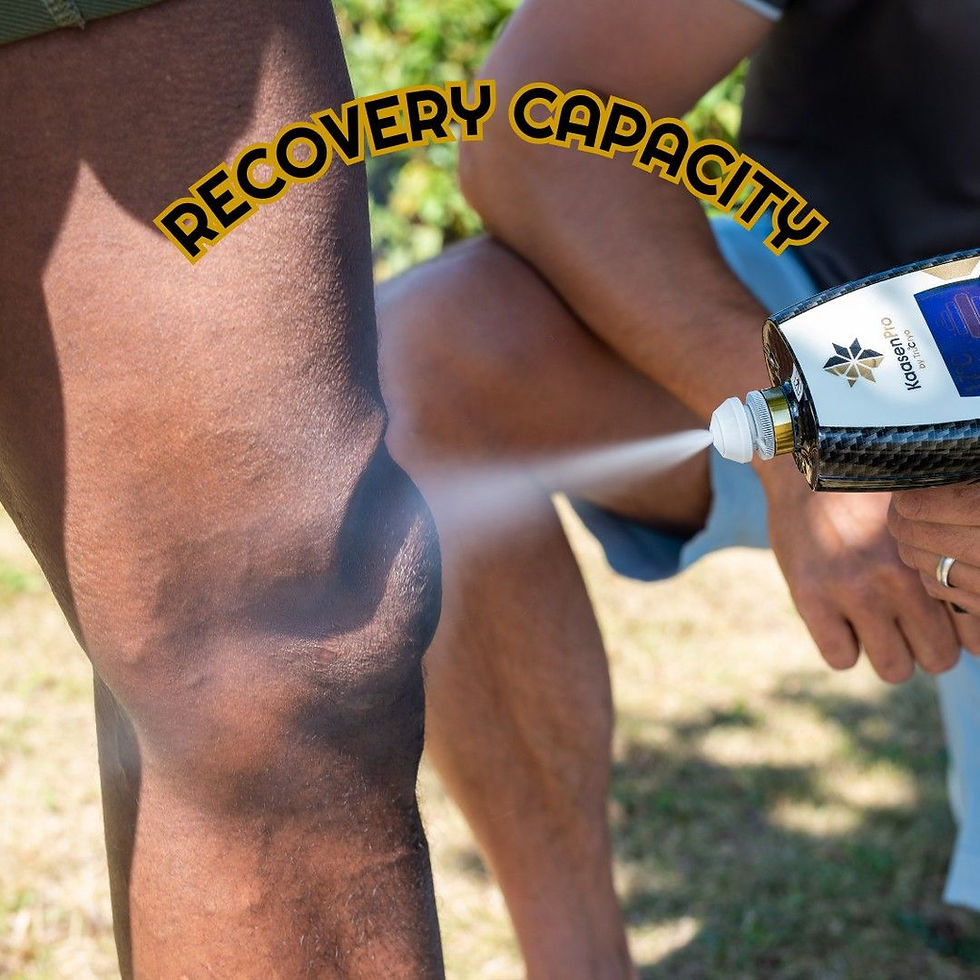
Recovery is not passive. It is an active physiological process, and one that can be measured, trained, and optimized.
What recovery capacity really means
Recovery capacity reflects how efficiently the body restores homeostasis after stress. This includes:
Autonomic nervous system balance
Hormonal regulation
Cardiovascular recovery
Muscular repair
Metabolic reset
In metabolic testing, recovery capacity indicates how quickly the system can return to baseline after exertion. Athletes with low recovery capacity may have strong VO₂ max scores but struggle to repeat quality sessions, adapt to training, or perform consistently.
The high-intensity trap
One of the most common mistakes I see, across all levels of endurance sport, is excessive high-intensity training layered on top of inadequate recovery.
Athletes chase fitness through intervals, tempo sessions, and race simulations, believing intensity alone drives improvement. In reality, adaptation occurs between sessions, not during them.
When recovery capacity is compromised, the body remains in a chronically sympathetic state. This leads to:
Elevated resting heart rate
Suppressed heart rate variability
Reduced fat oxidation
Impaired sleep
Declining breathing coordination
Over time, performance regresses despite increasing training volume.
Why VO₂ max can improve while recovery declines
A common paradox appears in metabolic testing: VO₂ max improves, yet recovery capacity deteriorates.
This happens because VO₂ max reflects maximal oxygen uptake under stress, while recovery capacity reflects how efficiently the system resets afterward. An athlete can increase peak output while simultaneously accumulating systemic fatigue.
Without adequate recovery, this creates a fragile athlete, fit on paper, inconsistent in reality.
Recovery as a performance multiplier
Elite endurance athletes do not treat recovery as an afterthought. They design it with the same precision as their training.
High recovery capacity allows athletes to:
Maintain higher training quality with less fatigue
Sustain Zone 2 adaptations
Preserve fat-burning efficiency
Improve breathing coordination
Execute race-day pacing effectively
In short, recovery determines how much training you can actually use.
Training the recovery system
Recovery capacity improves through deliberate strategies, including:
Consistent Zone 2 training to lower sympathetic load
Breathing reconditioning to enhance parasympathetic activation
Structured low-intensity days following hard sessions
Sleep optimization and circadian alignment
Metabolic conditioning that avoids chronic carbohydrate dependence
Importantly, recovery is not synonymous with doing nothing. It is about applying the right stress at the right time.
The longevity connection
From a longevity perspective, recovery capacity may be more important than VO₂ max itself. Poor recovery accelerates biological aging through chronic inflammation, hormonal disruption, and autonomic imbalance.
Athletes who recover well train longer, compete longer, and maintain performance deeper into life.
The shift that changes everything
The most successful endurance athletes are not those who tolerate the most suffering, they are those who adapt the fastest.
When athletes stop asking, “How much more can I do?” and start asking, “How well am I recovering?”, performance follows naturally.
Understanding your recovery capacity requires objective data, not guesswork.
At The Elite Hub, advanced metabolic and VO₂ max testing allows us to quantify recovery capacity, identify limiting factors, and design training strategies that maximize adaptation while protecting long-term health.
Because in endurance sport, progress is not dictated by how hard you train, but by how well you recover.
Read more from Osvaldo Cooley, PhD
Osvaldo Cooley, PhD, Dermal Clinician & Body Contouring Specialist
Dr. Osvaldo Cooley, PhD, is a leading expert in body transformation, metabolic performance, and longevity. A former athlete, his promising career was cut short by injuries that sparked a passion for understanding recovery and performance optimisation. Drawing from his personal journey and extensive research, Dr. Os developed proven techniques to help men and women transform their bodies, improve fitness, and boost long-term health. As the founder of The Elite Hub, he empowers high-performing individuals to achieve visible, lasting results through advanced diagnostics and personalised strategies.