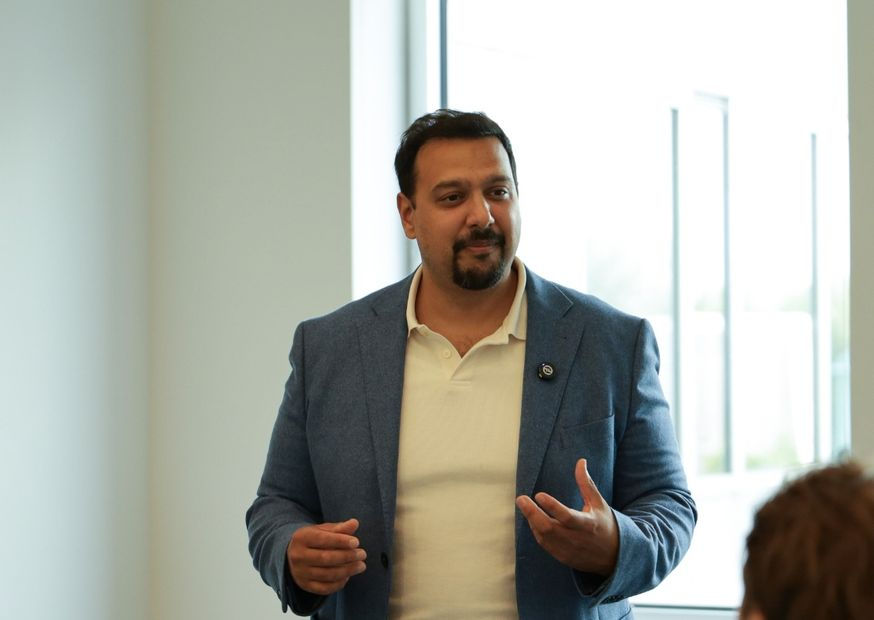
Reclaiming Your Creative Voice Through Art Therapy – Exclusive Interview with Denise Scicluna
- Brainz Magazine

- Dec 2, 2025
- 7 min read
Denise Scicluna is a London-based art psychotherapist, clinical supervisor, and creative practitioner with over ten years of experience supporting emotional wellbeing across the NHS, schools, charities, and community services. She works privately with adults, young people, and children, offering both talking therapy and creative therapy to help clients navigate trauma, anxiety, attachment difficulties, low self-esteem, and significant life transitions.

Denise Scicluna, Art Psychotherapist and Creativity Facilitator
Who is Denise Scicluna?
From a personal perspective, she is a thinker, a soul seeker, and a creative, curious human being. Always driven by a strong need to express her creativity, she was born in sunny Malta and later relocated to London, where she currently works as an art psychotherapist, clinical supervisor, and creative. She has been painting for over 20 years and is a self-taught artist. Professionally, over the past decade, she has developed a passion for helping people connect with their creativity, work through their inner critic, and tap into their creative side as a way of moving forward in life. She runs her own private practice, both online and in person, and she is currently a Transpersonal Psychology trainee, seeking to weave together creativity, spirituality, and psychology.
What made you decide to combine art therapy and mindfulness into your practice?
After several years of reading self-development and spirituality books, I began to understand mindfulness on a deeper level. As I practiced meditation and mindfulness in my personal life, I realised how closely mindfulness and art making – or the creative process – are connected. When creating any artwork, whether it’s a drawing, doodle, or painting, you naturally start to notice and connect with the “observer” within. You become aware of your thoughts, your judgments, and that familiar inner critic that always seems to find a reason not to like what you’re creating. This understanding inspired me to formally study mindfulness, and later to collaborate with mindfulness practitioners in London. Together, we developed in-person workshops where people could experience mindfulness and art making in the same space. It turned out to be a beautiful combination that helped people connect more deeply with themselves and their creative side.
How do you support busy professionals who feel stuck or overwhelmed to reconnect with themselves?
I often work with busy, overwhelmed professionals who tend to be more rational and logical, yet have a deep desire to reconnect with their playful, creative side. Using Iain McGilchrist’s left–right hemisphere theory as a guiding framework, I support them through an 8-week transformative programme where we gradually move from rigidity and stuckness toward a more open, creative way of being. Each week, we explore a theme and make art together as a group, creating a safe, non-judgemental space where all forms of expression are welcome. There’s no right or wrong.
By giving them permission to create - often for the first time since childhood - they begin to feel more confident, inspired, connected to themselves and others, and more open to weaving creativity back into their daily lives. Because so many of their judgments stem from childhood, I offer them permission to create - and that safe permission often brings about magical transformation in their lives.
What does a typical one-on-one session look like when you’re working with someone creatively?
After creating a contract and setting goals together, we meet weekly or bi-weekly. A typical session begins with a general check-in, followed by an invitation to explore an ongoing theme or feeling through art making. Once people start creating, their guard often softens, and they begin opening up about what’s coming up for them: emotions, thoughts, memories. Throughout the process, I guide them with questions connected to their goals and therapeutic journey. Toward the end of the session, using a Jungian-inspired tool called ‘Active Imagination,’ we look at the artwork together and explore what surprised them, what they noticed, and what the process brought to the surface. My role is to help bring the unconscious into conscious awareness, and the art making becomes a powerful part of that unfolding.
Can you share a breakthrough moment you’ve seen a client experience through your “Transitional Space” online programme?
One participant joined the programme while working as an estate agent and described his life as boring and uncreative. In the past, he had loved producing music and writing, but he felt completely disconnected from that part of himself. His goal was simple but meaningful - to bring creativity back into his life after years of feeling it had disappeared. Through The Transitional Space, he began to visualise new possibilities and solutions to the problems that had been keeping him stuck. After just a few sessions, he noticed real shifts. Week by week, he started to integrate parts of himself in ways that created a strong, positive momentum. His life changed dramatically: he left his real estate job, ended a relationship that wasn’t supporting his growth, and finally felt reconnected to his right-brain, creative energy. He soon dived deep into creating music and loved every moment. Coming full circle, he asked me to paint and design an album cover for his songs, which I happily did! It was the best collaboration ever!
What types of challenges do you most often help people overcome using art-therapy?
People usually reach out because they’re feeling a sense of meaninglessness, a lack of purpose, or a general disconnection from themselves. Many are overwhelmed, caught in overthinking, or stuck in patterns of self-criticism. I also support people navigating anxiety, low mood, trauma, and major life transitions.
Why do you believe creativity is such a powerful route to healing and transformation?
As humans, we’re great with words - but there comes a point where words alone don’t reach the deeper layers of our wounds, emotions, and traumatic experiences. Talking can only take us so far. Emotional memories and trauma often live in the right hemisphere of the brain, which is also home to imagination, creativity, and emotional intelligence. When we engage in creativity - whether it’s art, music, movement, dance, or writing - we access those deeper places within us. With the safety and guidance of a therapist, hidden emotions and experiences can begin to surface in a gentle, natural way. I think we’re increasingly recognising the importance of somatic and creative approaches alongside talking therapy. The beauty of art therapy is that it brings both together: the making and the meaning. It helps people integrate insight, expression, and healing in a way that words alone often can’t.
How would you describe the unique value you bring as an art-psychotherapist and abstract painter combined?
Unlike many art therapists, I didn’t come from a formal art background - my academic roots are in psychology. But painting since the age of 16 and nurturing a practice for over 20 years has given me a deep, lived understanding of the creative process. My art has always been connected to self-exploration and personal growth rather than technical mastery or developing a specific artistic skill. As a self-taught artist, painting became a grounding, healing, and exploratory tool throughout my life. It was my safe space - something I could always return to at any point. I now weave these personal experiences together with psychodynamic and Jungian theory in my work as an art therapist, offering a blend of clinical understanding and authentic creative insight.
For someone who’s never tried creative therapy before, what would you say to them about what they’ll gain?
They’ll gain a completely new experience of feeling more creative and playful in their life – something many of us gradually lose in the busyness of adulthood. I think it’s so important not to let that part slip away. Alongside that, they’ll gain deeper insight and understanding of themselves and their life, supported by the creative connection that naturally unfolds through the process. Also, I want everyone to understand that you don’t need to study art to be creative!
What’s your process when creating a bespoke commission piece, and how does that reflect the therapeutic side of your work?
When I paint, I never fully know what the final outcome will be. In life, we make plans, but things rarely unfold exactly as we imagine - and the creative process mirrors this beautifully. Staying with the unknown, trusting the unfolding, and allowing the process to guide me are core parts of how I create. These are also the same skills I encourage in my therapeutic work. There’s so much wisdom in the creative process: learning to be present, letting go of control, and discovering what emerges when you give yourself permission to explore. It’s something I wish everyone could experience!
How do you integrate mindfulness and trauma-informed approaches in your creative workshops and supervision?
I feel that mindfulness and trauma-informed practice go hand in hand, and they complement each other beautifully in all areas of my work - whether I’m with clients, offering supervision, or running workshops and programmes. Mindfulness helps people connect with the inner observer – the part of them that can notice, pause, and bring compassion to whatever they’re feeling or experiencing. A trauma-informed approach adds another layer of awareness: it asks us to consider what someone might have lived through, and to attune to their needs with sensitivity, care, and choice. Together, these two approaches create a grounded, safe, and supportive container for creative exploration.
What next step should someone take if they feel ready to reclaim their creativity, reconnect with purpose, and work with you?
They can choose to work with me 1:1 (either online or in person), or join my creative and transformational 8-week group programme, The Transitional Space, returning in March 2026. I offer Discovery Calls for both options, so booking one of those would be the best next step for anyone who feels ready to explore this journey.
Read more from Denise Scicluna