

Reclaiming the Place Where Trauma Happened and How My Mother's Home Became My Sanctuary of Healing
Emily Ross, LMHC‑S, is a trauma specialist, clinical consultant, and speaker with 20 years in community mental health. She has presented trauma‑focused research at national symposiums and is a sought‑after speaker and facilitator on burnout, trauma recovery, and community mental health.

Can a place associated with unimaginable trauma ever become a place of healing? In 2012, my mother died in the home I am now transforming into a sanctuary. For thirteen years, my family lived with the understanding that she had died by suicide. Then, in 2025, a handwritten letter left behind by my stepfather changed everything. The letter indicated that he was responsible for her death. By the time I discovered it, he had already passed away, leaving me his estate, including the very property where my mother's life ended.
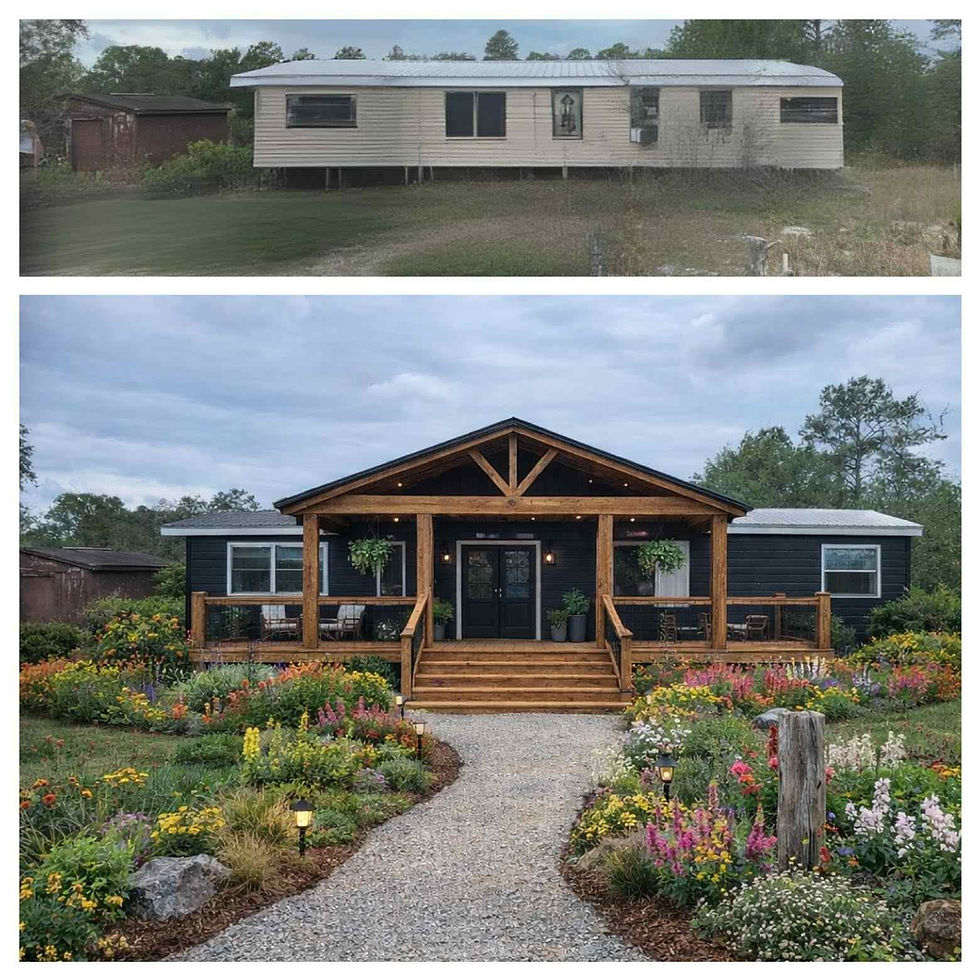
There is something profoundly unsettling about inheriting the place where your mother died, particularly when everything you believed about her death has been called into question. As a trauma therapist with more than two decades of clinical experience, I have helped countless individuals navigate traumatic grief, betrayal, and the long-lasting effects of psychological trauma. Yet nothing in my professional training could have fully prepared me for standing inside my mother's home, carrying a devastating new understanding of her death.
And then came a question I never imagined I would have to answer: What do you do when the place that holds your deepest grief becomes your responsibility to care for?
For me, the answer began with a decision. I would not allow what happened here to be the only story this land would ever tell.
Can a place associated with trauma become a place of healing?
A home is more than walls, windows, and a roof. It holds memories, relationships, sensory experiences, and the everyday rituals through which we develop our sense of belonging. When trauma occurs in a familiar environment, the nervous system may begin associating particular rooms, sounds, smells, or surroundings with danger. Years later, these reminders can activate physiological stress responses even when the original threat is no longer present.
This is one reason returning to a place associated with trauma can be extraordinarily complicated. For me, this Florida homestead represents a painful contradiction. It is connected to my mother's death, years of unanswered questions, and a betrayal that fundamentally changed my understanding of our family's history. Yet it is also connected to childhood memories, the natural world, and the possibility of creating something entirely different.
I cannot tell you that I have resolved every emotion surrounding this inheritance. I can tell you that I am choosing what happens here next. That distinction matters. Trauma recovery is not always about changing how we feel about what happened. Sometimes, it begins with reclaiming our ability to choose what happens next. Learn more about unlocking your innate ability to heal trauma.
Why do betrayal and delayed truth complicate traumatic grief?
Grief is complicated enough when we understand the circumstances surrounding a loved one's death. But what happens when the story you have carried for thirteen years is suddenly challenged? Learning new information about a traumatic loss can disrupt the assumptions through which we have understood our relationships, memories, and even ourselves.
For me, there is the grief of losing my mother. There is the grief of discovering that the explanation we had accepted may not have been true. There is the painful reevaluation of relationships and events that once seemed settled.
Betrayal trauma can be especially destabilizing because it affects the very relationships through which people ordinarily seek safety, trust, and belonging. Anger, confusion, sadness, disbelief, and renewed questions about the past may emerge as we attempt to integrate information that changes the meaning of earlier experiences. These responses are not necessarily evidence that someone has failed to heal. They may reflect the extraordinary psychological work of trying to understand a loss that no longer fits the story we believed. Sometimes, healing must begin before all the questions have answers.
Can you heal without forgiving what happened?
Yes. As a trauma therapist, I believe this is one of the most important messages survivors deserve to hear. Forgiveness is not a prerequisite for trauma recovery. Neither is reconciliation.
Reclaiming this homestead does not mean excusing what happened to my mother, minimizing her death, or abandoning my need for truth and accountability. It means refusing to allow the violence associated with this property to determine every future experience I have here. There is a profound difference between accepting that something happened and deciding that it was acceptable.
I can hold grief and gratitude in the same body. I can experience anger while planting flowers. I can honor my mother's life without allowing the circumstances of her death to define my own. I can seek peace without pretending that justice no longer matters.
Healing is not an obligation to make tragedy beautiful. It is the opportunity to build a meaningful life while telling the truth about what happened.
Reclaiming the land, one small decision at a time
There is an old live oak on this property that I associate with my mother. Its roots stretch into the same earth that holds so much of our family's history. I have come to regard it as a guardian of sorts. Not because I believe a tree can undo what happened, but because its continued existence reminds me that life can endure tremendous change.
The land has its own rhythms. Plants grow, die back, and return. Storms rearrange the landscape. Fallen leaves become nourishment for new growth. Nature does not insist that healing be linear. Neither should we.
Through Root & Ramble®, I am slowly transforming this homestead into a place of intentional living, connection, and restoration. I plant gardens. I care for animals. I walk beneath the trees. I create spaces where laughter, friendship, and quiet moments can exist alongside remembrance. I am not erasing the history of this place. I am allowing another chapter to grow beside it.
The story does not end where the trauma happened
My mother was more than the circumstances of her death. She had a life, a personality, relationships, experiences, and a story that deserves to be remembered beyond its ending. As I restore this homestead, I want to honor her humanity rather than allow the violence of her death to become her defining legacy.
Perhaps that is what reclaiming a place of trauma means to me. Not pretending the darkness never existed. Not demanding that grief disappear. But refusing to surrender every possibility of beauty, belonging, and peace to what happened here.
I cannot change my mother's death. I cannot recover the thirteen years we spent believing a different story. But I can decide what grows from this land now. I am discovering that sometimes the most meaningful act of reclamation begins with something as ordinary as planting a seed.
Coming next: From trauma to sanctuary
In Part Two, I explore how I am using nature connection, embodied healing, nervous system awareness, and meaningful rituals to transform this property into a sanctuary. I also share practical, trauma-informed ways you can begin reclaiming your own environment, whether you have an entire homestead or simply a quiet corner of a room. Because you do not need acres of land to begin creating a place where you can feel safe enough to grow.
The land is changing. I am changing. Our story is still being written. Root & Ramble® – Where chickens roam, gardens grow, and healing happens.
Come grow with me. Follow Root & Ramble® on Facebook for the next chapter of this journey and conversations about traumatic grief, resilience, and nature-connected healing.
Read more from Emily Ross
Emily Ross, Certified Clinical Trauma Provider
Emily Ross, LPC‑S, is a trauma specialist and educator who embodies post‑traumatic growth by reclaiming the farm where her mother was murdered, transforming generational trauma into a regenerative homestead producing natural healing remedies and publishing self‑paced trauma recovery classes on embodied healing.







