Real-Estate Investor Nick Houwen Reveals the Cost of Living in the Algarve
Northern European families relocating to Portugal's southern coast face monthly living expenses between €3,000 and €3,700, depending on schooling choices and lifestyle preferences. These figures include housing, utilities, food, transportation, and healthcare, coming in substantially below comparable costs in Amsterdam, Brussels, or Munich, where similar households often exceed €4,500 monthly.
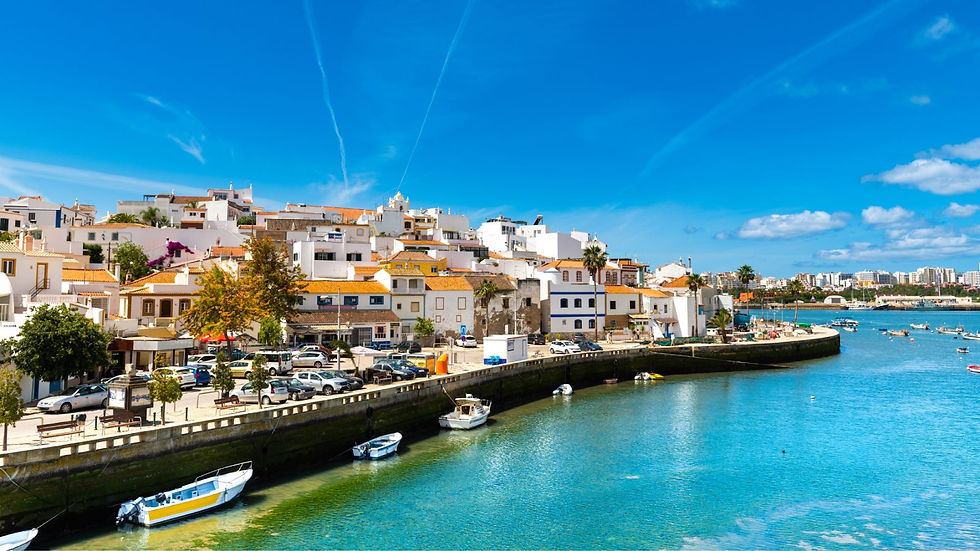
Nick Houwen, co-founder of Casa Vista Real Estate LDA and resident of the Algarve, breaks down what prospective buyers should budget when considering permanent relocation to Portugal's most popular coastal region.
What does monthly living cost in the Algarve?
Housing costs dominate monthly expenses for most expatriate families. Rental prices for two-bedroom apartments in coastal towns like Lagos, Ferragudo, or Tavira average €1,200 monthly. Three-bedroom properties closer to international schools or premium locations command €1,800 to €2,500. Homeowners with mortgages typically spend €800 to €1,200 per month, building equity while incurring lower outlays than renters.
Utility expenses run significantly lower than northern European averages. Electricity, water, and internet combined typically cost €150-€250 per month for a family home. Portugal's moderate climate reduces heating and cooling requirements. Solar panel installations, increasingly common in new construction, further reduce energy bills.
Grocery costs for a family of four range from €400 to €600 per month. Local supermarkets like Pingo Doce, Continente, and Lidl offer competitive pricing. Fresh produce from municipal markets costs considerably less than prepared imports.
Transportation expenses vary based on lifestyle. Fuel costs approximately €1.70 per liter. Monthly vehicle insurance ranges from €40 to €80. Families relying on personal vehicles budget €300-€400 per month for fuel, maintenance, and insurance combined.
Healthcare access through Portugal's National Health Service (SNS) provides affordable basic coverage. Private health insurance, preferred by most expatriates for English-language services and reduced wait times, costs €50-€150 per person per month. Family plans through companies like Médis or Advancecare typically range from €200 to €400.
Education costs driving budget variations
Nick Houwen notes that education expenses often determine whether families fall into the €3,000 or €3,700 monthly budget range.
Portuguese public schools offer free education but require proficiency in Portuguese. International schools providing British or American curricula charge annual tuition:
Primary education: €8,000 to €12,000 annually
Secondary education: €12,000 to €18,000 annually
Additional fees for activities and materials: €1,000 to €2,000 annually
Families with two children in international schools add approximately €1,500-€2,500 per month when annualized. Portuguese private schools charging lower fees (€3,000 to €6,000 annually) offer middle-ground options with a Portuguese curriculum and some English instruction.
How Algarve living compares to northern European costs
Restaurant dining costs 40-50% less than in comparable northern European cities. A family dinner at a mid-range Portuguese restaurant runs €50 to €70 compared to €100-plus in Amsterdam or Brussels. Coffee averages €0.80 to €1.20 versus €3.00-plus in Scandinavian countries.
Property acquisition costs favor the Algarve significantly. Average asking prices reached €4,385 per square meter according to Confidencial Imobiliário, though substantial variation exists between coastal premium locations and inland municipalities. Comparable coastal properties in the Netherlands, Belgium, or Germany command €6,000 to €10,000 per square meter.
Nick Houwen observes that Dutch and Belgian families relocating to the Algarve frequently purchase larger homes than they owned previously while spending similar or lower amounts. "A family selling a 120-square-meter apartment in Amsterdam for €500,000 can acquire a 200-square-meter villa with pool and garden in Ferragudo for the same price," he explains.
Vehicle costs provide another advantage. Portugal maintains lower vehicle taxation than most northern European countries. Used car prices run 20-30% below German or Dutch equivalents.
What are the one-time costs of relocating?
Families budget €8,000 to €16,000 for initial relocation beyond property purchase. Major one-time costs include:
Relocation and shipping household goods: €2,000 to €5,000
Residency paperwork including D7 visa and NIF tax number: €500 to €1,000
Property purchase transaction taxes and fees: 6-8% of property value
Initial furnishing and home setup: €5,000 to €10,000
Property transaction costs deserve particular attention. Portugal charges Imposto Municipal sobre Transmissões (IMT), a property transfer tax on a sliding scale. Properties under €92,407 face minimal taxation, while those exceeding €1,000,000 incur 6% on the full value. Notary, registration, and legal fees add 1-2%.
Tax considerations affecting net income
Portugal's tax framework significantly impacts the effective cost of living. The country introduced a revised tax regime replacing the Non-Habitual Resident program in early 2025. The new framework targets highly skilled professionals, scientists, and investors with preferential tax treatment on specific income categories.
Portuguese residents face progressive income tax rates reaching 48% on earnings above €81,199 annually. Social security contributions add 11% for employees. Qualifying professionals under the new incentive program have access to reduced rates on eligible income.
Capital gains from property sales are taxed at 28% for residents, though primary residence sales are exempt if proceeds are reinvested in Portuguese property within specific timeframes. Rental income is subject to a 28% withholding for non-residents or to integration into progressive income rates for residents.
Nick Houwen advises prospective buyers to consult Portuguese tax specialists before relocating. "Tax planning should happen before establishing residency, not afterward," he states.
What hidden expenses surprise new residents?
Annual property tax (IMI) ranges from 0.3% to 0.8% of fiscal property value, typically amounting to €300 to €800 annually for family homes. Condominium fees for apartment buildings or managed communities range from €50 to €200 per month.
Home insurance runs €200 to €500 annually for comprehensive coverage. Coastal properties face higher premiums due to weather exposure.
Vehicle inspection costs €30-€50 annually. Road tax based on engine size ranges from €20 to €200 annually for family vehicles.
Veterinary care exceeds northern European costs for some services. Annual vaccinations and checkups cost €80 to €150 per pet.
Rental income potential offsetting costs
Algarve tourism continues expanding, with regional growth projected for 2025. Families purchasing larger properties than needed often generate rental income during unused periods.
Gross rental yields average 4.57% across Portugal according to Global Property Guide research. Properties licensed for short-term rental (Alojamento Local) generate higher returns than long-term leases but require active management or property management services costing 15-25% of rental income.
Long-term rental demand has surged among professionals and families seeking Algarve residency before purchasing property. Premium rentals command monthly rates exceeding €3,000 in high-demand areas.
When does buying make more sense than renting?
Nick Houwen calculates that purchasing becomes financially advantageous after approximately 18-24 months for families planning long-term Algarve living. Monthly rental costs of €1,200 amount to €28,800 over two years without building equity. Mortgage payments of €900 monthly cost €21,600 over the same period while building an ownership stake.
Property appreciation adds to ownership advantages. Algarve real estate prices increased 15.3% during 2024, according to regional market data, substantially outperforming broader Portuguese market growth of 4.2%. Coastal properties in premium municipalities experienced even stronger appreciation.
Transaction costs and initial furnishing expenses create a break-even threshold requiring 18-24 months to overcome. Families confident in a longer-term commitment to the Algarve benefit from making purchase decisions earlier.
Portuguese banks rarely extend mortgages to foreign nationals without established Portuguese income. Most northern European buyers complete cash transactions, requiring available liquidity.
Practical cost management strategies
Successful Algarve residents optimize living costs through strategic choices. Shopping at municipal markets for fresh produce rather than supermarkets reduces grocery expenses 20-30%. Markets in Loulé, Olhão, and Lagos offer exceptional quality at competitive pricing.
Dining at Portuguese restaurants rather than tourist-oriented establishments significantly reduces meal costs. Neighborhood tascas charge €8-€12 for daily lunch menus, including soup, main course, dessert, and beverage.
Portuguese mobile phone plans cost €20-€30 monthly for unlimited data compared to €40-€60 in the Netherlands or Germany.
Entertainment and leisure activities cost significantly less. Golf green fees, tennis court rentals, and marina services run 30-40% below northern European rates. Annual gym memberships average €300-€500 compared to €600-€1,000 in major Dutch or Belgian cities.