Michael Pisseri – Process, Purpose, and School Turnarounds
Updated: Mar 2
What does it take to turn around a struggling school? For Michael Pisseri, the answer is not hype. It is a process. It is patience. And it is belief. Over a career that spans classroom teaching, school leadership and national STEM presentations, Pisseri has built a reputation for bringing big ideas to life in practical ways. His focus has always been simple, improve outcomes for students while building a strong culture around them. “I don’t give up. I don’t quit,” he says. “I believe that I can get better every day and learn from anyone.”
Early life and education: Where discipline began
Pisseri grew up in Eastchester, New York. He is the oldest of four children. His father worked as a pharmacist in the Bronx for 50 years. His mother was a nurse.
He attended public schools his whole life. He still speaks about that with pride. At 14, he took his first job at Grand Union grocery store. In high school, he balanced sports with a 20-hour work week. He was one of only ten students selected for the National Honor Society. He was the only child in his family to earn that honour.
“That meant a lot,” he says. “My parents raised me to be honest, hard working and independent.” Years later, his own son would earn National Honor Society recognition. They took a photo holding their awards side by side. It is one of his favourite pictures.
That early discipline shaped how he approaches leadership today.
How Michael Pisseri built a career in education
Pisseri earned a BA and a Master’s degree from Fairfield University. He later completed a Certificate of Advanced Study in Leadership at Sacred Heart University. As an undergraduate, he served as a student senator.
His early years in the classroom built his foundation. In 2006, he was named a Teacher of the Year finalist in Westport Public Schools.
“I define success as living in alignment with your values while continuing to grow,” he says. “Not just achieving outcomes, but becoming someone you respect along the way.”
That mindset would guide his biggest leadership challenge.
Helping to turn around davenport ridge elementary school
Pisseri became Principal of Davenport Ridge Elementary School at a difficult time. The school was one of the lower performing in the city of Stamford. It had had three principals in five years and there had been a lot of turn over both with staff and families.
The goal was not a quick fix. It was long-term change in the belief that progress takes time and effort.
“The process that leads to the outcome is the most important,” he explains. “That is where you recognise the existing hard work and dedication of staff, build a team, set up a plan, fail, learn from it, refine and then achieve success.”
He focused first on the school climate. Trust. Consistency. Clear expectations. He helped to organise a grant with staff for professional development on PBIS(Positive Behavioral Interventions and Supports). He helped to organize a committee to investigate ways to improve school climate for students, staff and parents. This was not easy work, it took time, refinement, listening, trial and error. It was extremely rewarding work as staff created clear expectations for students that were grounded in SOAR – Safety First, Outstanding Effort, Accept Responsibility and Respect for All.
In 2016, the school received a Banner School Award for positive climate. In 2019, it was named a Connecticut School of Distinction for academic performance.
The turnaround took seven years.
“Never give up,” he says. “Belief that you can get better every day. It has to be ingrained in you.”
Why STEM and NASA matter in education leadership
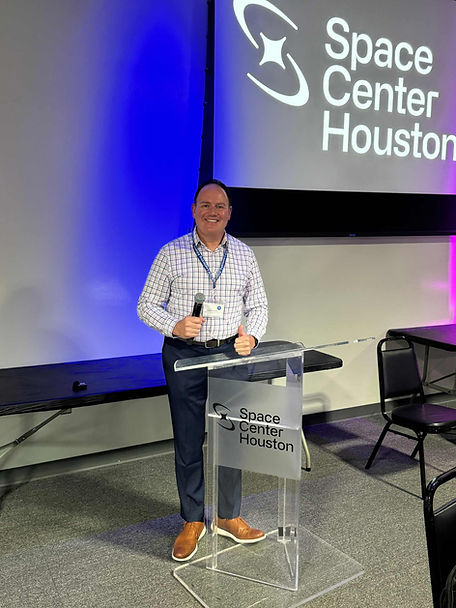
In 2024, Pisseri presented at a National STEM Conference at NASA’s Johnson Space Center in Houston.
For someone passionate about space and research, it was a milestone.
But for him, STEM is bigger than science labs.
“STEM teaches students how to think, collaborate and work together,” he says. “Curiosity and problem solving apply to everything.”
He believes schools must prepare students not only for exams, but for a world shaped by technology, climate challenges and innovation. That means building resilience and adaptability early.
His interest in the environment and research is not abstract. It is practical. He sees STEM as a tool to expand opportunity.
Returning to the classroom in New York City
Today, Pisseri serves as a Social Studies and Intervention Teacher in New York City Public Schools. Some might see that as a step back from administration. He does not.
“I have learned something everywhere I have worked,” he says. “The classroom keeps you grounded. It helps you to respect the work of educators more and work with students more closely. Students have changed since I started in education over 20 years ago. They are smarter ad can demonstrate that in a variety of ways. It’s easy to lose touch with that when you are not in the classroom. It was exciting to make the leap into the classroom to continue to grow as an educator and person. It’s been great to reconnect with students on their level and interests.”
Intervention work allows him to work closely with students who need extra support. It is direct impact. It is daily progress.
He also continues to advise student councils, encouraging leadership and responsibility in young people.
“Be a good listener. Be authentic. Be someone people trust and keep moving forward. At the same time, think about your community on both a local and global perspective.”
Leadership elssons: Direction over goals
One of Pisseri’s core ideas is simple but powerful. Start with direction, not goals.
“Before setting goals, I define guiding values,” he explains. “What do I want more of? Growth. Connection. Impact. What do I want less of? Burnout. Chaos.”
This approach has shaped both his professional and personal life.
Two years ago, he ran half marathons in Brooklyn and Fairfield. Training required patience and steady effort. The lesson was familiar.
“You build endurance mile by mile,” he says.
At home, he is a proud father of two student-athlete sons who are both starting baseball pitchers. His oldest was recently named captain as a junior at Mount St Mary’s College.
Balance, he says, is about alignment.
“Professional success should support the life you want, not compete with it.”
The big idea: Success through alignment and persistence
Across his career, one theme stands out. Big results come from steady systems.
From a grocery store job at 14. To National Honor Society. To leading a school turnaround. To presenting at NASA. To teaching in New York City classrooms.
Each step builds on the last.
Success, in his words, is not loud.
“It is living in alignment with your values while continuing to grow.”
For Michael Pisseri, the big idea is simple. Build the right process. Stay patient. Never quit.
And keep moving forward.