

Menopause Care Meets AI in This Interview with Dr. Abduljabar Hamza
Dr. Abduljabar Hamza (MD, ChM) is a London-based NHS surgical registrar and deep-tech healthcare entrepreneur operating at the intersection of frontline medicine and artificial intelligence. Holding a Master of Surgery with distinction from the University of Edinburgh and a Postgraduate Certificate in Medical Education from the University of Warwick, he applies a first-principles approach to solving complex clinical bottlenecks.
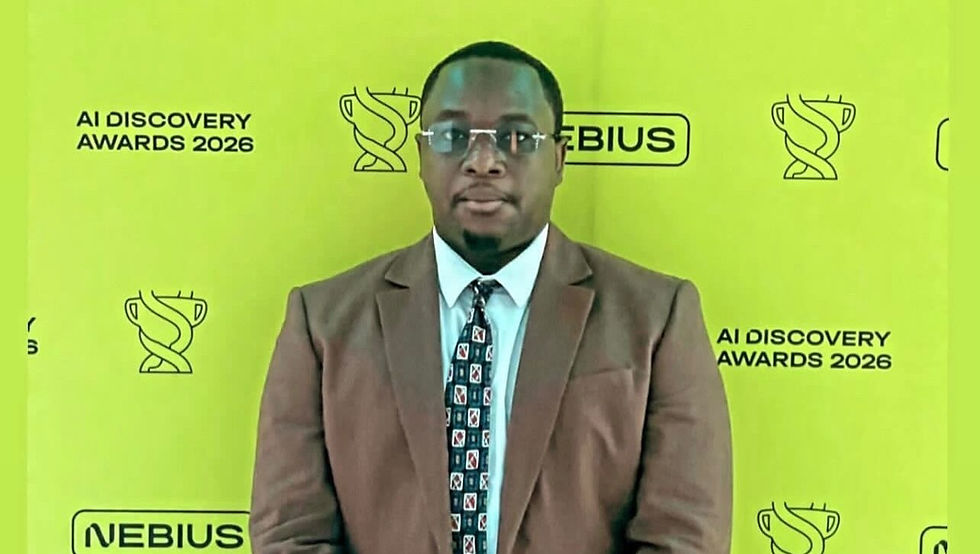
Dr. Abduljabar Hamza, Founder and CEO of AI MedTech Ltd
What inspired you to move beyond your clinical work as a UK doctor and start developing AI solutions through AI MedTech?
Working on the front lines of clinical medicine gives you an unfiltered view of where healthcare systems excel, and where patients quietly fall through the cracks. Every day, I saw patients arriving late in their health journeys, frustrated after months of fragmented appointments, conflicting online advice, and trial-and-error self-care.
I realized that while medicine has extraordinary diagnostic and therapeutic capabilities, the "front door" to care, how everyday people make sense of early symptoms and find the right clinical or wellness support, was broken. One clinician can help one patient at a time, but thoughtfully engineered technology can scale clinical clarity to millions. That realization led me to found AI MedTech Ltd in London. Our mission is to build physician-designed AI infrastructure, backed by ecosystems like NVIDIA Inception, to turn symptom confusion into safe, structured, and immediate navigation.
What challenges in everyday clinical practice convinced you that patient navigation needed a different approach?
Three recurring bottlenecks stood out in daily clinical practice: fragmented symptom assessment, delayed triage, and information overload. Patients rarely present with a single textbook symptom; they experience overlapping physical, cognitive, and lifestyle changes that span multiple specialties. Yet most digital tools treat symptoms in isolation or rely on generic marketing quizzes designed to sell products rather than protect health.
At the same time, clinicians face severe time pressure, meaning patients often enter consultations unprepared or directed to the wrong service entirely. I became convinced that patient navigation needed a standardized clinical bridge, one built on international medical ontologies like SNOMED CT and HL7 FHIR rather than guesswork. With MedBridge and MenoBridge, we set out to structure patient-reported symptoms at the very first touchpoint so people reach the right care pathway faster and safer.
How does MenoBridge aim to help women make sense of menopause symptoms and find the right medical support?
MenoBridge acts as a physician-built AI clinical navigation layer designed specifically for perimenopause and menopause. Instead of forcing women to decode dozens of disconnected symptoms on their own, from 3:00 AM insomnia and brain fog to vasomotor shifts, joint stiffness, and mood changes, MenoBridge guides them through an intuitive, 60-second clinical assessment.
Behind the scenes, our engine clusters multi-systemic symptoms and maps them against standardized SNOMED CT clinical terminology. Depending on symptom severity and clinical profile, MenoBridge routes each woman to the most appropriate next step: connecting her directly with specialist menopause clinicians when medical evaluation or hormone therapy discussion is warranted, or matching her with evidence-aligned nutritional, sleep, and wellness protocols when supportive self-care is appropriate. It replaces months of expensive trial-and-error with clear, personalized, and medically grounded direction, wherever in the world she is located.
Where do you see the biggest gaps in menopause care today, particularly when it comes to early guidance and access to treatment?
The biggest gap in menopause care is the chasm between early symptom onset and structured clinical support. Perimenopause often begins years before a woman’s final period, presenting with subtle cognitive, sleep, or metabolic shifts that are frequently misattributed to stress, burnout, or ageing. Because early guidance is scarce, women either suffer in silence or turn to an unregulated wellness market saturated with unverified supplement claims.
Access to specialist care is equally uneven. Long wait times, inconsistent clinician training in midlife hormone health, and geographic barriers leave millions without timely, evidence-based options. Even when women do secure an appointment, they often struggle to articulate months of fluctuating symptoms within a brief consultation. Bridging that early navigation gap, giving women accurate, structured insight from day one, is essential to closing the global women’s midlife health divide.
What needs to change before AI-powered clinical navigation can become a trusted part of everyday healthcare?
For AI-powered clinical navigation to earn lasting trust from both patients and clinicians, the industry must move away from "black-box" consumer chatbots and prioritize three non-negotiables: clinical standardization, deterministic safety guardrails, and uncompromising data privacy.
First, AI tools must speak the language of medicine. Mapping inputs to established clinical frameworks like SNOMED CT and HL7 FHIR ensures outputs are transparent, auditable, and genuinely useful to healthcare providers. Second, consumer-facing AI must know its limits, incorporating hard-coded clinical red-flag gating that immediately escalates high-risk symptoms to a doctor rather than offering algorithmic reassurance. Finally, patients will not trust digital health tools if their most sensitive health data is harvested for ad targeting. At AI MedTech Ltd, we isolate all sensitive health inputs inside encrypted UK/EU GDPR and HIPAA-ready enclaves, proving that clinical intelligence and strict privacy can scale together.
What would a woman's experience with MenoBridge look like, from recognising her symptoms to preparing for a medical consultation?
Imagine a woman in her mid-forties noticing disrupted sleep, afternoon brain fog, palpitations, and sudden anxiety, unsure whether she is experiencing burnout, a thyroid issue, or perimenopause. When she opens MenoBridge, she completes a calm, structured 60-second intake designed by doctors rather than marketers.
Within seconds, MenoBridge organizes her overlapping experiences into a clear, multi-systemic symptom profile. If she reports any clinical red flags, such as abnormal bleeding or concerning cardiovascular symptoms, the platform immediately prioritizes medical review. Otherwise, she receives an accessible breakdown of what her symptom cluster means, tailored lifestyle and evidence-aligned wellness guidance, and direct routing to specialist menopause clinicians if she wants medical treatment. Crucially, she walks away with structured, clinically coherent language that transforms a rushed ten-minute doctor’s visit into a focused, empowered conversation.
What safeguards are essential when using AI to guide patients through sensitive health concerns?
When guiding individuals through sensitive health concerns, safety cannot be an afterthought, it must be engineered into the core architecture. The most critical safeguard is automated red-flag safety gating. AI should never mask symptoms that require urgent or specialist medical evaluation. In MenoBridge, specific high-risk clinical markers automatically override wellness or retail routing and direct the user toward qualified clinical care.
Second, scope clarity is essential: digital navigation tools must clearly communicate that they provide clinical stratification and educational routing, not a formal medical diagnosis. Third, data isolation and minimization protect user dignity. By keeping sensitive symptom data locked inside an encrypted, compliant enclave, completely separated from third-party commercial storefronts or advertising trackers, users can explore intimate midlife and health concerns safely without fear of their medical profile being exposed or monetized.
How has your clinical background shaped your philosophy on balancing technological innovation with patient safety?
Clinical practice teaches you a foundational rule very quickly: primum non nocere, first, do no harm. In hospital medicine, high-stakes decisions rely on structured checklists, clear escalation protocols, and knowing exactly when to ask for specialist input. Innovation in healthcare only succeeds when it respects those same principles.
While Silicon Valley culture often celebrates moving fast and breaking things, breaking things in healthcare carries real human consequences. My clinical background shaped AI MedTech Ltd’s philosophy of "safe velocity." We move fast in engineering user-friendly global interfaces and integrating with modern ecosystems like SHOPLINE, NVIDIA Inception while keeping our clinical logic deterministic, evidence-aligned, and strictly governed. True innovation isn't about bypassing medical rigor, it’s about embedding clinical safety seamlessly into everyday digital experiences.
What is the most important change you hope AI MedTech will bring to the way people access and navigate healthcare?
My vision is for AI MedTech Ltd, through MenoBridge and our broader clinical triage engine, MedBridge, to become the trusted "Intel Inside" clinical navigation layer across global healthcare and consumer wellness.
Today, the burden of navigating complex healthcare systems and an overwhelming wellness market falls almost entirely on the individual. People waste valuable time, money, and emotional energy guessing what their symptoms mean and where to turn. I hope we change that dynamic permanently, so that anyone, anywhere in the world, can access physician-built clinical clarity at the exact moment a health concern arises. Whether someone needs specialist medical intervention or targeted everyday wellness support, our goal is to turn confusion into confidence, eliminate guesswork, and make safe, personalized healthcare navigation universally accessible.
Visit my website for more info!
Read more from Dr. Abduljabar Hamza







