Is Applied Neurology a New Trend or a Valuable Approach in Rehabilitation and Performance Enhancement?
Updated: 4 days ago
Written by Kate Galustyan, Personal Trainer
Kate Galustyan is known for her work in posture restoration, movement correction, and pain management. Through her in-person and online coaching, she helps people build stronger body awareness, resilience, and long-term physical performance.

When we buy a car or a computer, it usually comes with a manual explaining how to operate it, maintain it, and get the most out of its capabilities. Yet, at birth, we are given the most sophisticated machinery imaginable, our own body, and sent into the world without an instruction manual.
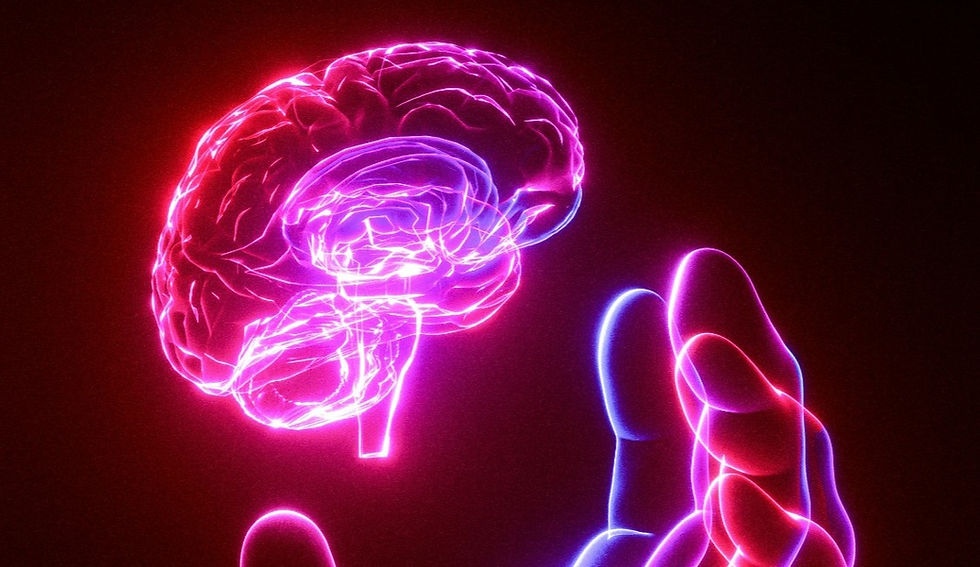
We are expected to figure it out as we go.
I became a personal trainer because I wanted to help people understand how to move better, become stronger, and achieve their physical goals. I believed that by teaching people proper movement, improving strength, and developing better biomechanics, I could help them get the most out of their bodies.
But over the years of training clients, I began noticing something that didn't quite fit that picture.
So many people struggled simply to feel or control their own bodies. Some couldn't activate certain muscles, no matter how many repetitions they performed. Others had difficulty coordinating movements that seemed relatively simple. And then there were those who constantly battled nagging pains that just wouldn't go away.
Many had already spent months, sometimes years, going through physical therapy. Some experienced temporary relief, only to have the same pain return as soon as they resumed exercising. Others seemed to hit a plateau, unable to progress despite consistent effort and dedication.
It kept me wondering: Why?
Why would someone work so hard to strengthen a muscle, improve mobility, or correct a movement pattern and still struggle with the same problem? Why would pain return even after what appeared to be successful rehabilitation? And why could two people perform the same exercises, follow the same program, and experience completely different results?
Determined to find answers, I took several courses in biomechanics to deepen my understanding of how the human body is structured and how movement is produced. I learned more about the relationships between muscles, joints, connective tissues, and mechanical forces. This knowledge certainly helped, but I still felt that something was missing.
It wasn't until I began studying applied neurology that many of the pieces of the puzzle finally started coming together.
I began to understand that the body is not simply a combination of bones, muscles, ligaments, and joints. It is an incredibly sophisticated system, constantly receiving information from the environment and from within itself, processing that information, and coordinating appropriate responses.
Every movement we make is influenced by the brain and nervous system. Our vision, vestibular system (inner ear), proprioception (our sense of body position and movement), and other sensory systems continuously provide information that helps the brain organize movement, regulate muscle activity, maintain balance, and adapt to changing demands.
Suddenly, I had a different perspective on the people I had been training for years. Perhaps some of their limitations weren't simply a matter of weak muscles, restricted joints, or poor movement mechanics. Perhaps we needed to look beyond the muscles and joints and investigate how the nervous system was controlling them.
And this raised an exciting possibility: Could stimulating a particular sensory or neurological system sometimes produce improvements in movement, coordination, balance, or even pain that conventional exercise approaches had failed to achieve?
Could a simple eye-tracking drill, a vestibular exercise, or a targeted sensory stimulus help unlock a movement that years of stretching and strengthening had not?
This is what makes applied neurology such an interesting area of exploration—not as a replacement for traditional rehabilitation, but as an additional perspective that may help us better understand why the body moves the way it does and how we can improve its function.
So, is applied neurology just another fitness and rehabilitation trend, or does it represent a valuable approach to understanding human movement, overcoming physical limitations, and enhancing performance?
Let's explore what it is, how it works, and where it may fit into the bigger picture of rehabilitation and human performance.
What is applied neurology?
Applied neurology is not a newly discovered science, nor is it the invention of one individual. It is an evolving approach that draws on decades of neuroscience research to better understand how the brain and nervous system influence the way we move, feel, balance, coordinate, and perform. Its foundations come from the work of neuroscientists, physiologists, and rehabilitation pioneers who helped uncover the intricate relationship between sensory input, brain processing, and motor output.
What makes applied neurology particularly interesting in the context of fitness and rehabilitation is the opportunity to look beyond muscles, joints, and biomechanics. Instead of focusing exclusively on strengthening a weak muscle or mobilizing a restricted joint, we can also investigate how the nervous system receives and processes information and how that information influences physical function.
Movement begins with information
One of the most fascinating things about the human body is that movement doesn't begin in the muscles. It begins with information.
Before we take a step, reach for an object, change direction, lift a weight, or maintain balance, our nervous system is already processing information about our body and its surroundings. The brain uses this information to determine which muscles need to work, how much force is required, when they should contract, and how the body should respond.
In other words, muscles provide the mechanical ability to move, but the nervous system provides much of the coordination and control that make movement possible.
This is why understanding the relationship between the brain and our sensory systems is so important—not only for rehabilitation but also for athletic performance, strength training, coordination, and everyday physical activities.
Three sensory systems play particularly important roles in this process:
Vision: Provides information about the environment, movement, distance, and spatial orientation.
Vestibular system: Located in the inner ear, it detects head movement and orientation relative to gravity, helping regulate balance and stabilize vision.
Proprioception: Provides information about body position, joint movement, muscle length, and tension.
The sensory input-brain processing-motor output loop
Everything we do physically involves a continuous feedback loop:
Sensory input
Brain processing
Motor output
Feedback
Sensory input: The eyes, inner ears, muscles, joints, and skin continuously send information to the nervous system about our surroundings and body position.
Brain processing: The brain and spinal cord integrate this information, interpret the situation, and organize an appropriate response based on the task, previous experience, and current conditions.
Motor output: Signals travel through the nervous system to the muscles, coordinating their activation, timing, and force to produce movement.
Feedback: Sensory receptors detect the results of that movement and send updated information back to the nervous system. The brain uses this feedback to make adjustments.
This cycle happens continuously, often without conscious awareness.
Consider performing a single-leg squat. Your visual system helps orient you to your surroundings, your vestibular system provides information about head movement and gravity, and your proprioceptors tell your brain where your hip, knee, and ankle are positioned.
Your brain integrates all this information and coordinates the muscles needed to maintain balance and control the movement. As your body shifts, new sensory information arrives, and your nervous system makes constant adjustments.
Movement is not simply a mechanical action. It is the result of continuous communication between the sensory systems, the brain, and the muscles.
The threat bucket: Understanding the nervous system's capacity
In applied neurology, the Threat Bucket is a useful analogy for understanding how the nervous system manages the many signals and demands it receives throughout the day.
Imagine that your nervous system has a bucket with a limited capacity. Every incoming stressor, old injuries, nutritional deficiencies, overtraining, scars, sleep deprivation, relationship difficulties, financial stress, and other physical or emotional challenges, adds to the overall load in that bucket. When the accumulated load exceeds the system's ability to cope, protective responses may become more pronounced, potentially showing up as pain, muscular guarding, fatigue, dizziness, altered movement patterns, or reduced physical performance.
But there is another important part of this equation: the quality of the sensory information entering the nervous system.
Our vision, vestibular system, and proprioceptors constantly provide the brain with information about our surroundings, head position, movement, balance, and body position. If this information is inconsistent, unreliable, or difficult to interpret, the brain may have to work harder to maintain stability and coordinate movement. Depending on the circumstances, this may contribute to the overall demands placed on the system.
For example, difficulty stabilizing vision during head movement, poor balance, or reduced awareness of body position may make certain movements feel less predictable or more challenging. The nervous system may respond by changing muscle activation, increasing protective guarding, or altering movement strategies.
Through targeted visual, vestibular, and proprioceptive exercises, we aim to improve the quality of sensory input and the nervous system's ability to process and respond to it. At the same time, addressing lifestyle stressors and recovery can help reduce the overall load.
In the Threat Bucket analogy, we are working on two things: reducing unnecessary stress entering the bucket and improving the system's ability to manage its demands.
How applied neurology drills influence brain function and movement
The goal of applied neurology drills is to challenge and train the communication pathways between the sensory systems, the brain, and the motor system.
The brain doesn't operate through isolated compartments; different regions constantly exchange information to integrate sensory input, coordinate movement, regulate balance, and control muscle activity. Visual, vestibular, and proprioceptive exercises provide specific sensory challenges that require the brain to process information and coordinate an appropriate response.
Through repeated, targeted practice, we can stimulate neuroplasticity—the nervous system's ability to adapt and reorganize its connections and functions.
This may improve sensory integration, motor coordination, timing, and movement efficiency. When the nervous system processes relevant information more effectively, it may also help reduce unnecessary protective muscle guarding, improve movement confidence, and support better movement quality.
In the context of pain, appropriate neurological and movement-based interventions may help modulate pain sensitivity and reduce protective responses, although they do not guarantee pain relief or eliminate the underlying cause.
The ultimate goal is not simply to make muscles stronger, but to improve how the brain communicates with and coordinates the body, helping produce more efficient, controlled, and adaptable movement.
Bringing it all together
This is ultimately what makes applied neurology such an interesting addition to rehabilitation and performance training.
Instead of looking exclusively at the muscle that feels tight, the joint that lacks mobility, or the movement that causes discomfort, we begin to consider the nervous system responsible for coordinating the entire process.
We explore how sensory information influences the brain's interpretation of the environment and how that interpretation affects the body's response.
By identifying relevant limitations and introducing targeted sensory and motor exercises, we may be able to improve certain aspects of nervous system function, movement coordination, postural control, and physical performance.
But the real value comes from combining these neurological principles with traditional training.
Better sensory input can help the nervous system make better-informed decisions. Better motor coordination can improve the quality of movement. And repeated practice can help reinforce those improvements so they transfer into meaningful physical activities.
We aren't replacing traditional training. We are adding another dimension to it.
Because ultimately, building a stronger body isn't just about developing stronger muscles. It's also about understanding the whole system that controls how those muscles work.
Perhaps that's the instruction manual we've been missing all along.
Follow me on Instagram for more info!
Read more from Kate Galustyan
Kate Galustyan, Personal Trainer
Kate Galustyan is a personal trainer specializing in human biomechanics, applied neurology, and movement-based wellness. With a background in dance, her passion for movement began early and later evolved into strength training as a way to support her health through the demands of corporate life, pregnancy, and motherhood. After leaving the corporate job, Kate began a deeper journey into understanding how the nervous system, posture, breathing, and movement patterns shape overall health and performance. Today, she is dedicated to educating and empowering people to better understand their bodies, move with confidence, reduce pain and stress, and build long-term health from the inside out.