Interview With Michael Fullman on How Technology & Human Connection Are Redefining Brand Experiences
Updated: May 25
Michael Fullman is a creative executive and design-first leader working at the intersection of experience, culture, and emerging technology. As Chief Creative Officer of Acronym, he helps shape the next generation of brand experiences, immersive, human, and built across physical and digital worlds.
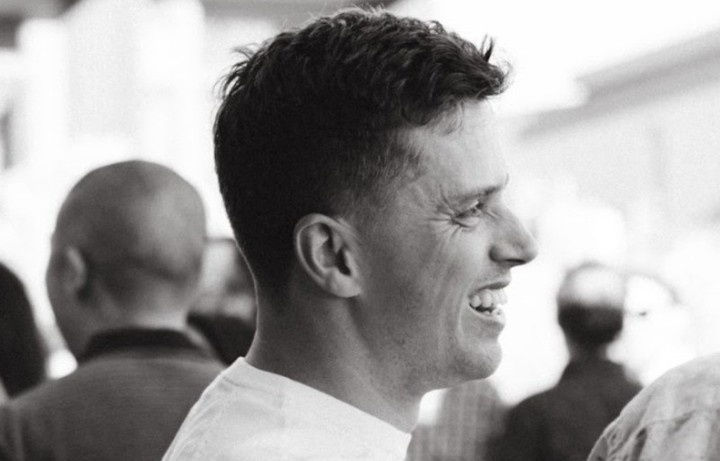
Michael Fullman, Chief Creative Officer
You've designed unforgettable experiences across various mediums. What drives your passion for blending technology with craft?
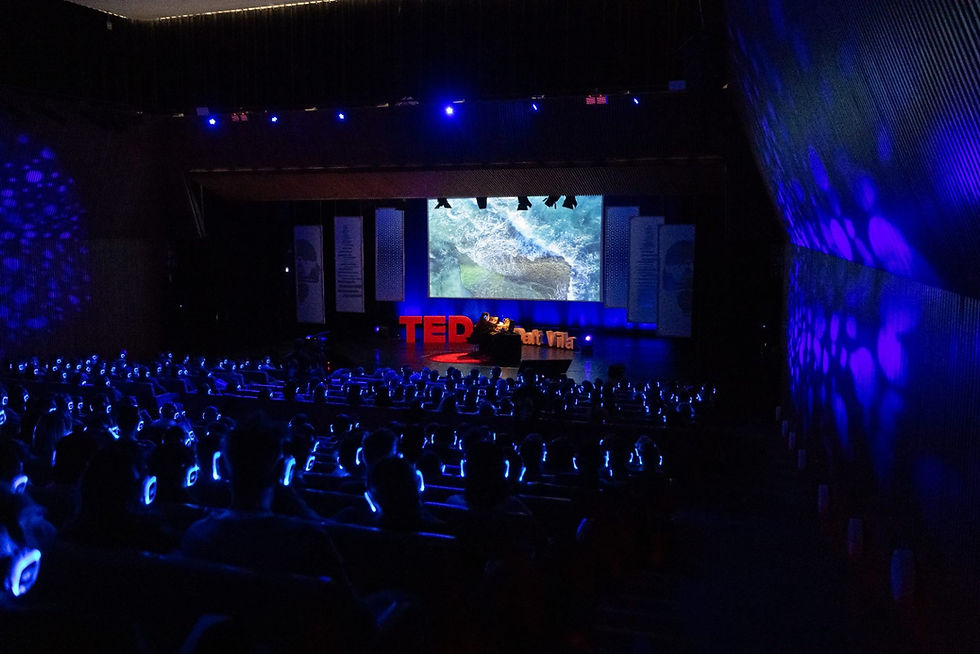
I came up designing live shows like concerts, tours, the kind of large-scale productions where you can feel instantly whether a crowd is with you or not. You learn fast that the staging, the lighting, the screens are there to amplify what the artist is trying to do, the technology is the vehicle, but the human connection is the point. That's still what drives the work.
Companies get tripped up trying to look innovative by throwing the newest tech at the wall, but audiences can feel when something is hollow. Technology is at its best when it disappears into the experience. When software stops being a gimmick and starts deepening a story or making a room respond to the person in real time, that is when you can see that moment, and experience, land and you can see that people feel something is true, and intentionally design for them to enjoy.
There's also a more selfish thread in it. I love making something new. Playing with a new tool, learning its limits, crafting around them, then trying something a little crazy. That curiosity is my engine. Yes, the audience connection is the goal, but the pursuit itself is what keeps me showing up.
How do you ensure that innovation and technology enhance rather than overshadow the emotional impact of an experience?
The principle we work with at Acronym is that the technology has to disappear. Tech is everywhere now, and the audience we are presenting to is extremely discerning which means that they can tell when an experience is built around showing off the hardware versus using the hardware to enhance a moment and make it better; more personal, more responsive, more human. If it's working, people aren't thinking about how it was made. They're just inside it.
We start every project with the audience and the emotion, not the tools. What do we want them to feel? What's actually worth their time? Once that's clear, we look at our creative technology stack to see what can serve the answer. We recently built a project for HBO using voice agents and real-time video generation to make the experience completely unique to every person who walked in. The tech behind it was complex, but the audience wasn't thinking about code. They were fully inside, and committed to experiencing the world we'd built, because we made sure that the tech disappeared. Tech that disappears into the experience is the version of innovation that actually does something.
The idea of blending physical and digital experiences is central to your work. Where do you see the future of these hybrid activations heading?
We have to stop treating "physical" and "digital" like they belong to different departments. For years the live event was the main attraction and the digital component was a companion app bolted on at the end. That isn't how people operate anymore. They still crave real, in-person connection, but they expect their digital world to come along with them, not get walled off.
So the spaces we build have to listen and respond. We aren't designing static, pre-planned rooms anymore. We're building environments that flex in real time based on how the crowd is behaving. If you can personalize a room while the audience is standing inside it, that's a real shift, that isn’t just for entertainment. It demonstrates that the experience isn't a side channel inside a marketing plan, rather it's at the core of how a brand actually shows up. The future isn't about broadcasting a single message across two mediums, it's about building places people genuinely want to spend time in.
You often speak about scaling creative ideas without losing their soul. How do you maintain the balance between creativity and systematized execution in your projects?
It comes down to treating this work as a real discipline, not a marketing stunt. When we were doing concert tours, we learned that the most ambitious creative ideas only survive if you have the production muscle to actually pull them off. That’s a hard truth, but an important one because you can have a breathtaking concept on paper, however, you can also watch the whole thing fall apart in the room quickly without the right systems behind it.
We brought that mindset into the brand world. Whether we're working on a stadium show or a brand activation, the rigor is the same. But for the soul of an idea to survive contact with execution, the creative intent has to stay in the driver's seat. The job of leadership is to let smart people take massive creative swings and then build the structural framework that makes those swings possible. A lot of companies optimize purely for scale, but real impact comes from focusing on what resonates with people and using your systems to deliver that without compromise.
In your view, what role does emotional connection play in creating memorable brand experiences, and why is it critical now more than ever?
People are overwhelmed. The volume of advertising and content competing for attention right now is too much, and audiences filter out anything that feels generic before they're consciously aware they're doing it. The old marketing playbooks are struggling because reach can't be bought the way it used to be. Attention has to be earned.
What we look for instead of traditional ROI is what we call Return on Experience (ROX). It isn't about an immediate transaction, it's about what people carry out of the room with them. Did they actually feel something? Did the way they see the brand shift? Are they going to bring it up tomorrow? Some leaders write that off as soft, but the loyalty that comes from making people feel moved or seen builds faster than almost anything else a brand can do. In a saturated environment, showing up in a way that's genuinely human is one of the most valuable moves a company can make.
With your experience in live concert design, how do you see the entertainment industry evolving with new technologies and immersive experiences?
Live entertainment is in an interesting moment. For decades the assumption was that the show happens on stage and the audience watches. When technology arrived it then became about extending that, bigger screens, better sound, more spectacle. Now that model is sifting again, and what we're seeing now is the audience moving away from spectator to participant. This is happening in a lot of different ways with a lot of different tools, but it really manifests itself in how a show is designed to make the audience feel like they are individually being interacted with. We've been building toward this for years, and the tools have finally caught up to the ambition.
The other shift is that the show doesn't end when the lights come up. The experience now extends into the parking lot, onto people's phones, into the conversations people have the next day. The smart artists and brands are designing for the whole arc, not just the 90 minutes of the performance. We will see an entertainment transition occur, where bigger and louder takes a back seat, and we move from this notion of ‘broadcasting’ to ‘hosting’ entertainment. The industry will focus more on how to make the environment more responsive, more inviting, more personal, and more aware of who's in the room.
What advice would you give to other creative leaders looking to create meaningful and emotionally impactful brand experiences?
The first thing is accepting that you can't fake relevance anymore. Audiences know immediately when something wasn't built with them in mind, and they leave. So build something people actually want to step into. Invite them in. If someone has to be convinced to engage, you've already lost them.
The second thing is to make participation part of the idea itself. It isn't enough for people to passively consume what you've made. Give them a role to play, something they can influence or shape. Ask the harder versions of the questions: What would make them stay? What would make them advocate for this tomorrow without being asked? And don't try to reinvent the whole business model overnight. Start with focused, meaningful ideas and build that muscle over time. There's risk in stepping away from playbooks that are easy to measure, but leaning into that risk is what builds the kind of brand experience that actually lasts.
You've spoken about building systems that support ambitious ideas. What's a core principle you follow when leading teams to bring these ideas to life without losing their essence?
Design and technical execution have to talk to each other, they can't live in different parts of the building. The ambitious ideas that survive are the ones where people across disciplines are sharing a brain - designers thinking about technical constraints, engineers thinking about emotional payoff, producers thinking about the creative why.
At Acronym, we deliberately pull from different backgrounds, software, staging, content, and design, and put those people in the same room from the start of a project. That mix is what keeps ideas big, and it's what keeps the technology serving the work instead of dictating it. It’s not the technology that makes the experience. It’s a good idea or concept that drives the use of the technology; and it is the job of a creative leader to protect the conditions where that kind of cross-disciplinary trust can happen.
Looking ahead, what do you believe will be the most important challenge or opportunity in merging culture, technology, and design?
The biggest challenge for most organizations is the difficulty of letting go of what got them here. Old marketing models are comfortable and easy to measure. Stepping into experience-led work doesn't come with a neat instruction manual, and that uncertainty makes a lot of leaders hesitant. But that hesitation is exactly where the opportunity lives. The brands willing to reinvent themselves, not because they're panicking, but because they're paying attention, are going to define the next decade of how culture gets made.
The real shift is moving past the goal of reaching as many eyeballs or ears as possible and focusing on actually making something hit the audience right. We have tools now, AI especially, that allow personalization at a scale we couldn't have imagined five years ago. The trick is using those tools to make things feel more human, not more automated. Culture has to drive the story. Technology has to power it. Design has to pull it together. When those three things are working together, you build experiences people remember.
Read more from Michael Fullman