

Interview with Elizabeth Hechavarria on What Women Miss About Perimenopause
Dr. Elizabeth Hechavarria is a medical doctor and intuitive with more than 25 years in medicine. After training at Weill Cornell and Boston Children's Hospital, she worked as a pediatric gastroenterologist at Harvard Medical School and UCSF, then in clinical and translational medicine at Gilead, Roche, and Galapagos, before turning to integrative and anthroposophic medicine. Today she practices at Klinik Arlesheim in Switzerland and works with clients internationally in English, Spanish, and German, bringing together body, emotions, and soul.
In this interview, Elizabeth shares what decades in conventional medicine taught her about the limits of treating the body alone, what women often overlook about perimenopause, and why lasting transformation depends on what happens after the breakthrough moment.
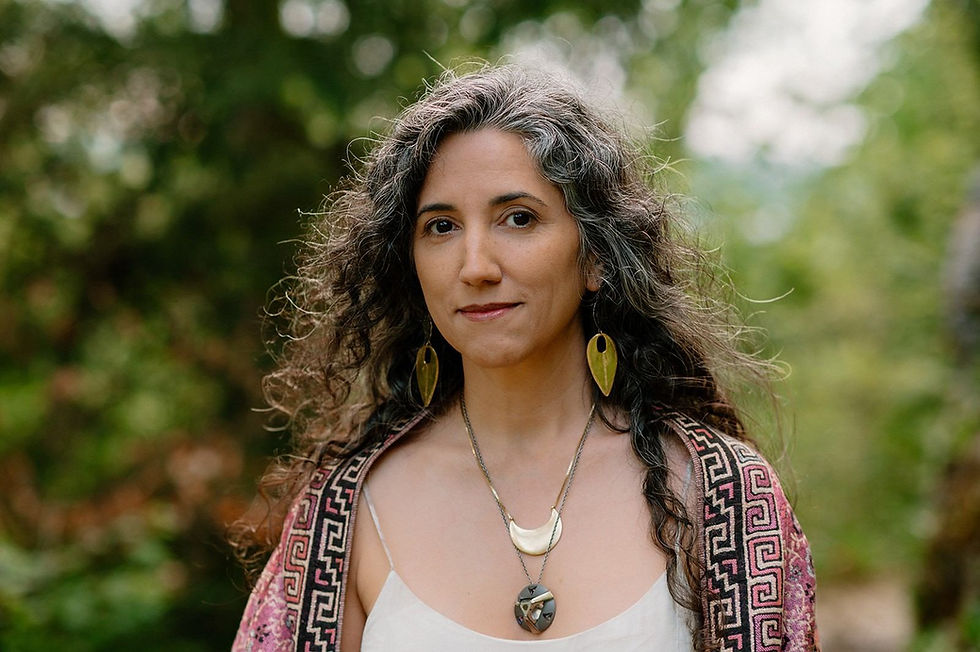
Dr. Elizabeth Hechavarria, Physician & Intuitive Healer
What led you to bring together your background in conventional medicine with intuitive and spiritual healing?
Even in medical school, I sensed that what I was learning about the physical body, how the organ systems work together in health and disease, couldn't fully explain the lived experience of being human. I had already seen enough outside conventional medicine to know there were other forces at play that today's science can't yet explain. I was fascinated by how traditional Chinese medicine could achieve such good outcomes with needles placed at specific points, or make a diagnosis by reading the pulse. Ayurveda intrigued me too.
Western medicine grew out of a reductionist framework rooted in the Enlightenment, Newtonian physics, and the discovery of cells and microbes. Studying the body's components in depth made sense, but a whole dimension of the human being was left untouched. My subspecialty training narrowed my focus even further, to the gastrointestinal tract, and that continued through my years in the pharmaceutical industry. All the while, I was using other approaches in my own life.
Eventually, I wanted my work to align with my values and to focus on the study of health rather than disease. Bringing an energetic and spiritual approach to biology into that work was the natural next step.
After more than 25 years in medicine, what experiences most changed your understanding of what it means to heal?
I remember diagnosing children with inflammatory bowel disease during my fellowship. A child or parent would look at me and ask, "When am I going to get better? Will this go away?" I had to explain that there would be good periods and flares, and that we would need strong medications to control the disease so the child could grow. It felt crushing. I was giving a diagnosis that might last a lifetime, and I never felt I could tell them that true healing was possible.
I was working only at the physical level, thinking about molecules, signaling, and an overactive immune system. Everything was about control.
When I began studying anthroposophic medicine and how soul and spirit work together with the physical body, a whole new possibility for healing chronic illness came into view. The focus shifted from controlling physical processes to finding the root cause on a psycho-spiritual level. The body is a manifestation of everything happening in our consciousness, our thoughts, our feelings, and patterns that run deeper than this lifetime. My understanding of healing didn't come from a single patient. It grew over years, as a doctor and as an intuitive.
How has your work in academic medicine and pharmaceutical research shaped the way you approach whole-person health today?
Academic medicine and pharmaceutical research taught me to stay curious and never assume I know how something is supposed to work. Every clinical study is designed to answer one specific question. Everything else is a secondary outcome, and it can only be interpreted with confidence if that main question produces a clear result. Each study is also limited by the population it includes and by the questions we knew to ask at the time.
The deepest lesson I took from those years is that we never fully know the truth. New data can always challenge what we thought we knew. It gave me a kind of clarity of unclarity. I value scientific rigor, and when something isn't working the way we expect, that's a signal to go back and ask better questions.
That humility shapes how I work today. Knowing I can't have all the answers keeps me open to new ideas and possibilities. I ask about the physical body, but also about emotions, personal history, and everything else in a person's life that might be shaping how they feel now. Health isn't only about how the body functions.
Health is the whole life.
Where do you see the biggest gaps in conventional healthcare when it comes to understanding the connection between physical symptoms and emotional well-being?
Conventional healthcare has come a long way since I started practicing. There is now real recognition that emotions, thoughts, education, and other psychosocial factors shape how a disease shows up and how well someone gets through it. Larger centers often have psychologists, social workers, and full support teams for patients with serious illness, and I'm glad to see that.
The gap is in less-resourced settings, where one doctor sees patient after patient, sometimes with only five to ten minutes for a new patient. There is almost no room for psychosocial support in that time, let alone for getting to the root cause. The bigger gap is in how we approach chronic disease. Take the epidemic of obesity and insulin resistance. Doctors have recognized the problem for a long time, yet we struggle to make a dent in it. Our instinct is to change the environment around the person, for example, by taxing sugary drinks. But lasting change comes from each person understanding what it means to be healthy, to care for and love themselves, and to make choices aligned with that. Those questions go to the core of who we are, and our current healthcare systems aren't built to address them.
In your writing, you explore the difference between feeling transformed and experiencing lasting change. What does genuine transformation mean to you?
Genuine transformation is about making decisions and following through on them. A decision you don't follow through on isn't really a decision. It's just an idea.
We go to events and retreats, or watch an inspiring video, and we feel moved. We think, yes, I'm going to do this. In a meditation, you might feel a new energy inside you, something uplifting, loving, and expansive. That experience is beautiful, and it can be life-changing.
But it has to be translated into daily life: into the words you speak, the actions you take, and how you relate to others and to yourself. That requires integration.
Inspiration opens the door, and integration is what carries you through it.
I've been through many transformations of my own, and each one became real only when I lived it, day after day. That's why I build integration into my work with clients. Lasting change happens in the weeks and months after the breakthrough moment.
Your 90-Day Whole-Person Breakthrough explores the body, emotions, life circumstances, and deeper patterns. How do these elements come together in your work with clients?
My 90-Day Whole-Person Breakthrough is a complementary approach that works alongside conventional medicine. Because I work with clients around the world, I don't practice medicine in this setting, but my medical background informs everything I do.
I begin with a thorough history: what diagnoses have been made, what symptoms a client is living with, and where life feels hardest emotionally, whether in relationships, at work, as a parent, or with their own parents.
I then bring that together with energy testing and an analysis of the client's astrological chart. Together, they point to the areas a person is meant to develop in this lifetime. What a client experiences as a challenge becomes an opportunity to grow into a stronger, more aware, and more open-hearted person.
Much of the work centers on acceptance, letting go, and, above all, trust that life is working for you, not against you, even when it doesn't look that way. As that shifts, clients often notice changes not only in how they feel emotionally but in their bodies too.
What do you think is often overlooked about the changes women experience during perimenopause, particularly around digestion, sleep, and stress?
The biggest struggle is that many women don't realize they've entered perimenopause, and often their doctors don't either. Their complaints get brushed off as "just hormones." But hormonal changes are real, and they affect the digestive, nervous, and circulatory systems, essentially the whole body.
When those changes disrupt daily life, like needing the bathroom three or four times before you can leave the house, or waking several times a night, women deserve more than "it's just hormones" or a prescription alone. There is a lot that can be done beyond a quick fix.
Stress is the other overlooked piece. Women in midlife are often in the sandwich generation, raising children, carrying the most demanding years of their careers, and caring for aging parents. That stress has a real physical impact, and it keeps hormonal shifts from unfolding as smoothly as they could.
From the anthroposophic perspective, the life forces active in the reproductive organs since puberty begin to withdraw, freeing energy for spiritual development. Most women aren't even aware that this way of seeing it is possible, so they experience the symptoms, including the loss of libido, only as a burden. With awareness and openness about what's happening, the transition can be much smoother.
When women begin experiencing unfamiliar symptoms in midlife, what are some useful first steps toward understanding what their bodies need?
Start by getting curious about what's going on in your body. Habits and ways of eating that served you for years may no longer be working for you, and your symptoms are often the first sign.
Keep a log for a few weeks. Track your cycle alongside sleep, digestion, energy, mood, and anything new. Patterns appear that you would never notice day to day. To help women start with digestion, I created a free 28-day Gut Detective Log.
For me personally, wearing a continuous glucose monitor was eye-opening. It showed me how different foods affected my blood sugar and how quickly I recovered. It also revealed nighttime lows that may have been disrupting my sleep. Find a practitioner who listens, and ask for a metabolic panel that includes fasting glucose, fasting insulin, and hemoglobin A1c, along with thyroid function, iron, and vitamin D. Insulin resistance can make every perimenopausal symptom worse and raises the risk of cardiovascular disease later in life. Hormone levels swing widely in perimenopause, so one normal hormone test doesn't rule it out.
Finally, ask what your body is trying to tell you. Symptoms are messages about where life is out of balance and what needs to change.
What is one thing you hope women will begin doing differently when it comes to listening to their bodies and taking ownership of their well-being?
I always say: your body is speaking. Are you listening?
Take this time of change as an opportunity to get curious about what's happening in your body and how it connects to every part of your life: the emotional triggers, the expectations you had for life, and the grief of letting go of a way of living that won't return. This phase won't last forever, but it asks something of you while it's here.
Your symptoms aren't there to make you miserable. They're letting you know that change has arrived and adjustments are needed. When symptoms get louder, it's often because we're resisting, or simply not paying attention and continuing down the path we're used to.
Sometimes we just need to slow down, take notice, and make the changes that are necessary without feeling like a victim. When you take that awareness of your body and your life and use it to create the change that's right for you, you become a sovereign being.
If something in this conversation resonated with you, take my free assessment, What Might Be Missing From Your Healing Journey? It takes just a few minutes, and I personally read every response.
Read more from Dr. Elizabeth Hechavarria







