

How Rhythm and Movement Are Redefining Wellbeing – An Interview with Tamsin Ward
Updated: Aug 20
Tamsin Ward is a former music teacher and headteacher, a qualified Personal Trainer, and holds a Master’s in Education. She founded Drums4Health to harness the combined power of movement and rhythm in supporting physical and brain health. With regular classes growing rapidly in popularity, Drums4Health is now expanding across the UK as an innovative and inclusive approach to wellbeing.
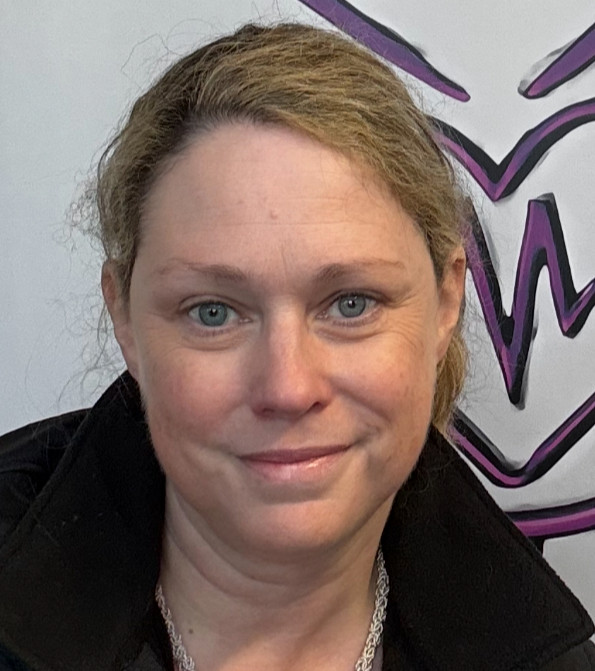
Tamsin Ward, Founder of Drums4Health
What first convinced you that combining rhythm and movement could become something bigger than a fitness class?
I came to this from quite an unusual combination of backgrounds. I was a Director of Music in schools for many years before moving into senior leadership roles, including specialist education. Music and the way people respond to rhythm had therefore been part of my professional life for a very long time.
Later, I trained as a personal trainer and completed an Exercise Referral Diploma. That was when I really started looking at my experience of music, education and movement together and wondering what could happen if we stopped treating them as completely separate things.
Very quickly, I realised I wasn't really just teaching a fitness class. People were moving, but they were also learning, concentrating, laughing and connecting with each other.
I started hearing people say, “My brain has had a workout!” Others were surprised by how much they'd moved because they'd been concentrating on getting the rhythm rather than thinking about exercise.
Seeing similar responses across very different groups made me realise there was something much bigger to explore. That's now led to working with research partners so that, as Drums4Health grows, we can gather meaningful evidence and impact data alongside the experiences people are sharing with us.
How do structured rhythmic patterns make Drums4Health different from conventional cardio drumming?
For me, the drum isn't simply a prop to exercise around. The rhythm itself is really important.
My background is in music and education, so I actually teach rhythmic patterns. We might work with singles and doubles, alternate hands, repeat and remember patterns, change direction or gradually increase the complexity. As confidence develops, there is always something else we can introduce.
That means the brain has a job to do as well as the body.
And you absolutely don't have to be a musician! Getting a pattern wrong, laughing and trying it again is all part of it. Nobody is being assessed on their drumming ability.
That's what fascinates me about combining the two. Someone might be moving their arms, using their core, gripping and controlling their sticks and raising their heart rate, but at the same time they're listening, processing, remembering and coordinating.
It's much more than simply hitting a drum along to music.
What did working in specialist education teach you about the connection between movement, regulation and engagement?
Probably more than I realised at the time!
Working in education for so many years, including specialist education, taught me that people don't all engage or learn in the same way. It also taught me that forcing participation rarely creates meaningful engagement.
You have to meet somebody where they are.
Regulation, movement, rhythm, repetition and predictable structures can all be incredibly important. I also learned to look beyond what somebody was doing and think about why they might be doing it.
That thinking is very much part of Drums4Health today.
For me, inclusion isn't simply saying, “Everybody is welcome.” It's designing something so that when people arrive, they can actually participate and feel successful.
Somebody might need to sit. Someone else might want a huge amount of movement. Another person may struggle to follow the rhythm but can still drum along and be completely part of the group.
They don't all need to do exactly the same thing to belong.
Where do you think traditional fitness approaches fall short when it comes to making movement genuinely inclusive?
Traditional fitness has enormous value, but it doesn't work for everybody.
Some people simply don't identify as someone who “does exercise”. Gyms can feel intimidating and traditional classes aren't always accessible to somebody with reduced mobility, low confidence or a health condition.
I wanted to remove some of those barriers.
In Drums4Health, one person can be standing and using big movements while the person next to them is seated and doing something much smaller. Neither is doing the lesser version.
I think that's really important.
People are also distracted from the fact that they're exercising, in a good way! Instead of thinking, “I've got another 15 repetitions to do”, they're thinking, “Can I get this rhythm?”
The exercise is still happening.
I'm increasingly interested in how we create movement that people actually want to return to. Because we can design the perfect exercise programme on paper, but if somebody doesn't enjoy it and won't come back, how useful is it really?
What have your sessions with people living with dementia taught you about rhythm, memory and human connection?
These have been some of the sessions that have stayed with me the most.
I've seen how familiar music can create an immediate response. People might not necessarily follow every rhythm, but suddenly they're moving, smiling, drumming or connecting with the person beside them.
At one Memory Café, retired occupational therapist Heather Manktelow, who has over 16 years' experience and has worked extensively with older adults and people living with dementia, observed the session. She described seeing people moving as well as drumming and said, “The smiles on people's faces, were fantastic.”
One participant simply said, “It made me feel good.”
Heather also told me about five residents from a neighbouring care home who rarely participated in organised activities. Four engaged with the drumming for the whole session.
Sometimes connection matters more than whether somebody remembers the pattern.
These observations are incredibly powerful, but I'm conscious of not turning observations into scientific claims. That's why working with research partners is so important. I want to capture what is happening properly and build evidence around where Drums4Health can genuinely make a difference.
What changes do participants tend to notice first when they begin Drums4Health?
Usually it's how they feel.
People talk about feeling happier, energised or surprised by how much they've moved. Others immediately mention the mental challenge and tell me their brain has had as much of a workout as their body.
We are beginning to capture some of this more systematically too.
At Heather's Memory Café, she used a simple 0–10 mood scale before and after one session. One gentleman living with memory loss had experienced a difficult morning and rated his mood as 4/10 beforehand. Afterwards, it was 10/10. His wife moved from 7/10 to 10/10 and talked about how much she loved seeing him enjoying himself.
It's important to say that this was a small real-world evaluation, not a clinical research study.
But those experiences give us questions worth investigating.
The next stage is measuring impact more formally. I'm working with research partners to look beyond “people enjoyed it” and begin gathering evidence-backed data around physical, cognitive and wellbeing outcomes.
How do you adapt a session so people with very different ages, abilities and confidence levels can participate together?
My aim isn't for everyone in the room to do exactly the same thing. My aim is for everyone in the room to feel they're part of the same thing.
That's probably the simplest way I can describe it.
Everything can be adapted.
People can participate seated or standing. Our drums are height-adjustable, movement range and intensity can change, rhythms can be simplified and nobody needs previous musical experience.
If somebody can't follow a pattern, they can keep drumming. They're still part of the music.
This means I can have somebody doing a really energetic standing session alongside someone who needs to remain seated, and both can have a meaningful experience.
I've also designed our own Drums4Health equipment to support this. It needed to be robust, portable and adaptable because if we genuinely want activities to be inclusive, the equipment has to work in real community, care and wellbeing settings too.
Inclusion has to be built into the activity rather than added afterwards.
What does meaningful movement mean to you personally?
I've become much less interested in how movement looks and much more interested in what it allows somebody to keep doing in their life.
For one person, that might mean maintaining enough strength and mobility to remain independent. For somebody else, meaningful movement might be discovering an activity they can participate in from a chair. For another, it might simply be finding exercise they actually enjoy.
I'm particularly interested now in healthy ageing and things like hand and grip strength. During drumming, we're continually holding and controlling sticks and using our hands, wrists and forearms. Grip strength is recognised in wider research as a useful marker associated with physical capability and healthy ageing, and it's an area I'd really like us to investigate properly.
But meaningful movement is also about how somebody feels.
If you're moving, learning, laughing and connecting with other people at the same time, there is something really powerful in that.
Movement should add something to life, not simply tick an exercise box.
As Drums4Health grows, what do you hope people will ultimately understand about the relationship between rhythm, movement and wellbeing?
I want Drums4Health to sit in that really interesting space between physical activity, creative health and preventative wellbeing.
We tend to separate physical health, brain health and social wellbeing into different boxes. What excites me about rhythm and movement is the possibility of bringing those things together.
I want Drums4Health to remain joyful and accessible, but I also want substance behind it. Working with research partners and gathering meaningful impact data is a huge part of where we're going.
I'm also now training teams within organisations to deliver Drums4Health themselves. That means schools, care and dementia organisations, community services, gyms and wellbeing teams can potentially embed it into what they already do, delivered by people their participants know and trust.
Ultimately, I'd love Drums4Health to help change the way we think about exercise.
It doesn't always have to look like exercise.
Sometimes it can look like people of completely different ages and abilities moving, learning, laughing and drumming together.
Move. Drum. Connect.
Read more from Tamsin Ward


