How Facing My Own Mortality Taught Me to Truly Live
After breaking his neck playing rugby and becoming a quadriplegic, Alex Noble is a highly sought-after motivational speaker, #1 bestselling author, and 2025 Young Australian of the Year finalist. Drawing on his extraordinary journey, Alex shares his profound perspective and mindset to help clients build resilience and achieve their full potential.

Becoming a quadriplegic has meant that I face many significant challenges every day of my life, challenges that extend far beyond just the inability to walk, challenges that no one can see. But of all the challenges I face, there’s one that has always stood out. It’s something that echoes around my head all day and keeps me up late at night.
"Every man has two lives, and the second starts when he realises he has just one." – Confucius
When I got injured, I quickly came to notice just how little my body was moving around and how sedentary I was 24/7. I knew that not being able to walk or run around and not having the muscular strength to exercise properly meant that there was very little I could do to maintain things like my cardiovascular health and bone density. To put it simply, I could no longer take for granted the good health I once had.
So, ever since the accident, I have always had this thought that I would have a shorter life expectancy than the average person. That I would die before my friends. That I would die before my brothers. That I might even die before my parents.
I know what you’re probably thinking. Everyone’s afraid of dying. I remember when I was in about Year 3, I was staying at my grandparents’ house in Townsville, and I was lying in bed one night bawling my eyes out. Why? I was in deep thought about what happens to us after we die. Where do we go? What do we do? These thoughts continuously ran through my head. I started freaking out, and I realised that once we pass away, that is it. We’re gone, erased from the planet forever. Nothing to feel, nothing to think, nothing to look at. Just blank. Just darkness. I continued to cry. I was so scared of dying. But after the accident happened, I wasn’t just scared of dying. I was scared of dying young.
Just like I never specifically asked my doctors about my quadriplegic diagnosis, I never asked them about my life expectancy either. I thought about it often, but I was too scared to find out the answer. Scared that I might be right.
But one day, about three years after I was injured, I was sitting at my desk with the Google browser open. I stared at it, contemplating whether or not I should finally find the answer to the question that had plagued my thoughts nearly every day since the accident.
I typed in the question a few times, always deleting it before I hit enter. But after an internal tug of war that lasted about half an hour, I worked up the courage to type it in. What is the life expectancy of a quadriplegic, aged 16?
I braced myself for the results, praying to God that my fears wouldn’t be realised. The top result read: The life expectancy of a quadriplegic, injured at age 16, is 50 years, 33.2 years less than the average male.
I was right. I waited for the tears. I waited for the wash of pain and sadness. But they didn’t come. The words on the screen didn’t traumatise me, didn’t get me down, didn’t imprison me. I didn’t sit there and cry and give up. Instead, the exact opposite happened. In that very moment, my entire life changed. I became completely liberated. In learning about my own death, I learned to live, and I figured out exactly how I wanted to do it. I knew, in that moment, that I’d rather spend forty years on Earth living to the absolute fullest than eighty years tiptoeing through life, trying to make it to the end comfortably and safely.
Nowadays, it’s not death that I’m afraid of. It’s not the thought of dying young that scares me either. Rather, it’s the thought of getting to the end of my life and realising that I could have done more. Realising that I could have been more. Realising that I had untapped potential. Realising that I lived a life that was less than the one I was capable of living. Dying doesn’t scare me, but not reaching my full potential absolutely terrifies me.
So the question I needed to ask myself became: how can I possibly reach my potential when I have such a short time to live?
I’ve now come to terms with the fact that death will come for me sooner than most. I’ve come to terms with the fact that most of the people I love will probably outlive me. They know who they are, and I hope they don’t cry when they read this.
This isn’t something I have spoken about openly with anyone before. But I’m ready to talk about it now because knowing that I may die young has been one of the best things that has ever happened to me. It has taught me how to live. Properly. It has taught me three of the most valuable lessons I have ever learned about how to live a fulfilled life. The lessons are to accept what you can’t control, embrace discomfort and vulnerability, and be disciplined.
I learned that first lesson, about accepting the things you can’t control, when I woke up in the intensive care unit (ICU). But I don’t think the true power of the lesson ever really hit me until the day I sat at home on my computer and confronted my worst fears about my own mortality. I received the worst possible news, and all I could do was accept it. But that acceptance freed me from grief and propelled me forward.
When things happen to us, of course, our immediate response is to try to fix the problem and find a solution. But in life, things happen to us that we have no control over. There are some things that we just cannot change. When these things happen, we are left with two simple options. We can accept them for what they are and move on, or we can choose the easier option, which is to hold on to what has hurt us and waste time wishing that it didn’t happen.
Knowing that my time here on this planet is already limited, I realised I had no time to waste on grieving and wishing. Doing so would only bring me a life of misery and feeling sorry for myself, a life of anger and unhappiness. A life that may not even be worth living.
So in that moment, despite the emotional pain I was going through, I knew that I just had to accept it and find a way to carry on in order to live my life while I had the chance.
Refusing to accept the things you can’t control in life is, simply put, time-wasting and energy-sucking. Because I have less time than the average person, I am quick to jump off any merry-go-round that isn’t taking me to where I want to go. I will always accept any situation exactly as it is, move on if it isn’t serving me, and pivot towards something that will.
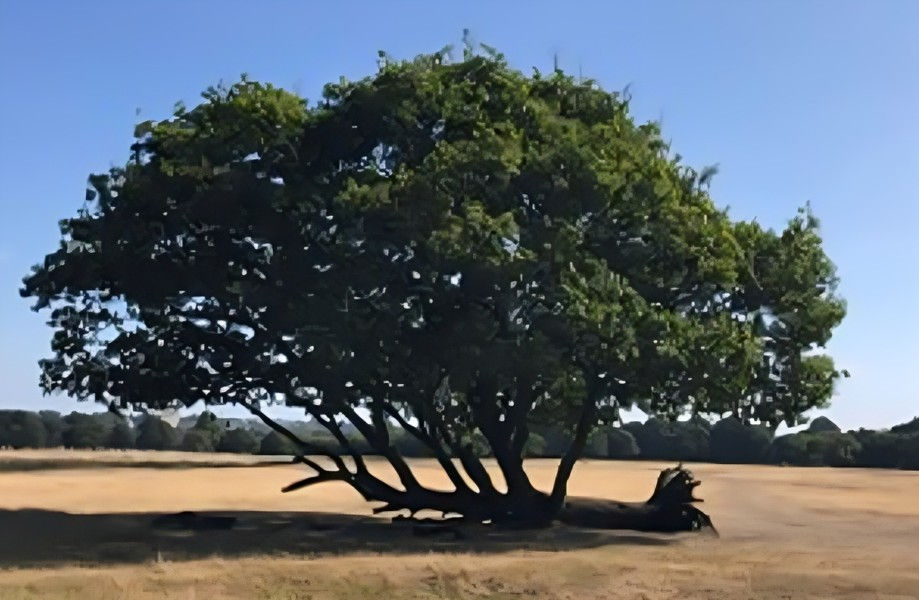
There’s a photo I love of a tree that demonstrates this first lesson. It looks like it has been chopped down, with the trunk lying on the ground. Yet, despite that, tree branches are still visible, growing upright from the trunk along its entire length. It’s sort of like a sideways tree. I can hear you asking, ‘Where are you going with this, Alex?’ To that, I’d say I reckon this photo is a pretty accurate visual representation of the world we live in. The universe doesn’t care about what you’ve gone through to get something, only about whether you get there or not. The world doesn’t care how unfair our lives are compared to the lives of others, or how many more challenges we face than someone else. All that matters is whether or not we get to where we’re trying to go.
So, when we come across obstacles and challenges in our lives that we can’t change, no matter how unfair they are, we’ve just got to accept that they are there and find a way to carry on, just like that sideways tree.
Read more from Alex Noble
Alex Noble, Motivational Speaker, Mindset Coach & Author
After a rugby injury left him permanently in a wheelchair, Alex Noble is now a highly sought-after motivational speaker and mindset coach, #1 bestselling author, and 2025 Young Australian of the Year finalist. Drawing on his extraordinary journey, Alex shares the perspective and mindset that enabled him to not only overcome profound adversity, but to thrive and achieve more than ever. He equips audiences with a tailored toolkit of practical strategies to overcome their own challenges, build resilience, remain optimistic, achieve their goals, and reach their full potential. Alex has worked with a diverse range of clients, including individuals, schools, sports teams, corporations, government departments and global organisations.