

Healing Skin Through The Mind Skin Connection – Exclusive Interview with Nadia Tamara Lee
Updated: Jun 23
Nadia Tamara Lee is a Licensed Aesthetician, Certified Ayurveda Practitioner, Mindfulness Coach, and Psychodermatology Educator with over 24 years of experience in holistic skin health. She has helped thousands worldwide heal acne, eczema, rosacea, psoriasis, hyperpigmentation, and premature aging. After overcoming two cancer diagnoses and closing her luxury skincare brand featured in Vanity Fair, Glamour, and Vogue, Nadia deepened her focus on psychodermatology, where science meets soul. Through her global certification eCourse and her app, SKIND, she bridges skincare, nutrition, and mindfulness to restore balance from within.
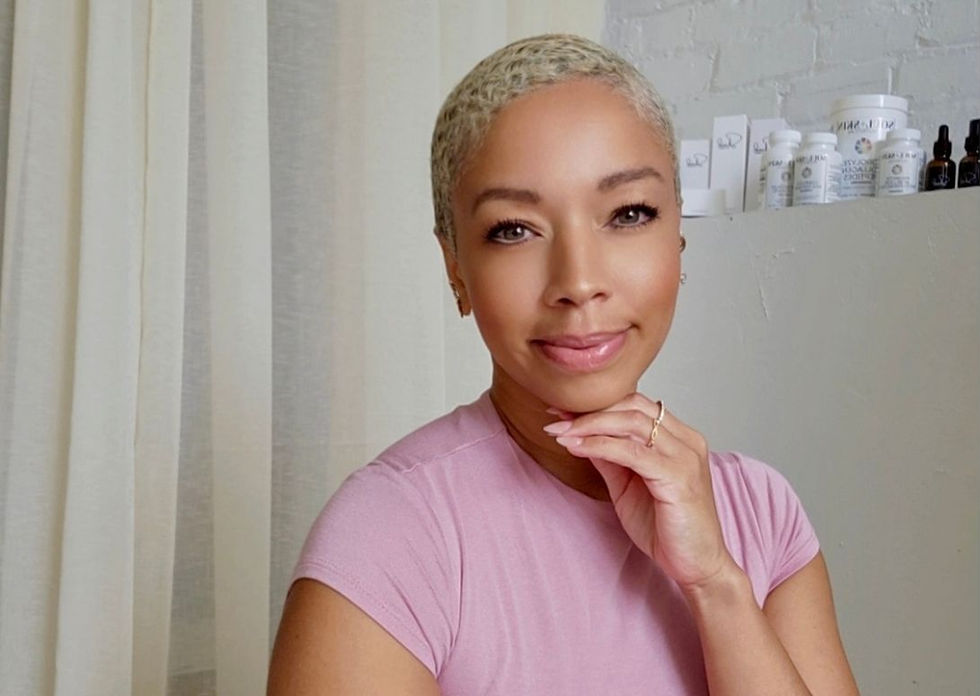
Nadia Tamara Lee, Psychodermatology Educator & Skin Health Expert
Who is Nadia Tamara Lee?
I’m a Holistic Skin Health Expert, psychodermatology educator, and the founder of SKIND Connection, a platform dedicated to helping people heal their skin from within through the integration of science, mindfulness, nutrition, and emotional wellness. I’ve spent over two decades in the beauty and wellness industry working closely with clients struggling with conditions like acne, eczema, rosacea, hyperpigmentation, and premature aging. Over time, I realized that skin health could never truly be separated from emotional health, nervous system regulation, and the way a person experiences stress internally.
Outside of business, I’m deeply drawn to stillness, nature, spirituality, and intentional living. Some of my favourite moments are the quiet ones, bike rides along the ocean, journaling with tea in the morning, meditating, exploring wellness practices, and creating meaningful educational content that helps people feel seen and understood. I love combining science with beauty and emotional healing in a way that feels grounding rather than overwhelming.
Something interesting about me is that my journey into psychodermatology was born through personal adversity as much as professional experience. I’ve walked through incredibly difficult seasons in life that forced me to deeply understand the connection between stress, emotional pain, identity, and the body. That lived experience changed the way I approached healing entirely. It taught me that transformation does not happen only through products or procedures, it happens when people feel safe enough to reconnect with themselves again.
What inspired you to start SKIND, the mind+skin connection and the business behind it?
SKIND was born from years of witnessing the same heartbreaking pattern in my treatment room. Clients would come to me exhausted, discouraged, and emotionally defeated after trying countless products, medications, and treatments that only offered temporary relief. Many of them blamed themselves when their skin didn’t improve, not realizing their body was communicating something much deeper.
I began noticing how closely skin flare-ups were connected to stress, emotional overwhelm, burnout, grief, anxiety, and nervous system dysregulation. The more I studied psychodermatology, Ayurveda, holistic wellness, and the nervous system, the more everything began to connect. I realized the skincare industry was often treating the symptom while ignoring the internal environment influencing the condition.
I created SKIND because I wanted people to finally have access to a platform that addressed the full picture. I wanted to create something that combined education, personalized skincare guidance, nutrition, mindfulness, nervous system support, and emotional healing in one place. SKIND became more than an app or a business, it became a movement toward a more compassionate and intelligent approach to skin health.
At the same time, I saw an opportunity to help professionals evolve as well. Many estheticians, practitioners, and wellness professionals feel there is a deeper layer to skin healing but were never taught how to integrate it into their work. That realization led me to create the professional education side of the brand through the Holistic Dermatology Certification and the SKIND Halo Network.
What makes your approach to skin health, mind, plus skin, plus soul, different from traditional skincare methods?
Traditional skincare often focuses primarily on the surface of the skin, ingredients, treatments, and symptom management. While those things absolutely matter, I believe lasting transformation happens when we also understand the internal environment influencing the skin.
My approach is rooted in psychodermatology, which explores the relationship between the nervous system, emotional health, and skin conditions. I integrate evidence-based skin science with mindfulness practices, stress regulation, nutrition, lifestyle medicine, and emotional awareness so clients can begin addressing the root causes contributing to inflammation and imbalance.
What makes this different is that we are not simply asking, “How do we get rid of the breakout?” We are asking, “Why is the body expressing this in the first place?”
For example, someone struggling with chronic acne may also be experiencing high cortisol levels, nervous system dysregulation, poor sleep, digestive imbalance, perfectionism, or chronic emotional stress. Another client with rosacea or eczema may have a highly reactive nervous system and unresolved inflammatory triggers connected to stress and gut health.
When clients begin supporting the body internally while also using personalized skincare externally, their results become deeper, more sustainable, and often emotionally transformative as well. They stop feeling like they are fighting their skin and begin understanding it.
What are the top three skin concerns your ideal client comes to you with, and how do you help them overcome them?
The three most common concerns I see are acne, premature aging, and chronic sensitivity conditions such as eczema, rosacea, and psoriasis.
With acne, many clients come to me after years of harsh treatments and overcomplicated routines that have damaged their skin barrier and increased inflammation. I help them simplify their approach while also exploring internal contributors such as stress, hormones, digestion, blood sugar imbalance, and nervous system overload. Through personalized skincare, anti-inflammatory nutrition, mindfulness practices, and psychodermatology tools, we help calm both the skin and the internal environment driving the breakouts.
For premature aging, I work with clients who are often experiencing chronic stress, burnout, sleep deprivation, emotional exhaustion, and inflammation that accelerate collagen breakdown and skin aging. We focus on restoring the skin barrier, improving circulation and lymphatic support, reducing inflammation, supporting collagen naturally, and helping the nervous system move out of survival mode. I also incorporate skin fitness, facial tools, visualization techniques, and restorative lifestyle practices.
For sensitive skin conditions like eczema and rosacea, the goal is not simply calming the flare-up temporarily but understanding why the skin has become so reactive. We work on reducing inflammatory triggers, strengthening the barrier, regulating stress responses, and helping clients create a sense of internal safety within the body. Many people are surprised to discover how strongly emotional stress and nervous system dysregulation influence these conditions.
How does the journey in your app and eCourse help someone move from frustration to confidence in their skin?
One of the biggest reasons people feel overwhelmed in skincare is because they are constantly consuming conflicting information. They don’t know what applies to them specifically. My goal with SKIND was to remove that confusion and create a personalized journey.
Inside the app, users begin with quizzes that help identify their skin type, stress patterns, and body constitution. From there, they receive customized guidance tailored to their unique needs rather than generic advice. The app combines skincare routines, ingredient education, seasonal nutrition, guided visualizations, affirmations, mindfulness practices, supplements, facial tools, and psychodermatology education in one ecosystem.
What changes people most is not only the physical improvement in their skin, but the emotional shift that happens alongside it. They begin understanding their triggers, learning how stress impacts their skin, and feeling empowered rather than hopeless.
The professional certification course works similarly for practitioners. It helps them move from surface-level treatment approaches into a deeper understanding of the mind–skin connection. Professionals gain confidence because they are finally able to understand patterns they have been observing in clients for years but may not have had language for before.
Can you walk us through a real-life transformation story from one of your clients and what it reveals about your method?
One client who deeply impacted me was a woman who had struggled with severe acne for years. She had tried nearly everything before coming to me, medical treatments, expensive products, restrictive diets, and countless online trends. Physically, her skin was inflamed and reactive, but emotionally, she was exhausted and disconnected from herself.
As we worked together, it became clear that her skin flare-ups were closely tied to chronic stress, perfectionism, and emotional suppression. Her nervous system was constantly operating in survival mode. Instead of only focusing on products, we began integrating nervous system regulation practices, anti-inflammatory nutrition, mindfulness exercises, and guided skin visualizations alongside a simplified skincare routine.
Over several months, her skin began improving significantly, but what stood out most was the emotional transformation. She became more confident, less obsessive about her appearance, and more connected to herself overall. Her healing was no longer just cosmetic. It became holistic.
That experience reinforced something I now teach often, skin healing becomes more sustainable when people feel emotionally supported and physiologically safe within their body.
What role do lifestyle factors, stress, nutrition, and mindset, play in skin health, and how do you guide clients in those areas?
Lifestyle factors play an enormous role in skin health because the skin is deeply connected to every major system in the body. Chronic stress increases cortisol and inflammation. Poor sleep impairs repair processes. Nutrient deficiencies affect collagen production, healing, and barrier function. Emotional stress can trigger inflammatory pathways that worsen conditions like acne, eczema, and rosacea.
I guide clients by helping them understand these connections in a practical and compassionate way rather than overwhelming them with rigid rules. We focus on sustainable changes that support the body long-term. That may include anti-inflammatory nutrition, blood sugar balance, hydration, stress reduction practices, breathwork, restorative sleep habits, mindfulness rituals, or nervous system regulation techniques.
I also help clients reconnect with the emotional relationship they have with their skin. Many people carry shame, frustration, or anxiety around their appearance, which can create additional stress within the body. Part of healing is learning to approach the skin with understanding instead of punishment.
For someone who has tried every product and still isn’t seeing results, how do you help them figure out what’s really going on?
The first thing I help them understand is that they are not failing. Their skin is communicating.
When someone has tried everything without success, it usually means the root cause has not been fully addressed. I begin by looking at the bigger picture, stress levels, emotional health, digestion, inflammation, sleep, hormonal patterns, lifestyle habits, skincare history, and nervous system regulation.
Very often, clients have unknowingly damaged their barrier by over-treating their skin or following trend-based advice that was never designed for their individual needs. Others are dealing with chronic internal stress that is keeping the body in a constant inflammatory state.
By slowing down, simplifying the approach, and understanding the body as an interconnected system, we can begin identifying the patterns contributing to the condition. That awareness alone is often incredibly relieving for clients because, for the first time, their skin finally starts making sense.
What results or shifts can clients expect when they invest in your program, and how quickly do they typically notice them?
One of the first shifts clients notice is often emotional rather than physical. They begin feeling calmer, more hopeful, and less overwhelmed because they finally understand the “why” behind their skin condition. That reduction in stress alone can begin influencing inflammation and skin reactivity relatively quickly.
Physically, many clients notice improvements within the first few weeks, particularly in hydration, inflammation, sensitivity, and overall skin balance. More chronic conditions and long-standing imbalances naturally take longer, but because we are focusing on sustainable healing rather than temporary suppression, the results tend to become more stable over time.
Beyond the skin itself, clients often report improved confidence, better emotional regulation, healthier routines, and a stronger connection to themselves overall. That is the part of this work that means the most to me. Watching people reclaim not only their skin, but their sense of self.
How can someone get started with you today, and what’s the first step they should take toward their skin + soul transformation?
The first step is simply becoming curious about what your skin may be trying to communicate.
For consumers, I recommend starting with the SKIND Connection app, where they can take personalized assessments to better understand their skin type, stress patterns, and body constitution. From there, they receive customized guidance, routines, educational content, mindfulness tools, and holistic support tailored specifically to them.
For professionals looking to deepen their expertise, the Holistic Dermatology Certification is the best place to begin. It provides an in-depth understanding of psychodermatology, the nervous system, holistic skin healing, and how to integrate these principles into practice confidently and ethically.
And for practitioners who want to become part of a larger movement in integrative skin health, the SKIND Halo Network offers an opportunity to connect with a growing global community of aligned professionals.
Healing begins when we stop seeing the skin as something separate from the person experiencing it. Once that connection is understood, everything changes.
Read more from Nadia Tamara Lee


