From Sea to Table – How a Galley Taught Me What Really Matters
Updated: Nov 15, 2025
Written by Vallery Melcher, Culinary Wellness Chef
Vallery is a wellness and culinary chef with expertise in health, nutrition, and project management. She combines her passion for food and culture with years of experience in events and community initiatives. Her upcoming cookbook, Wave Food, is inspired by the Blue Zone lifestyle about longevity.

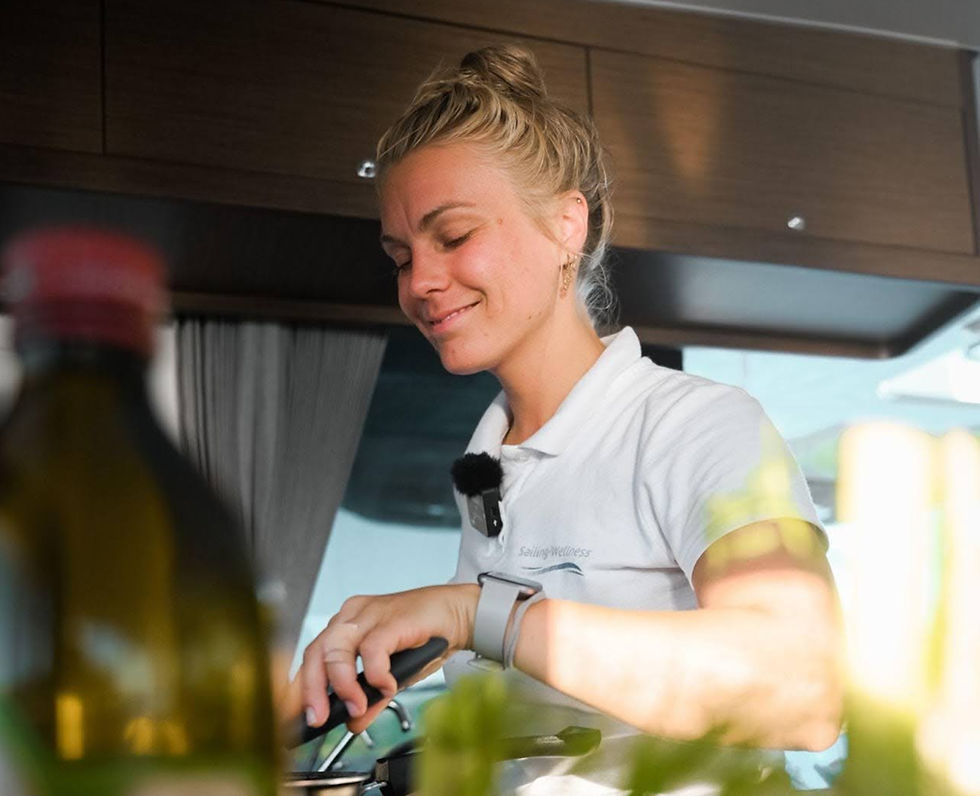
When I stepped into a sailboat's tiny kitchen, the galley, with limited storage, unpredictable ingredients, and the daily task of cooking for ten guests, I discovered something unexpected. The constraints didn't limit me, they liberated me. This is the story of how cooking at sea taught me what really matters about food, presence, and nourishment.
In my previous Brainz article, I explored how simple food choices transform the way we live. I shared principles that felt universal, eating with the seasons, choosing local ingredients, building meals around plants, and being present in the kitchen. But I didn't tell you where those principles came from, or why they matter so deeply to me.
They came from the sea.
The galley as my teacher
When I first stepped onto a sailboat to work as a hostess, I had cooked in many kitchens, from my hometown gardens where I learned to prepare gardening food into meals, to multicultural spaces where Asian, Arabic, and Caribbean flavors taught me that food carries culture in every bite.
Growing up by the sea, I knew small galleys and the rhythm of boats. But this was different. Every day, I prepared meals for up to ten guests. Shopping meant visiting whatever local market we found one or the other day. Planning meant trusting what was available and letting go of control.
At first, it felt like a limitation. Then it became the greatest gift.
I learned that
Presence beats perfection
On a moving boat, you work in rhythm with the waves, the captain's schedule, and the day's sailing plan. You can prepare recipes, but you never know what the local market will offer until you arrive. Will there be fresh fish today? Which vegetables are in season right now? You learn to adapt, to trust your instincts, and to work with what's there. Between managing the galley, helping with boat tasks, and keeping to tight timelines, every moment in the kitchen becomes precious.
Less creates more
A simple pasta with whatever vegetables the morning market offered, dressed with good olive oil and local herbs, became more satisfying than elaborate dishes I'd made in fully equipped kitchens. The guests didn't want complexity. They wanted presence, flavor, and the story of where the food came from. As I wrote in my previous article, we often overcomplicate nourishment when what we truly crave is simplicity and connection.
Food connects everything
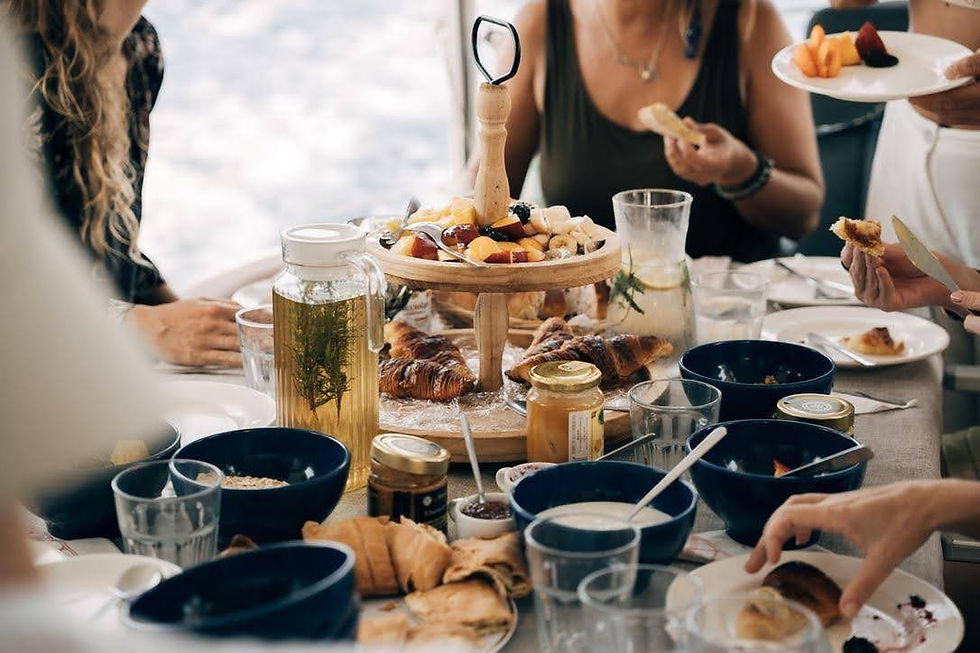
Buying from a fisherman in a small harbor, then serving that fish to guests who watched the sunset from the deck. Sharing meals with locals, then bringing their stories back to the boat. Feeling the rhythm of seasons through what was available, then translating that into meals that told a story. Food is never just food. It's a relationship, culture, time, and place, all on one plate. When people from different countries gather around a small table, food becomes the universal language that connects us all.
Blue Zone wisdom, lived
Sardinia is one of the world’s Blue Zones, places where people live longer, healthier, and happier lives. This concept I brought onto sailing trips. I didn’t just read about their wisdom, I lived alongside it throughout my life.
There I watched nonnas making bread the way their mothers taught them. I noticed how naturally people moved throughout their day, how they ate what grew nearby, how they lived in rhythm with nature’s cycles.
These weren't health hacks or trends. They were simply how life had always been lived. Before industrial food, before rushing, before we forgot that nourishment includes joy, community, and connection.
The Blue Zone principles I wrote about in my first article, eating seasonally, choosing local foods, building plant-forward meals, and being present, aren't theories. They're how humans have eaten for thousands of years. The sailboat, with its constraints, brought me back to that ancient wisdom.
Wave Food, bringing it all together
Wave Food is the cookbook that emerged from this journey. But it's not just a collection of recipes. It's an invitation to remember what we already know deep down.
That cooking can be meditation, not an obligation. Those simple ingredients, treated with respect, create extraordinary meals. Eating together builds something no supplement or superfood can replace. When we align our eating with nature's rhythms, we feel it in our bodies, our energy, our mood.
The wave in Wave Food has many meanings. It's the Mediterranean waves that rocked the boat while I cooked. It's the ebb and flow of seasons that guide what we eat. It's the ripple effect of small, consistent choices made with intention and joy.
From the galley to your kitchen
You don't need a sailboat to embrace this approach. You don't even need a fancy kitchen.
What you need is already there. Your senses, your presence, and your willingness to slow down enough to notice.
Start with one meal. Visit a local market and choose what looks vibrant and alive. Notice the colors, smell the herbs, feel the textures. Then, in your kitchen, however small or large, take a breath. Put away your phone. Let cooking become fully present.
Chop consciously. Taste as you go. Notice how ingredients transform with heat, time, and attention. When you sit down to eat, pause before the first bite. This is nourishment in its fullest sense.
The journey continues
This article is the second in a series where I'll keep exploring these themes, weaving together personal stories, practical wisdom, and the philosophy behind Wave Food. In the coming months, I'll dive deeper into how food shapes our energy and resilience, the magic of cooking with the seasons, and the transformative power of shared meals.
Because these principles aren't separate from life, they are life.
From hometown gardens to sailing the Mediterranean, from farmers' markets to tiny galleys, the lesson stays the same. Real food, real presence, real connection. That's what changes everything.
As I wrote in my previous article, simple food choices change how we live. Now you know why I believe this so deeply. I didn't just study it. I lived it, cooked it, shared it, and let it transform me to transform others.
"Hands in the soil, cooking in small spaces, sharing meals and stories, this is how we learn to nourish ourselves."
Read more from Vallery Melcher
Vallery Melcher, Culinary Wellness Chef
Vallery Melcher is the author of the upcoming cookbook Wave Food, inspired by the Mediterranean Blue Zone lifestyle and her experiences cooking while sailing around the Mediterranean and in Berlin, Germany. She combines her roots in growing and harvesting food with the joy of sharing meals, building community, and teaching mindful, seasonal eating.