

Francesca Kastelanides Interview on How Yoga Helps Children Thrive
Francesca Kastelanides is co-founder and Head Trainer at BEAM Academy and founder of SoYoga, with over 20 years of experience in yoga, mindfulness and wellbeing. In this interview, she shares her journey from a career in public relations and event management to studying special education and discovering the transformative potential of yoga for children with additional needs.
She explores how this experience inspired her to bring yoga, breathwork and mindfulness into schools and nurseries, helping children develop emotional resilience, confidence and self-regulation while fostering more inclusive environments.
Francesca also reflects on the importance of making wellbeing accessible to everyone, drawing on her extensive experience training new yoga teachers and supporting children and adults through school programmes, corporate wellbeing, workshops and retreats in the UK and abroad. She highlights how yoga and mindfulness can positively impact people at every stage of life, both in the classroom and beyond.
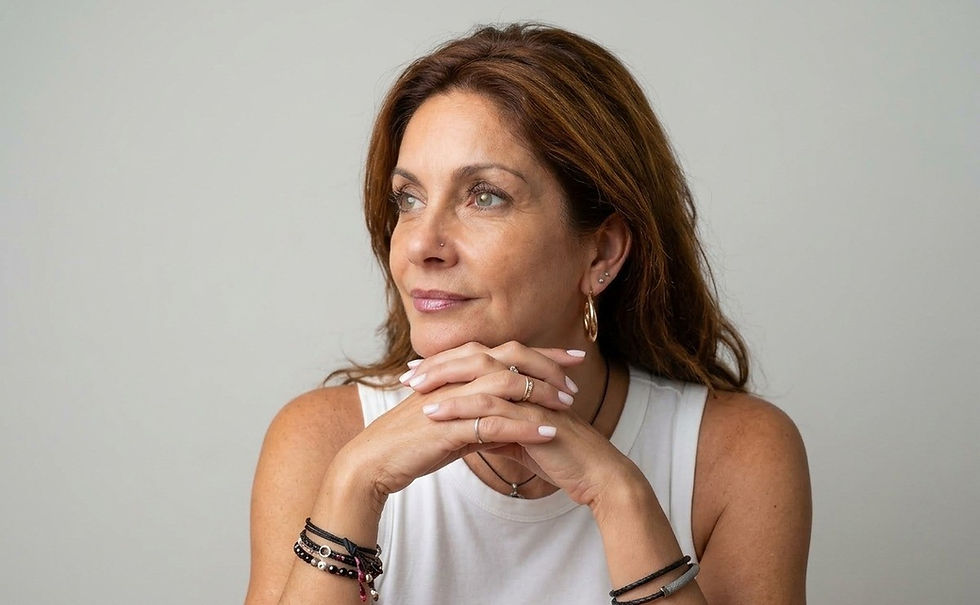
Francesca Kastelanides, Director, Founder & Senior Trainer
What first pulled you from events and PR into special education, and eventually into building a career around yoga for both children and adults?
I began my career in public relations and event management, while also volunteering with the Special Olympics. This experience had a profound impact on me, and my involvement eventually led me to become a member of the Board of Directors for Special Olympics Cyprus. Working with these children showed me how much the right support, understanding and opportunities can shape a young person’s life, inspiring me to work more closely with children with additional needs.
When the opportunity arose to take on more one-to-one work, I decided to change direction and study for a degree in special education. Working with a child with autism was a real turning point. I saw how movement and breathing techniques could help them navigate triggers, manage anxiety and feel more settled. It was a lightbulb moment: yoga could offer so much more than a physical practice; it could give children practical tools to understand and regulate their emotions.
This inspired me to undertake specialist training in yoga for children with additional needs, followed by further training in children’s and teen yoga, adult yoga, mindfulness and breathwork. Over time, I expanded my work into schools and nurseries, developing programmes and training others to share these practices with children of different ages and abilities.
Alongside this, I spent more than 15 years supporting adults through corporate wellbeing programmes, workshops and retreats in the UK and abroad. Although my work spans different ages and settings, the underlying principle remains the same: helping people reconnect with themselves, develop self-awareness and discover practical tools to support their wellbeing.
Looking back, my journey from PR and events into special education and yoga was not a sudden change of direction, but an evolution shaped by experience, a growing passion and the realisation that I wanted my work to make a meaningful difference to people’s lives.
How does a yoga session change when it is built for a two-year-old instead of simplified from an adult class?
The biggest difference is that you are not taking an adult class and making it easier; you are creating an entirely different experience based on how a two-year-old learns, moves and engages with the world.
At that age, children learn through play, repetition, music, stories, sensory exploration and relationships. A yoga session might involve pretending to be animals, travelling through an imaginary forest, singing songs, exploring different sounds or using props to bring a story to life. A downward-facing dog becomes a dog stretching, and a breathing exercise might involve smelling an imaginary flower and gently blowing out a candle. Sessions are short, varied and flexible because attention spans and energy levels change very quickly. Repetition is important, too, because familiarity helps children feel secure, while small variations keep them curious.
We are also building foundations without necessarily expecting children to understand what they are learning. They are developing body awareness, coordination, listening skills, emotional recognition and the beginnings of self-regulation. Yoga is woven into the experience rather than presented as a series of formal postures.
For me, the magic is in creating an environment where children are learning valuable skills without feeling that they are being taught a lesson.
What has adapting yoga for children with additional needs taught you about making a practice genuinely inclusive?
Adapting yoga for children with additional needs has taught me that inclusion is not about expecting everyone to participate in the same way. It is about creating opportunities for everyone to participate in a way that works for them.
Every child is unique, and that is particularly evident when working with children with additional needs. A movement, sound or activity that one child finds calming might be overwhelming for another. Some children may love physical movement, while others prefer observing, using a prop, making a small gesture or simply being present in the space.
You have to be willing to adapt, think creatively and let go of preconceived ideas about what participation should look like. Visual cues, repetition, sensory resources, predictable routines and offering choices can all make a significant difference.
I have also learnt that we should never underestimate a child because of their diagnosis or assume we know what they are capable of. We need to understand the individual, recognise their strengths and give them the time and space to engage.
Genuine inclusion means that a child feels they belong, rather than feeling they have to fit into someone else's expectations. When we get that right, yoga can help build confidence, independence and a sense of connection with others.
“Everyone deserves the space to shine in their own way.”
Where do schools most often go wrong when they try to bring wellbeing or mindfulness into daily learning?
I think one of the biggest challenges is treating wellbeing as an additional activity rather than an essential part of the school day.
Schools are under enormous pressure to deliver academic results, and wellbeing can sometimes become something that is shoehorned in when there is time, perhaps through an occasional mindfulness session or a special event. But children need consistency. They benefit from having opportunities to pause, move, breathe and understand their emotions regularly, not just when something goes wrong.
Another misconception is assuming that mindfulness means asking children to sit still, close their eyes and be quiet. That simply does not work for every child, particularly younger children or those who need movement and sensory engagement to help them regulate.
Wellbeing needs to be age-appropriate, practical and woven into everyday learning. Sometimes that might mean a breathing exercise before a lesson, a movement break after a period of concentration, or helping a child recognise that they are feeling frustrated before that frustration escalates.
It is also important to support teachers themselves. We cannot expect educators to prioritise children's wellbeing without acknowledging the pressures they face.
Ultimately, wellbeing is not separate from learning. When children feel safe, connected and better able to manage their emotions, we create better conditions for learning to take place.
What do companies usually misunderstand when they bring in a wellbeing workshop for their staff?
I think companies sometimes approach wellbeing as a way to help employees cope with the pressures of their working environment without looking at the environment itself.
A yoga or mindfulness workshop can be incredibly valuable, but it cannot compensate for unrealistic workloads, poor communication or a culture where people feel they must always be available. Wellbeing needs to be supported by the organisation, not simply handed over to the individual to manage.
Another misconception is that wellbeing has to involve a major time commitment or be something that appeals to everyone in the same way. In reality, small, practical tools can make a real difference. A few minutes of conscious breathing, a movement break or learning how to recognise when stress is building can give people something useful to take into their working day.
I also think workshops work best when they are relevant to the people attending. A corporate team sitting at desks all day may need something different from a group working in a high-pressure, client-facing environment.
Having worked with adults and companies in London and abroad, I have found that people often need permission to pause. We become so accustomed to being busy that doing nothing, even briefly, can feel uncomfortable.
The aim is not simply to give people an enjoyable hour away from their desks. It is to equip them with practical tools they can continue using long after the workshop has finished.
How can a teacher tell when a child has moved from doing a breathing exercise with guidance to reaching for it on their own?
Often, it is through the small, everyday moments rather than anything dramatic.
A child might take a breath when they become frustrated, pause before reacting to a situation, or remember a familiar breathing exercise when they feel overwhelmed. They might ask to do their favourite breathing activity, suggest it to a friend or use a technique during a transition that they previously found difficult.
One piece of feedback that has always stayed with me came from a parent who told me that, during a challenging time at home, her daughter had gone out into the garden, practised Tree Pose and then taken a breath. She explained that this was what her daughter had learnt to do in her yoga class when her feelings started to get too overwhelming.
For me, that is what it is all about. The child had taken something she had learnt in class and, without being prompted by a teacher, remembered to use it in a real-life situation when she needed it. She had found a way to create a little space for herself and work through what she was feeling.
I cannot describe how proud I feel when we receive feedback like that. As teachers, we may not always see the immediate impact of what we do, but hearing that a child is using these tools outside the classroom reminds us why this work matters so much. It shows that we are not simply teaching yoga poses or breathing exercises; we are giving children skills they can carry with them into everyday life.
Of course, every child is different, and we should not expect everyone to demonstrate this in the same way. Some children may need visual prompts or reminders for a long time, and that does not mean they are not benefiting. Others may understand a technique but struggle to access it when their emotions are particularly intense.
The key is repetition, consistency and giving children opportunities to practise when they are calm, so the tools become familiar before they need them.
We are not trying to teach children to suppress their emotions or expect them to be calm all the time. We are helping them recognise what is happening inside them and discover that they have options for responding. And when a child begins to use those tools independently, even in a small way, that is a really meaningful milestone.
What shifts in your approach when you go from teaching a class of children to leading adults through a retreat or workshop abroad?
The biggest shift is in how I create the space and guide the experience. With children, I am often bringing the practice to life through stories, imagination, music, movement and play. With adults, I tend to create more opportunities for reflection, exploration and stillness.
But I do not think the difference is as great as people might imagine. Whether we are 2 or 70 years old, we all want to feel safe, accepted and free from judgement. We all want to have fun, laugh, let go of our inhibitions and release some of the things we have been carrying. Sometimes, as adults, we forget how to do that. We become so caught up in our responsibilities and expectations that we lose touch with the simple joy of being present and enjoying the moment.
I think creating a space where people feel comfortable enough to let their guard down is one of the most important parts of teaching. That might mean encouraging children to be silly and imaginative, or giving adults permission to explore, laugh at themselves and try something new without worrying about getting it right.
On retreats, particularly those abroad, there is an additional opportunity to step away from familiar routines and responsibilities. Being in a different environment, surrounded by nature or immersed in another culture, can help people gain perspective and reconnect with parts of themselves that everyday life tends to push aside.
I enjoy bringing together yoga, philosophy, mindfulness, meditation and meaningful themes that people can explore both on and off the mat. It is not just about the physical practice; it is about creating an experience that gives people the space to reflect, release, reconnect and perhaps discover something new about themselves.
Ultimately, I believe that as teachers, we are there to guide, not to dictate how someone should feel or what their journey should look like. We offer practices, tools and experiences, but each person has to find their own way and discover what works for them. There is no single right way to practise yoga, to relax or to find balance.
Whether I am working with a child or an adult, I am looking for the same thing: to create a safe, supportive space where people can be themselves, have fun, explore and reconnect with who they are. If they leave feeling a little lighter, more confident or more connected to themselves, and with something valuable they can carry into their everyday lives, then I feel I have done my job.
You've said teachers learn as much as they teach. What has two decades of students taught you that you did not expect?
I think one of the most important lessons has been how much we can learn when we stop assuming that we know what someone needs.
When you begin teaching, it is natural to focus on delivering the class, getting the sequence right and achieving the outcomes you have planned. Experience teaches you that the most valuable moments do not always happen according to plan.
Children have taught me to be more adaptable, to celebrate small achievements and to recognise that progress can look completely different from one person to another. They remind me that curiosity, play and a sense of wonder are not things we should lose as we grow older.
Adults have taught me how much people can carry beneath the surface. Someone may arrive at a class looking confident and capable while privately navigating stress, uncertainty or significant life changes. Creating a space where people feel they can put some of that down, even temporarily, is a real privilege.
I have also learnt that you cannot force change. You can offer tools, encouragement and opportunities, but each person has their own journey and their own pace.
Perhaps the biggest surprise is that, after all these years, I am still learning. Teaching has never been a one-way process. Every class reminds me to stay curious, listen more carefully and remain open to seeing the world through someone else's eyes.
What is one skill from yoga or mindfulness you hope stays with someone long after the class ends, whether they were seven or seventy?
I would choose the ability to pause and take a conscious breath.
It sounds simple, but that small moment can create space between what we feel and how we respond. When we are overwhelmed, anxious, frustrated or under pressure, we can become caught up in an automatic reaction. Learning to pause, notice what is happening and take a breath can help us approach the moment differently.
For a child, that might mean finding a way to manage frustration in the playground or feeling more confident before trying something new. For an adult, it might mean taking a breath before responding during a difficult conversation, stepping away from the pressure of a busy day or recognising when they need to slow down.
Of course, breathing is not a solution to every challenge, and it does not mean we should ignore difficult emotions. But it can help us become more aware of ourselves and give us a moment to choose what we do next.
Ultimately, I hope people leave my classes understanding that they have resources within themselves that they can return to whenever they need them.
You do not need a yoga mat, a quiet room or an hour of free time. Sometimes, all you need is one conscious breath and the reminder that you can begin again.
That is a skill I would love everyone to carry with them, whatever their age or stage of life.
Take a moment today to pause, take a conscious breath and notice how you feel. Give yourself the gift of slowing down, reconnecting with yourself and allowing space for a little reset. You deserve that pause, too.
If anything I’ve shared resonates with you, or you feel you could use a little more space to breathe, reconnect or find balance, I’d love to hear from you.
Read more from Francesca Kastelanides







