Breathing & Public Speaking – Why Skilled Speakers Forget to Breathe & How Nasal Breathing Helps
Updated: Oct 6, 2025
Alfonso (AL) Gonzalez is an ISSA Master Trainer, Certified Wellness Coach, and Co-Founder of the Kairos Wellness Experience. Known for his multidimensional approach to wellness, AL helps individuals cultivate physical vitality, emotional resilience, and inner peace through integrative practices rooted in both science and lived experience.

Public speaking coaches tell us to pause, pace ourselves, and “remember to breathe.” But what’s often missing even for skilled speakers is how to breathe. Most presenters rely on mouth breathing while on stage. It feels natural, especially when words demand strong bursts of air for impact and projection. But mouth breathing keeps the body slightly on edge, maximizing the risk for the fight-or-flight-or-freeze response when unexpected issues occur.

What’s even worse? When confronted with the unexpected in front of an audience, we may forget to breathe altogether! It happens more than you may think.
“The overlooked solution? Nasal breathing, especially nasal exhalation.”
This simple shift keeps presenters in homeostasis, restores calm when things go off-script, and even supports creativity by extending the breath cycle. It’s a game-changer that few public speaking books and even fewer expert presenters are talking about.
Why nasal breathing matters on stage
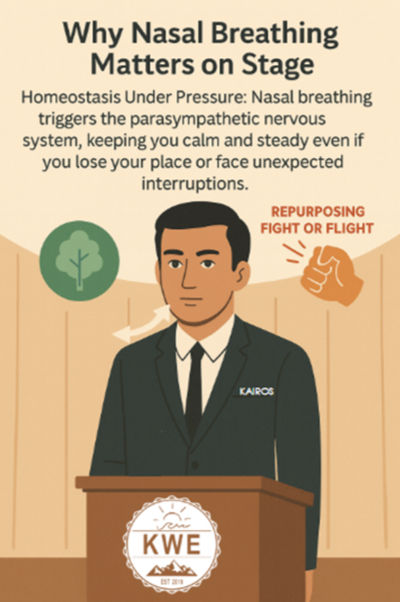
Homeostasis under pressure: Nasal breathing triggers the parasympathetic nervous system, keeping you calm and steady even if you lose your place or face unexpected interruptions. We call this Repurposing Fight or Flight.
Creativity & clarity: Longer, controlled exhalations through the nose activate the vagus nerve and maximize the impact of the “10-second breath,” a rhythm that allows space for insight and spontaneity. You’d be surprised how many times you can breathe for 10 seconds on stage, once you plan for it.
Audience connection: When you breathe calmly, your delivery slows naturally, making you appear more confident and intentional.
Finding opportunities for nasal breathing while speaking
Here’s the real challenge. When words require mouth movements, where do you fit in the nasal breath?
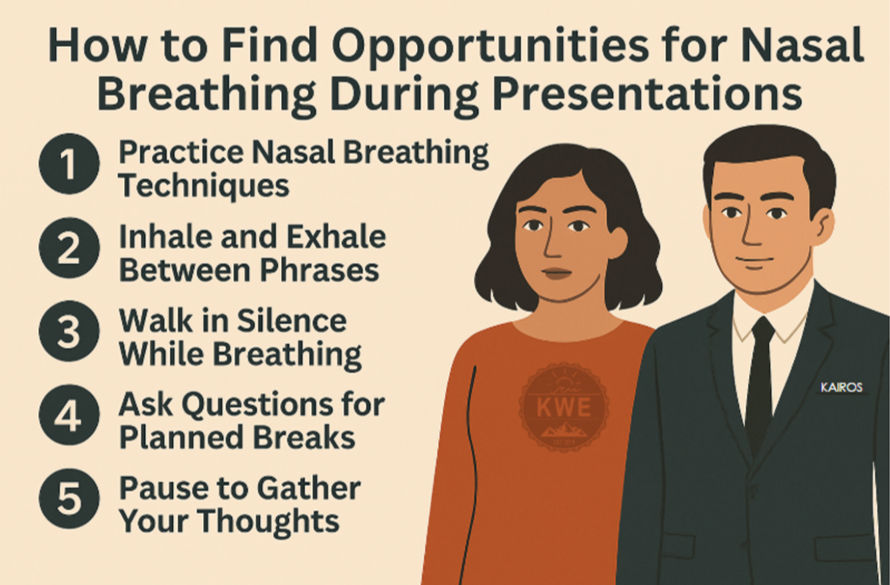
1. Silent nasal inhales between phrases
Instead of gulping air through the mouth, take a subtle nasal inhale at commas, pauses, or during a moment of eye contact. This only takes 3-4 seconds.
The audience doesn’t notice, but your nervous system does.
2. Nasal exhalations during pauses
When making a transition or asking a thought-provoking question, inhale and exhale slowly through the nose.
This calms your body and lengthens the silence for dramatic effect.
3. The “invisible reset”
If you feel yourself speeding up, pause with a smile or thoughtful gesture.
Take one slow nasal inhale, one nasal exhale. Audiences read this as confidence, not recovery.
4. Anchor breath to movement
Step across the stage, open your hands, or look at a new section of the audience as you inhale through the nose.
Exhale nasally as you settle into your new stance. Movement disguises the breath but reinforces your presence.
Prepare like an athlete: Breathe and visualize
Just as athletes breathe and visualize themselves succeeding in their sport, speakers can prime their nervous system by practicing the box breath while visualizing themselves excelling on stage.
Go ahead, visualize that standing ovation while breathing the box breath! This rehearsal locks in calmness before you even step on stage and will increase your confidence.

Conclusion
Breathing isn’t just about survival on stage, it’s about mastery. By learning to weave nasal inhales and exhalations into the rhythm of speech, presenters gain a hidden edge, calm in disruption, creativity in the moment, and authority in delivery.
Most presentation guides overlook this. But once you experience it, you’ll never want to present any other way.
Further exploration
If you are curious about the science behind nasal breathing, including its impact on the vagus nerve and posture, you can find a deep dive in my article, The Hidden Power of Nasal Breathing: Awakening the Inner Core.
You can also visit here to continue your breathwork and wellness journey.
Read more from Alfonso Gonzalez
Alfonso Gonzalez, ISSA Master Trainer and Wellness Coach
AL Gonzalez is redefining what it means to be “well” in today’s fast-paced world. His approach at the Kairos Wellness Experience goes beyond surface-level fitness, offering deep, integrative practices that restore balance, build resilience, and foster community. By teaching participants how to “breathe for power and peace,” AL empowers people from all walks of life to reclaim their wellness, not just as a destination, but as a daily practice.