Breathing Is Not Automatic – Why Ventilatory Efficiency Determines Endurance Performance
Updated: Jan 15
Dr. Osvaldo Cooley, PhD, is an expert in body transformation, metabolic performance, and longevity. As the founder of The Elite Hub, Dr Os helps high-performing individuals achieve visible, lasting results through advanced diagnostics, personalised recovery strategies, and specialised body contouring therapies.

Most athletes assume that breathing takes care of itself. After all, it is automatic, constant, and something we rarely think about outside moments of distress. Yet in endurance sport, breathing is not merely a background process, it is a trainable physiological system that can either amplify performance or quietly sabotage it.
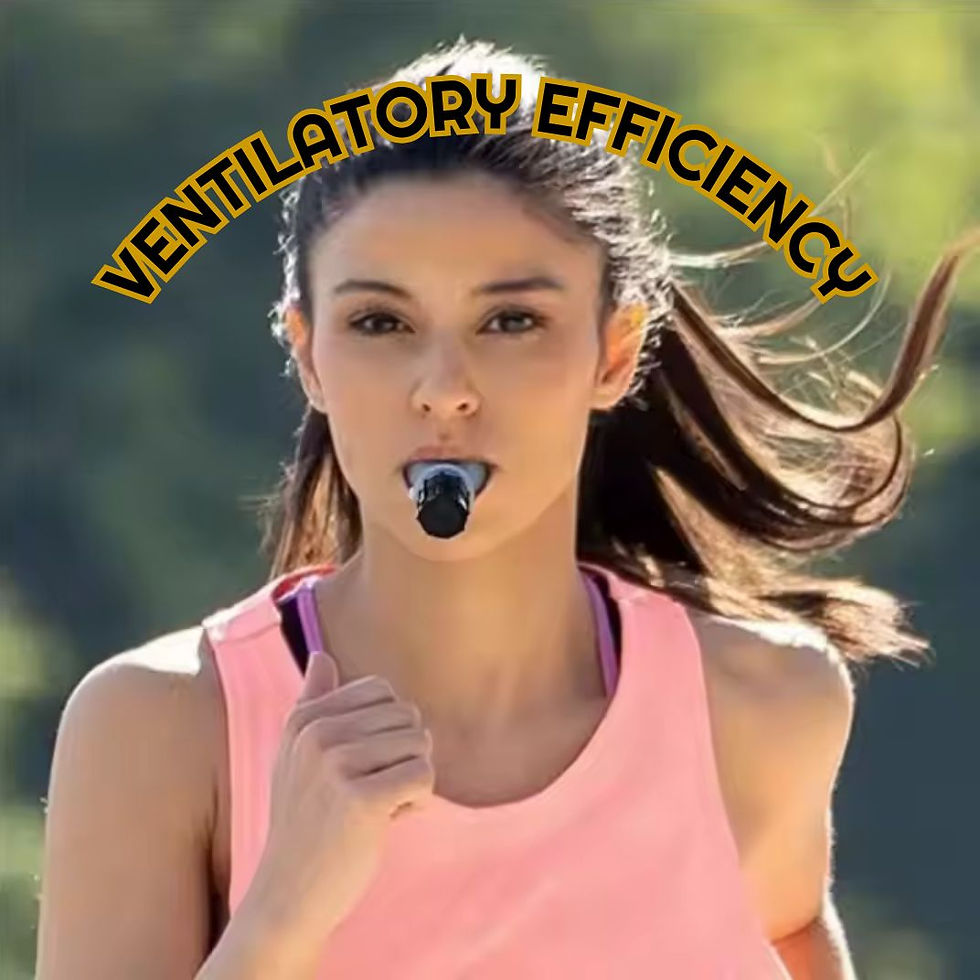
In metabolic testing, ventilatory efficiency and breathing coordination consistently emerge as critical differentiators between athletes who perform at their potential and those who plateau despite strong fitness markers.
Ventilatory efficiency: Doing more with less
Ventilatory efficiency reflects how effectively the lungs exchange oxygen and carbon dioxide relative to workload. In practical terms, it measures how much breathing is required to sustain a given intensity.
Poor ventilatory efficiency forces an athlete to breathe more, and harder, to deliver the same oxygen to working muscles. This increases sympathetic nervous system activation, elevates heart rate disproportionately, and accelerates carbohydrate depletion.
Highly efficient athletes, by contrast, maintain calmer breathing patterns and lower ventilatory demand at submaximal intensities. This allows them to preserve energy, enhance fat oxidation, and maintain metabolic stability over long durations.
Breathing coordination: The hidden performance lever
Breathing coordination describes how well respiration synchronizes with posture, core engagement, and movement. Dysfunctional patterns, such as shallow chest breathing, excessive upper-body tension, or incomplete exhalation, compromise oxygen delivery even when cardiovascular capacity is high.
This explains a paradox frequently observed in metabolic testing, VO₂ max improves, yet breathing coordination declines. The engine grows stronger, but the airflow becomes inefficient. In these cases, performance stagnates not due to a lack of fitness, but due to poor respiratory control under load.
The cost of inefficient breathing
Athletes with poor breathing mechanics often experience:
Elevated heart rate at easy intensities
Early breathlessness despite good fitness
Reduced fat oxidation
Faster glycogen depletion
Slower recovery between sessions
Over time, this leads to chronic fatigue, inconsistent performances, and a reliance on excessive high-intensity training to “feel fit.”
Why zone 2 training alone is not enough
Zone 2 training is foundational for endurance development, but it does not automatically correct dysfunctional breathing. In fact, athletes often reinforce poor respiratory habits during long, easy sessions.
Breathing must be deliberately retrained, especially at low intensities where athletes can focus on rhythm, nasal breathing, and controlled exhalation without cognitive overload. When breathing reconditioning is paired with Zone 2 training, aerobic efficiency improves exponentially.
Practical breathing techniques for endurance athletes
During training (especially zone 2)
Nasal breathing at low intensity: Encourages diaphragmatic breathing, improves CO₂ tolerance, and reduces sympathetic stress. Use during warm-ups and Zone 2 sessions whenever possible.
Extended exhalation (4:6 or 3:5 breathing): Exhale longer than you inhale to promote parasympathetic activation and breathing efficiency. Ideal during long aerobic sessions and recovery runs.
Step-breathing coordination (e.g., 3:3 or 4:4): Synchronizing breath with stride improves rhythm and movement economy. Particularly effective for trail and endurance running.
Outside training (daily reset)
Diaphragmatic reset breathing (5 minutes): Lie supine, one hand on chest, one on abdomen. Breathe slowly through the nose, keeping chest quiet. Restores proper breathing mechanics after stressful days or hard sessions.
CO₂ tolerance holds (advanced): After a gentle exhale, hold breath briefly (10-20 seconds), then resume calm breathing. Improves ventilatory efficiency and tolerance to exertion.
Before sleep (recovery & nervous system downregulation)
4-7-8 breathing or 5-5 nasal breathing: Slows heart rate, enhances vagal tone, and improves sleep quality. Particularly valuable for athletes with high training loads or elevated stress.
Consistent application of these techniques retrains breathing as a performance skill, not an unconscious afterthought.
From automatic to intentional
Elite endurance athletes do not leave breathing to chance. They measure it, train it, and integrate it into their metabolic strategy. Breathing is not simply about oxygen intake, it is about efficiency, coordination, and control under load. Once athletes understand this, they stop chasing fitness blindly and start building performance intelligently.
If you want to understand how your breathing, metabolism, and cardiovascular system are truly functioning, and how to train them with precision, a VO₂ max and metabolic assessment is the starting point.
At The Elite Hub, we use advanced metabolic testing to identify inefficiencies, guide training intensity, and build personalised strategies that improve performance, recovery, and longevity. Because in endurance sport, how you breathe often matters more than how hard you train.
Read more from Osvaldo Cooley, PhD
Osvaldo Cooley, PhD, Dermal Clinician & Body Contouring Specialist
Dr. Osvaldo Cooley, PhD, is a leading expert in body transformation, metabolic performance, and longevity. A former athlete, his promising career was cut short by injuries that sparked a passion for understanding recovery and performance optimisation. Drawing from his personal journey and extensive research, Dr. Os developed proven techniques to help men and women transform their bodies, improve fitness, and boost long-term health. As the founder of The Elite Hub, he empowers high-performing individuals to achieve visible, lasting results through advanced diagnostics and personalised strategies.