Benefits of Botanical Plant Medicine, and How It Saved My Life
Updated: Feb 1
Berta Kaguako is the Co-Founder and Managing Director for EthVida, a patient educational platform that promotes plant medicine and a holistic healthcare approach. As a patient herself, Berta has made a remarkable transformation, using cannabis based medical products to manage 7 diagnoses and 50+ symptoms. And now advocates for plant medicine.

Discover the transformative power of botanical plant medicine through a personal journey of healing and resilience. Berta Kaguako shares her story of reclaiming her life from chronic conditions, revealing how botanicals like ginger, garlic, and lion’s mane supported her recovery. Explore the benefits of this ancient medicine and its ability to restore balance in body, mind, and spirit. Learn how plant medicine can be a powerful ally in modern healthcare.
My patient story
I didn’t find botanicals in a wellness aisle or a social media trend. I found them because I wanted my life back, and I was willing to build it one plant, one nervous system win, one small victory at a time. And that’s exactly what I did!
My medical file is thick. By twenty-two, after being diagnosed with Morton’s neuroma, I had already stepped onto a path that would include arthritis, fibromyalgia, a spinal syrinx at C6/C7, hemianesthesia with episodic paralysis, PCOS, asthma, POTS, bilateral sciatica, traumatic brain injury, PTSD, AuDHD, and Long COVID, with 50+ symptoms. Each diagnosis arrived with its own symptoms & rulebook, but none explained how it felt to live inside a body that could short-circuit without warning.
There were seasons where I found my footing. A holistic approach, nutrition, nervous-system support, movement adapted rather than forced, brought me into remission more than once. Then COVID arrived and hit the reset button in the worst possible way. Everything came roaring back at once, progressing all my conditions to the next stage. I went from managing my life, and living my best life, to pleading with the universe hour by hour.
At my lowest point, I was bedbound 4/5 days a week. Getting to the bathroom meant engineering a route across the floor with blankets and pillows and dragging myself forward with one functioning arm, due to the paralysis on the left. It wasn’t dramatic. It was logistical. And it was not living. I was existing!
The turning point didn’t arrive as a miracle, it arrived as permission. Medical cannabis was the first thing that reduced my pain and symptoms enough to let me participate in my own recovery. From there, botanicals became collaborators, ginger and garlic to cool inflammation, lion’s mane to support cognition, evening primrose and selenium for hormonal and neurological balance, beetroot and chlorophyll for cardiovascular resilience (enough, eventually, to earn my discharge from cardiology). Combined with physiotherapy, electro-acupuncture, dietary changes, and an aggressively patient pace, my body began to respond. Not all at once. But unmistakably!
Looking back now, in January 2022, I collapsed unconscious on the platform at Oxford Tube Station because simply leaving the house overwhelmed my system. In August 2025, I celebrated my 38th birthday by hiking for four hours on a treacherous trail in the Jungles of Puerto Rico. That transformation did not come from ignoring science, it came from expanding it. From recognising that plant compounds can meaningfully support complex, multi-system illness when integrated thoughtfully and consistently.
My journey isn’t finished. I still live with chronic conditions. I still respect my limits. But for the first time in years, the trajectory is forward, and that changes everything!
Botanicals didn’t just help me manage symptoms, they helped me re-enter my life, I am no longer existing, for once, I am living!
Exploring the benefits of botanicals with Ruby Gumbi-Edwards
For millennia, roots, leaves, and blooms have been whispered to hold wisdom from the heart of Traditional African healing systems, through the elemental science of Ayurveda, to the flowing meridians of Traditional Chinese Medicine (TCM). Today, botanical plant medicines are gently rising like sap in spring, welcomed as complementary allies within modern healthcare. Unlike many single-target pharmaceuticals, well-crafted botanical regimens seek not just to silence a symptom, but to restore harmony across the entire ecosystem of the self. They address the physical while nurturing the mental and emotional soil from which wellbeing grows. Let’s explore their benefits, tread carefully around essential cautions, and identify trustworthy sources to guide your journey.
Definitions & framework
Botanical medicines: Plant-derived preparations, think of teas steeped in stillness, potent extracts, tinctures holding a plant’s essence, powders, and topical oils, all used with therapeutic intention.
Holistic traditions referenced: (a) Traditional African Herbs, (b) Ayurveda, (c) Traditional Chinese Medicine. Each, in its own language, speaks of balance (homeostasis), honors the individual’s unique terrain, and weaves healing into the broader context of lifestyle and diet.
How does it work?
One of the reasons botanical medicines can be effective is that the human body does not operate like a collection of independent parts. It functions as an interconnected network, immune, nervous, endocrine, cardiovascular, endocannabinoid, and digestive systems constantly exchanging information. When one system is overwhelmed, others compensate, often at a cost.
Unlike many pharmaceuticals that are designed to target a single pathway, botanicals tend to work systemically. A single plant can contain hundreds of active compounds, alkaloids, terpenes, flavonoids, polyphenols, each interacting with different receptors, enzymes, and signalling pathways in the body. This multi-target approach is especially relevant in chronic, multi-system conditions, where dysfunction rarely exists in isolation. Rather than forcing the body in one direction, botanicals often support regulation, helping systems communicate more effectively and return toward balance.
Botanicals interact with this network through multiple entry points. Some modulate inflammation by influencing cytokine signalling. Others affect neurotransmitter availability, nerve growth factors, or autonomic tone. Certain compounds support mitochondrial function, improving cellular energy production, while others influence hormone metabolism or vascular elasticity.
This network-level support can be particularly impactful for people whose conditions involve dysregulation rather than structural damage alone, where the issue is not that the body is broken, but that it is stuck in survival mode.
A key difference between botanical and conventional approaches lies in adaptation versus suppression. Many plant compounds act as adaptogens or modulators, meaning their effects shift depending on what the body needs. Rather than overriding symptoms, they help the body recalibrate stress responses, pain signalling, immune reactivity, and energy use. This is why progress with botanicals is often gradual but durable. Instead of a dramatic short-term effect followed by diminishing returns, changes tend to accumulate, sleep improves, recovery speeds up, flares become shorter or less intense. The body begins to relearn flexibility.
In this way, botanical medicine aligns less with crisis management and more with long-term resilience building, contributing towards longevity.
Mind-body-spirit integration – The symphony of wholeness
Here lies the core beauty of botanicals, they are seldom solo performers, but rather an orchestra. A whole‑plant extract contains dozens of constituents that can gently resonate with multiple physiological pathways at once, supporting digestion, soothing inflammation, steadying mood, and nurturing energy, often in concert.
These ancient systems listen to the whole person, your constitution, the seasons of your life, your emotional weather, offering a regimen as unique as your fingerprint. It’s medicine that remembers you have a spirit.
The growing evidence, Modern Phytomedicine Research is now mapping these intuitive truths. Studies reveal multi-modal actions, anti-inflammatory, adaptogenic, neuroprotective, for herbs like Ashwagandha, Turmeric, and Milky Oat. For curated scientific reviews, explore the monographs from the “American Botanical Council” and the clinical summaries at the “National Center for Complementary and Integrative Health (NCCIH).”
Sustainability and connection – Re‑rooting in nature
To engage with plant medicine is to begin a conversation with the earth. Whether you’re tending a windowsill pot of Sage, mindfully foraging with respect, or supporting community herbalism, you cultivate a relationship. This connection naturally fosters “ecological awareness” and encourages sustainable, reciprocal practices, taking only what is needed, giving back where possible.
Ethical sourcing and community-based cultivation can help protect biodiversity, support local economies, and honor the keepers of traditional knowledge. On a personal level, this hands-on engagement often blossoms into a deeper commitment to preventive health, nurturing your body as you would a garden.
Important safety context – “Natural” does not mean “neutral”
A forest can be both sanctuary and a place of potent, wild power. Plants are profound chemists, their bioactive compounds are strong medicine. Some have narrow therapeutic windows, and many interact significantly with pharmaceuticals.
A prime example, “St. John’s Wort”, a brilliant light for some forms of low mood, is a powerful inducer of liver enzymes. It can accelerate the metabolism of numerous prescription drugs, including many antidepressants, oral contraceptives, and blood thinners, potentially rendering them ineffective. Respect for this power is non-negotiable.
Practical key points & precautions
Consult a qualified guide: Always speak with a registered herbalist, integrative doctor, or informed clinician before beginning, especially if you are pregnant, breastfeeding, managing a chronic condition, or taking prescription medications.
Mind the interactions: Herbs and pharmaceuticals share pathways in the body. Key interactions exist (e.G., ginkgo biloba with blood thinners like warfarin, kava with sedatives). A pharmacist or clinician can help you navigate these.
Source with discernment: Quality is paramount. Seek reputable suppliers who provide “third‑party testing”, adhere to “good manufacturing practice (gmp)”, and transparently list the botanical name, part used, and harvest date. This guards against adulteration and contamination.
Compliment, don’t always replace: Think of botanicals as essential threads in a larger tapestry of health. For acute, severe, or life-threatening conditions, conventional medicine is vital. Herbs excel in prevention, support, and restoring foundational balance.
Let’s talk about gut health
Your gut is a personal garden, its output tells a story. Use this simplified guide as a gentle screen, always discuss persistent changes with your practitioner.
Healthy stool checklist:
Frequency: Regular for “you” (typically 1-3 times/day to 3 times/week). Consistency is key.
Form: Soft, formed, and passed easily.
Colour: Generally brown (shifts with diet).
Odour: Not persistently foul.
No persistent blood, mucus, or unexplained shape changes.
Type 1-2 (Hard lumps/Sausage with cracks): Suggests slow transit. Consider gentle hydrating herbs (like Triphala in Ayurveda), more fibre, and water.
Type 3-4 (Sausage-shaped, smooth to soft): The ideal. Nurture this balance.
Type 5-7 (Soft blobs to watery): Suggests fast transit or irritation. Investigate triggers, soothing botanicals like Slippery Elm may help, but professional guidance is crucial for persistent issues.
Please note! There is no exact one‑to‑one traditional equivalent for eastern North American slippery elm (Ulmus rubra, synonym Ulmus fulva) in either Traditional Chinese Medicine (TCM) or pan‑African herbal systems, but there are several herbs with similar demulcent (mucilage‑soothing) or “moistening” actions used in those traditions.
Tips & tricks
Functional Equivalents (by action)
TCM (herbs with moistening, demulcent or stomach/lung‑soothing actions)
Mai Men Dong (Ophiopogon japonicus), moistens the lungs and nourishes Yin, often used to soothe dry, irritated mucosa.
Sha Shen (Adenophora/ Glehnia species), nourishes Yin, moistens lung and stomach, used for dry coughs and throat/stomach irritation.
Bai He (Lilium spp.), moistening, calming, sometimes used for dry throat and coughs.
Note! TCM herbs are used according to pattern diagnosis (e.g., Yin deficiency, heat, dryness) rather than as direct botanical “replacements.”
African / pan‑African traditional options (mucilaginous or soothing herbs used regionally)
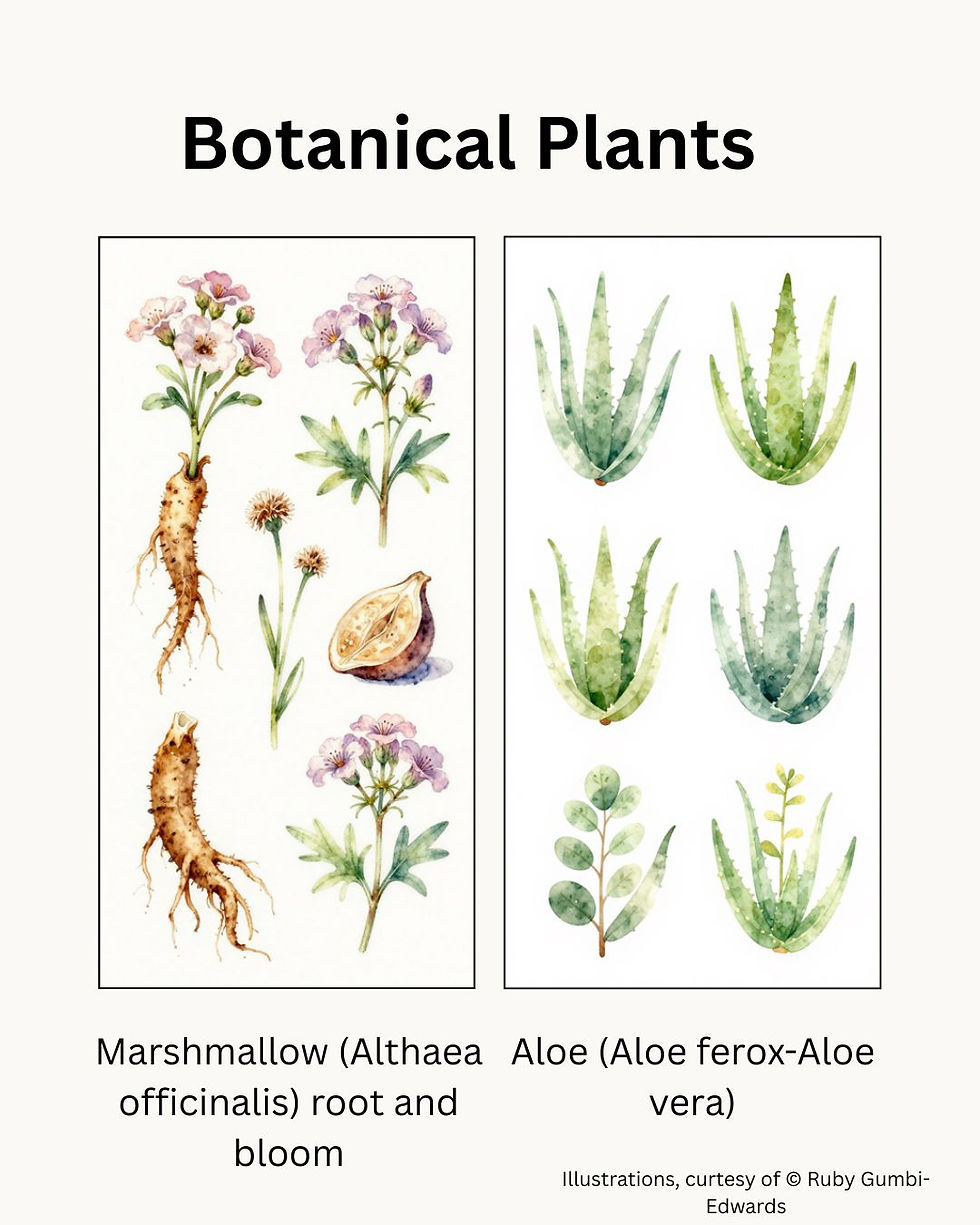
Aloe (Aloe ferox / Aloe vera), used across Africa for soothing GI (glycaemic index) irritation and topical mucosal care (internally and externally in some traditions).
Marshmallow (Althaea officinalis) widely used in Europe and parts of Africa for its mucilage, similar demulcent effect to slippery elm.
Okra (Abelmoschus esculentus) and other mucilaginous foods/plants are used traditionally to soothe digestion.
Note! African herbal traditions are highly diverse, regional plants with mucilage may be used rather than a single standardised species.
Practical points and caveats
Function over taxonomy: when looking for an “equivalent,” match the desired therapeutic action (demulcent, mucilage, lubricating, moistening) and pattern/symptom rather than expecting the same species.
Quality & safety: herbs differ in constituents and possible interactions, always confirm herb identity, dose and safety with a qualified herbalist or integrative clinician, especially if you take other medications.
For women: Honor your cycles. Hormonal tides across your menstrual cycle, pregnancy, or perimenopause can naturally alter your digestive landscape. Significant new changes will guarantee a conversation with your clinician.
Exploring more!
If you feel the call to explore, proceed not with haste, but with mindful curiosity:
Map your terrain: List your current health conditions and all medications/supplements.
Seek your guide: Consult a qualified practitioner for a personalised plan.
Choose quality: Invest in transparent, tested products from ethical sources.
Observe and adjust: Notice how your body responds. True healing is a dialogue.
When approached with respect, knowledge, and an eye on the evidence, botanical medicines can be profound allies, helping you cultivate resilience from the root up.
Conclusion: At the root of healing
Botanical medicine is not an alternative to science, but an expansion of it, a return to viewing the body as intelligent, adaptive, and capable of recalibration when properly supported. Plants offer more than symptom relief, they offer regulation, resilience, and the possibility of forward motion. When used with respect, evidence, and professional guidance, botanical medicines can become powerful collaborators within integrative care, especially for complex or chronic conditions where single-target approaches fall short.
My story is not one of cure, but of reclamation. Botanicals helped me move from survival back into participation, and from participation into living. They reconnected me not only to my body, but to nature as a partner in health rather than a backdrop to illness. If there is an invitation here, it is simple, approach healing with curiosity, responsibility, and openness. Look to nature not for miracles, but for partnership and trust that meaningful change often begins at the root.
Read more from Berta Kaguako
Berta Kaguako, Health and Social Care Consultant
Berta Kaguako is a Health and Social Care Consultant, with an Undergraduate in Psychotherapy and a Master's in Psychoanalysis. Berta’s background is in Mental Health, Substance Misuse and Children & Families, in both a therapeutic and senior management capacity, having won 3x Blooming Strong Awards (Recognition from UN for contribution to violence against Women). Berta is also the Co-Founder and Managing Director for EthVida, and independently runs the wellbeing service/educational platform.
References:
PubMed: Portal to peer‑reviewed clinical studies. Search: “herb name + clinical trial”.
Major Medical Centres (e.g., Mayo Clinic): Trustworthy overviews for drug-herb interactions.
World Health Organization (WHO) – Monographs on Selected Medicinal Plants
Authoritative global reference detailing traditional use, pharmacology, clinical evidence, dosage, and safety of medicinal plants. Widely cited in policy and clinical contexts.
European Medicines Agency (EMA) – Committee on Herbal Medicinal Products (HMPC)
Provides rigorous scientific assessments of herbal medicines, including safety profiles, contraindications, and evidence-based indications used across Europe.
ESCOP (European Scientific Cooperative on Phytotherapy) Monographs
Clinical and pharmacological monographs focused on evidence-based herbal medicine, frequently used by physicians and pharmacists practicing phytotherapy.
British Herbal Pharmacopoeia (BHP)
A gold-standard reference for herbal identification, quality control, dosing, and therapeutic indications, bridging traditional use with modern pharmacology.
Cochrane Database of Systematic Reviews – Herbal & Complementary Medicine Section
Independent, high-quality systematic reviews evaluating efficacy and safety of herbal interventions across a wide range of conditions.