Becoming the Leader I Needed as a Child – Gina Patel, Award-Winning Disabled Advocate
Gina Patel, a South Asian disabled woman and an award-winning equity advocate for over fifteen years, advocating for marginalised communities through her TEDx talk and participation in the UN Women’s CSW 68, CSW 69 and CSW 70 conferences. Her journey has explored overcoming barriers through navigating systems that weren’t built for her. Most recently through trying to enter the political world has defined her leadership style full of lived experience, bravery and a commitment to improving other people’s lives to ensure no one goes through what she has in her life.
In this interview, Gina reflects on becoming the leader she once needed, and why conversations about equity, identity and lived experience must remain at the forefront of both national dialogue in the UK and international discussions about change.
“Gina, this is your time, take it before anyone else does.”
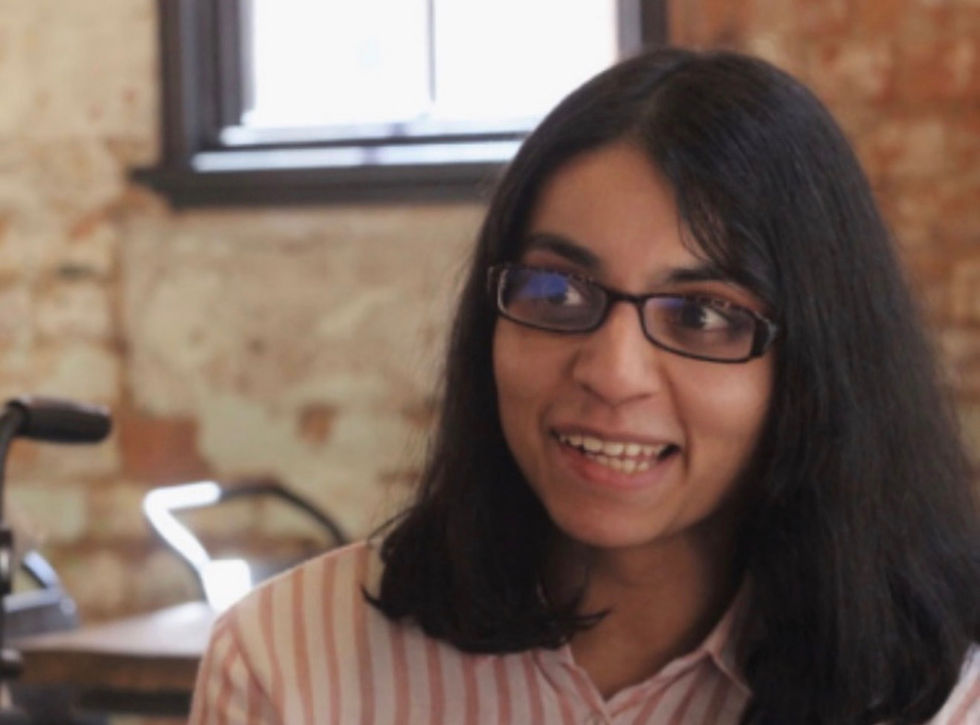
Gina Patel, Award Winning South Asian Disabled Advocate
How would you describe who you are today and the journey that shaped you?
As a South Asian disabled woman, I’ve spent my life navigating two worlds: the one society tried to confine me to, and the one where I could simply exist as myself. Between both worlds, I learnt how significant resilience is to me and how it taught me a life lesson in ways I didn’t recognise at the time I needed. Looking forward to where I am today, I now know my worth, the power of my identity and the purpose of why I was put on earth, far beyond my life experiences.
Today, I am a person driven by determination, lived experience and feel a sense of responsibility to my communities. It almost feels like the world depends on me, even when I know it doesn’t. I often feel my potential sits beyond my current career position, but that hasn’t stopped me from stepping into spaces where people don’t expect someone like me to be in. I challenge people to ensure processes are fair, question systems that fail people like me, and refuse to be invisible to make others comfortable.
How has your lived experience shaped your message and the voice you bring to your career?
My lived experience is the pivotal point of my leadership. Learning how to navigate all my identities alongside public systems allowed me to see that representation isn’t symbolic, it’s essential for everyone to have a better future. I know what it feels like to be underestimated and unheard. It begins with how you treat people, how you show up, and how you use your voice when our world isn’t how it should be. My message to you is rooted in honesty, empathy and real lived insight from my own past experiences.
I speak up because I know what it feels like to need someone to speak up for you when you don’t realise it and they aren’t there. What also matters is relatability, belonging and community. My voice is shaped by my ambition and cultural awareness to ensure the only one who has to struggle in this life is me. My leadership is grounded in humanity, and my voice reflects the reality of someone who has lived through the systems she now seeks to change.
How do you hope your lived experience will shape national and international conversations, and how does this influence your long‑term vision for the future?
My lived experience sits at the intersection of disability, race and sex and right now, these are the places where some of the most urgent national and international conversations need to happen, not at some distant point in the future when it may be too late. People have told me I can’t change the world and whilst they might be right, there’s no harm in trying to change what you can. In the UK, I want my journey to challenge assumptions about who deserves a seat at the table and show that leadership can come from lived experience, not just privilege or simply by following the crowd.
Internationally, I want to contribute to a world where South Asian disabled women step into spaces we were told weren’t for us. My long-term vision is a future where spaces are genuinely inclusive, accessible and diverse, where negative opinions are a thing of the past. Over the next decade, I want to continue being in the spaces people don’t want me to be in, with a seat at the tables that matter. I want to build a recruitment agency led by disabled people for disabled people, create my own media outlet to amplify marginalised voices, and mentor future Gina’s, being the mentor, I wished I had when I started my career. I want a world where kindness, representation and lived experience guide leadership, because I didn’t realise my own potential until the last five or six years, thanks to people who pushed me when I needed it the most but didn’t realise at the time.
And for those reading this thinking, “Gina sounds very ambitious, how is she going to achieve all this in a decade?” my reply is, “Yes, I am ambitious, but I’m also Gina, and this is what I stand for.”
How have your life experiences shaped your leadership and the way you show up for others?
Over the years, through the ups, downs, the good and the bad, these experiences pushed me to challenge systems, advocate for more equitable treatment in ways I never knew I had within me, and hold people to account even when it feels uncomfortable. I’ve always put other people first because I know what it feels like to be unsupported in a world not built for people for us. It’s easier to fix other people’s problems than my own.
From my opinion alone, it often feels like this world is unequipped for people from my communities, and that shaped the leader I’ve become. My approach is to listen first, create space for others, and use my strength to say, “This isn’t right and something must change.” Even if my leadership hasn’t always been recognised formally, I know I’m already performing at a senior level, and I show up with a purpose every time, even when no one expects it.
If you are elected to serve people in the future, what contribution do you hope to make in politics?
If I’m elected in the future, I want to bring a different approach into politics, filled with humanity, honesty and lived experience. I want people who feel forgotten, or who don’t believe politics is for them to know there is a politician that could represent them that is on their side, I want South Asian disabled people to be seen and heard not treated as part of a tick‑box exercise and I want us being in the rooms where change can happen. I want to be in those spaces to prove once again that we can achieve anything we put our minds to. I don’t want to speak at people; I want to speak with them. My goal is to demonstrate leadership that is accountable to those I would represent, by being myself, being visible and being fair.
I want to work alongside the politicians we have today, influencing policies for the better and strengthening support systems so disabled people never have to feel as though they are an afterthought. I want to be the politician whose community feels valued, respected and represented.
What initially motivated you to step forward in politics, and what continues to drive you?
I stepped forward in politics because I didn’t see people like me represented in my area, and I wanted to change that. I wanted to show that leadership doesn’t have to look or sound a certain way, or require a political background and that people with lived experience deserve to be in the rooms where decisions are made about them. When I stepped into politics, it wasn’t solely about ambition; it was about purpose and giving my community a different choice.
What drives me now is the thought of the young South Asian disabled girl watching from the sidelines, wondering if she belongs. I want her to know she does. I remind myself often, “Gina, this is your time, take it before anyone else does.”
How did you navigate racism under scrutiny and public pressure when you entered spaces in your campaign where people assumed you didn’t belong?
Going into the journey, I found navigating racism one of the most exhausting parts, especially when people assumed I didn’t belong. In 2026, we still have to talk about racism because, sadly, it still happens. I navigate it by refusing to absorb other people’s prejudices because I can’t control their words and actions. I respond using a calm and professional approach not because it’s easy, but because it protects my peace and prevents their behaviour from defining my identity.
When I first experienced racism online, I didn’t tell anyone close to me. I read it and thought, “I don’t need to prove my worth to you, but I’m going to, because I know I belong here and there’s nothing you can do to stop me.” No one told me how to respond; I did it myself, and even people who saw it complimented how I handled the situation.
I had people tell me I was going to be deported or that they “only want white native people,” but I refused to let that stop me. Every time someone tries to bring me down, I get back up stronger. These experiences remind me why representation is urgently needed and why voices like my matter. With elections taking place next year, I’ve already decided I’m running again. Their attempts to silence me only reinforce why I must continue showing up.
“Yes, I am ambitious, but I’m also Gina, and this is what I stand for.”
What strengths do you bring to organisations and the communities you represent?
I am resilient, emotionally intelligent and, through lived experience have a deep understanding of how poor systems affect people’s lives. I know what it feels like to be underestimated, and that shapes how I show up for those who were once like me. As a person, I am honest and able to connect with people regardless of who they are or where they come from. I create psychologically safe spaces where everyone deserves to feel seen and heard.
To organisations, I bring a strong work ethic, determination, directness and the courage to speak up when something isn’t right.
To my communities, I bring visibility and a strong belief that lived experience is a powerful tool and can shape leadership for the better.
At this moment in time, I’m not where I want to be; in fact, I would say I’m far behind. But I know I will get there. I know that at the right time, someone will take a chance on me and give me the opportunity I know I deserve, and I am ready for. We all have to start somewhere, and I started at the bottom just to get my foot in the door of a long, successful career, one I didn’t realise would lead me down this path. I’ve learned that the world is my oyster.
What personal insights have shaped your understanding of work, ambition and identity?
My personal insights have given me discipline, courage and truth. I’ve learned that ambition doesn’t always need to be through big goals, sometimes it needs consistency, integrity and the willingness to keep going when others doubt you. I don’t need people to validate me to succeed; my ambition is rooted in who I am, not in what others think.
Courage taught me that stepping into unexpected spaces is a form of leadership. Truth taught me that authenticity is more powerful than perfection. I don’t need to perform a version of myself to be taken seriously, I simply need to be Gina: determined, resilient and driven by lived experience. My identity is shaped by resilience, not by other people’s expectations, and that guides who I am today.
What is the best advice you’ve received, and how has it influenced your leadership?
The best advice I’ve received was: “You’re excellent at raising awareness for marginalised communities in an emotive way that reaches people on an emotional level.” At the time, I didn’t fully recognise the impact my leadership had on others. I was simply trying to make people’s lives better because I’ve always believed it’s easier to fix other people’s problems than my own. Hearing that advice made me realise that my ability to communicate with honesty and empathy is not just a personal trait, it’s simply a strength within me as a leader.
It reminded me that leadership isn’t about fancy titles or status; it’s about influencing and inspiring change while taking people with you on your journey. That advice from someone who continuously pushed me to be better gave me the confidence to speak up more, especially in spaces where I once felt overlooked. It helped me understand that emotional intelligence is a form of power, and that vulnerability can be a catalyst for transformation. Now, when I advocate for others, I do so knowing my voice can shift narratives. That advice strengthened my belief that lived experience is not a limitation, it’s a form of expertise.
What advice would you give to others who feel underestimated?
If I were in front of you, I would see a person with vulnerability, and you would probably tell me, “I’m not capable of making it, I am not going to achieve as much as you have, Gina, why are you here?” Whereas on the inside, you’ll probably want to say, “I’m grateful for you being here and giving me your time. I really want to start from somewhere, but I just don’t know how.” I get it, and I hear you. If I physically had the capacity to help everyone, I would, but sadly, I am only one person, and I can’t be everywhere at once.
My advice is simply “Grab every opportunity you have with open arms, take every part of it as a learning exercise, know it’s okay to make mistakes but learn from them and don’t make them again. If you don’t know the answer, ask because you will never know. We say every day we learn something new and I believe that’s right. Never push those who help you in your career away even when you have a setback, keep hold of them because they helped you for a reason, you might not see it now but I tell you now you’ll recognise it in the future. We all have that person who secretly admires us and is in our corner. You don’t know yet, you might not like them, but don’t because whether it’s one year, five years or ten years, your life will change for the better.
What moment changed you the most and shaped the leader you are becoming?
The moment that changed me most was stepping into politics for the first time, dreaming of becoming a politician, but knowing my chance of success was low. I didn’t have the usual backing, but I had the one thing the other candidate could never replicate: the courage to say, “I’m doing this.” People called me brave, but at the time, I didn’t feel brave; I simply felt determined to show up for my community and prove that someone like me could step forward.
Looking back, I realise that moment was the turning point. It taught me that visibility, courage and showing up when the odds are against you matter. Being underestimated became a catalyst instead of a limitation. It shaped me into a leader who steps into difficult spaces and leads with honesty, resilience and purpose.
Why do you think your story resonates across different audiences and communities?
My story resonates because it’s real, honest and deeply human. Nothing about my journey is rehearsed; it’s shaped by real barriers, real emotions and real resilience. I represent people who have felt underestimated. People recognise truth when they hear it, and my story reflects the reality of navigating systems not built for someone like me.
I don’t shy away from the challenges I’ve faced, because they shaped who I am. My story reminds others that purpose can be found in difficult moments and that you don’t need a traditional path to make an impact. That relatability is what brings people with you on your journey.
What legacy do you hope to leave, and what wider movement do you hope your work inspires?
My 2021 TEDx talk, I said: “No matter how long I live for, I want my message to be heard everywhere and my legacy to carry on after I’m gone.” Five years later, I still stand by that. I want people to say, “She showed up, even when life threw obstacles.” I want my legacy to be rooted in courage, honesty and lived experience proving that leadership can come from anyone, anywhere. When I pass away, if there is an afterlife, I want to look down and know everything I went through was worth it, and smile knowing the pain and suffering are in the past and that our beautiful planet is in a better place thanks to people like me.
I want South Asian disabled people to be truly recognised not included as part of a tick‑box exercise. I want authenticity to replace perfection and courage to replace silence. My wider hope is to inspire future leaders who understand that vulnerability is strength, and that systems only change when people like us refuse to step aside.
What values guide your leadership, and how do they influence the roles you see yourself growing into?
My leadership is guided by seven key values: honesty, empathy, compassion, integrity, courage, kindness and accountability. These values come from my past experiences in a world that wasn’t built for me, and from learning to advocate for myself when no one else would. I lead with honesty because people deserve the truth, and with empathy because I know what it feels like to be unheard.
These values shape the roles I see myself growing into. I want to step into spaces where lived experience is recognised as expertise, where I can challenge structures that fail people, and where I can prove I’m there for a reason regardless of whether people think I shouldn’t be. I aim to create environments where people feel safe, valued and supported. My future roles will be rooted in visibility, directness and the determination to speak up for those who aren’t strong enough to.
What would be the only message you would like to be taken from your story, what do you hope it is?
If anything, the one message I hope you take from my story is this: You are one person, but you are never powerless. Don’t let anyone convince you that you don’t belong because you do. You have something meaningful to contribute to this world, and that matters. It always has, and it always will. Your lived experience is enough. Your voice is enough.
If you feel the need to speak up, speak. Your words matter. Your presence matters. You don’t need permission to take up space; you already belong in every room you enter. The world may try to make you feel small, but your strength is bigger than the barriers you’ve faced. You are not defined by other people’s expectations, you are defined by your life journey, your resilience, your courage and your truth.
Even if we never meet, I want you to know that I believe in you. Keep going, even when it feels difficult. Keep showing up, even when others doubt you. Your story is far from finished, and the world needs your voice more than you know. You are not alone, and you never have been.
“You are one person, but you are never powerless.”