Your Burnout is Raising Your Kids
Samka Keranovic is a certified life, NLP, and neuroscience coach and co-founder of Desert Roots Wellness, whose work has appeared in Fast Company. With 16 years of private coaching experience, she specializes in helping high achievers overcome burnout, people-pleasing, and indecision.

You haven't taken a day off in four months. You answer emails at dinner. You say yes to things you hate. You fall into bed exhausted every night and wake up already behind. You have been running on empty for so long you've started to think this is just what adult life looks like.
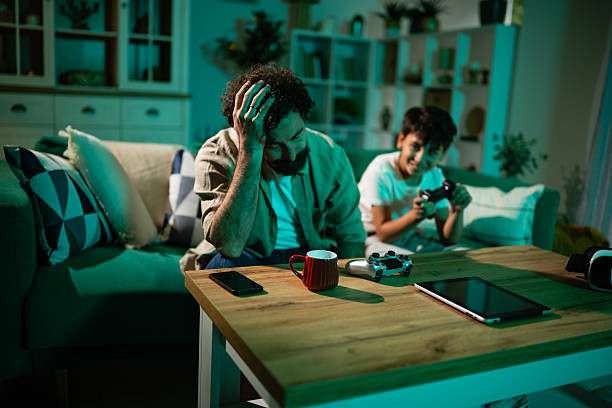
Your teenagers are watching all of it. They are taking notes.
What are they actually learning?
Not what you tell them. What you show them.
You tell them their needs matter. Then you spend every evening managing everyone else's. You tell them to set limits with people who drain them. Then you take the call from the person who always drains you. You tell them rest is important. Then you apologize every time you sit down.
Children, especially teenagers, who are in the exact developmental window where they're deciding who they want to become, don't learn from what parents say. They learn from the pattern of what parents do when no one is watching.
A client came to me at 42, exhausted, unable to say no to anyone, completely disconnected from anything she actually wanted. In our first session, she said, "I've been this way my whole life. My mom was the same."
She wasn't criticizing her mother. She was describing inheritance.
Why this generation of teenagers is struggling
Teen anxiety, depression, and burnout are at record levels. There are many factors. But one that doesn't get named often enough is this: most of these kids are growing up in homes where they have never seen a functioning adult model of what it looks like to honor yourself.
They have seen productivity. They have seen sacrifice. They have seen parents run themselves into the ground for careers, for families, for everyone except themselves.
What they haven't seen, in many cases, is a parent who has a real boundary. Who says no without falling apart. Who protects their own energy without guilt. Who has a life that is visibly, genuinely theirs.
So teenagers arrive at adulthood with no template for that. They know how to perform. They know how to overgive. They know how to tie their worth to their output. They have no idea how to exist without proving something.
We are not raising an anxious generation by accident. We are raising the children of burned-out adults who never learned to come home to themselves.
What does burned-out parenting actually look like?
Not neglect. Not absence. Often the opposite.
It looks like a parent who is physically present but emotionally hollow. Who gives and gives until there's a tightness in every interaction that the teenager can feel but can't name. Who says "I'm fine" with a tone that communicates the opposite. Who is so exhausted that patience runs out faster than intended, and guilt fills the gap.
Teenagers are exquisitely sensitive to the emotional texture of their home. They may not be able to articulate what they're picking up, but they feel the difference between a parent who is present and a parent who is performing presence.
One client's teenage daughter told her therapist: "I feel guilty any time I ask my mom for anything. She always says yes, but she looks miserable."
The mother had no idea. She thought she was being a good parent. She was. She was also disappearing in front of her child, and her child was learning to feel responsible for it.
The most counterintuitive parenting advice I give
Stop sacrificing yourself for your kids.
Not because your needs matter more than theirs. Because a parent who has genuinely returned to themselves, who has a life that fits them, limits that hold, and reserves that aren't perpetually depleted, is a categorically different experience to grow up around.
When you stop performing martyrdom, your teenager stops feeling guilty for existing. When you actually rest without apologizing for it, you give your child permission to rest without earning it first.
When you say no to something that costs you too much, and you hold it calmly, you teach something no worksheet, no therapist, no school curriculum can teach: that it is possible to honor yourself and still be loved.
This is what breaks the cycle. Not the conversation about boundaries. The demonstration of one.
Your teenager doesn't need a perfect parent. They need a real one, someone who is visibly, imperfectly, working out how to live a life that actually fits them.
That is the most generous thing you can give a child who is trying to figure out how to become a person.
"The exhaustion you're carrying isn't just yours to fix. It's being inherited."
Read more from Samka Keranovic
Samka Keranovic, Certified Holistic Life Coach, NLP Practitioner, and Neuroscience Coach
Samka Keranovic is a certified holistic life coach, NLP practitioner, and neuroscience coach who spent two decades in corporate leadership before building the coaching practice she once needed herself. As co-founder of Desert Roots Wellness, she works with high achievers and business owners who are successful on paper but quietly exhausted, helping them break free from people-pleasing, burnout, and indecision. Her work is grounded in 16 years of private coaching experience and the belief that real transformation comes from lived experience, not theory. Samka has been featured in Fast Company, Authority Magazine, and CHRO Daily, and works with clients internationally from Scottsdale, Arizona.