Your Body’s Communication – Are You Listening?
Updated: Dec 26, 2025
Dr. Keelin Regan-Reed, PT, DPT, is often referred to as the "Nerve Whisperer" by her clients and has been called a "Human MRI" by her peers. She is an Orthopedic and Neural Manual Physical Therapist specializing in Neural Manipulation and the published author of Fix It Yourself! A Self-Help Guide To Treating Common Muscular Aches And Pains.

If the human body were a workplace environment, it would be an open-plan office where everyone is trying to do their job while yelling messages at you. The muscles are over in the corner, filing complaints about posture. The gut is dramatically sighing, wondering why you ate dairy again. The brain is frantically waving a sticky note that says, “Sleep, please!” And the heart? She’s the supervisor reminding you that, yes, you do still need water to survive.
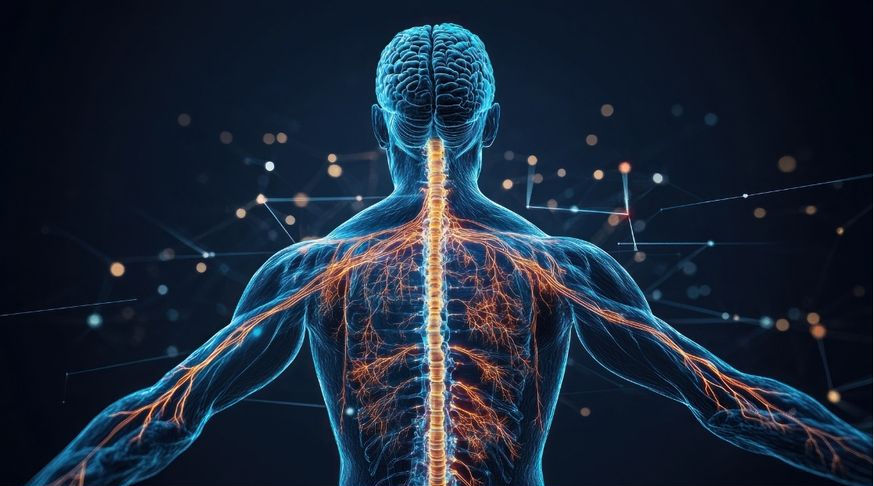
And yet, somehow, we’re experts at pretending we didn’t hear any of them. Welcome to your body, the most advanced, dramatic, high-maintenance, wildly impressive system you will ever own. And unlike a gadget, you can’t trade it in the moment it starts glitching. You’ve got to listen, maintain, and sometimes apologise to it like you do your best friend when you’ve been, well, a little neglectful.
Here’s the cliff-note guide to tuning into your body.
1. Symptoms are not inconveniences, they’re subtitles
Your body doesn’t speak English, but it does speak a language of sensation. A headache? Closed captions reading, “Could be dehydration, or you’ve been squinting at screens for seven hours.”
That tight chest feeling? “Deep breaths, human. Something is stressing you out.” A random ache that refuses to leave? “Maybe we stretch before the gym next time?”
Symptoms aren’t burdens. They’re translation tools. They’re your body’s way of saying, “I’m trying really hard to keep us alive, and a little feedback here would be great.”
2. Hydration, the plot twist that fixes everything
Have you ever noticed how water is the solution to about 80 percent of your problems? Fatigue? Water. Brain fog? Water. Feeling vaguely cranky at everyone for no reason? Seriously, water.
It’s not that water is magic. It’s that your cells are basically tiny, dramatic houseplants. Neglect them and they wilt. Hydrate them, and suddenly they’re like, “Oh wow, life is beautiful!”
3. Movement, your body’s love language
You don’t need to be a gym warrior or a fitness influencer. Your body doesn’t care if you lift 200 pounds or walk a lap around your block. Movement is like giving your body a little high five, “Good job keeping me alive today!”
It resets stress levels, boosts circulation, lubricates joints, and tells your nervous system, “We’re doing great. Keep it up. I believe in you!”
4. Rest, because you’re not a phone (but you do need a recharge)
Technology and today’s social media influences have tricked us into thinking we should be “on” all the time. Truth, you are only human. You need sleep. You need pauses. You need downtime that is actually downtime, not doomscrolling with one eye open.
Rest isn’t a reward. It’s maintenance. Remember, your body only heals when you sleep. Think of sleep as the night shift crew, cleaning, repairing, filing memories, and fixing tiny errors. If you skip rest, the day team shows up sluggish, overworked, and not ready for a long day’s work. This is when viruses can invade, bacteria can grow, and you will start to feel it.
5. Intuition, the oldest diagnostic tool on Earth
Your body comes with free built-in wisdom, you just forgot how to listen. That feeling you get before you get sick? That’s your immune system sending you a direct message. That sense of “I really shouldn’t push this injury”? That’s your tissues whispering, “Please don’t make us file another complaint.” Intuition isn’t mystical. It’s pattern recognition from thousands of years of evolution. Your body knows things. Trust it. Listen to it.
6. Nourishment, don’t treat food like a negotiation
Too often, we think of food in terms of rules, guilt, or trends like low fat or no carbs. But your body interprets food as fuel, information, and building materials. Your brain needs healthy fats and electrolytes. Your body needs hydration, carbohydrates, protein, and fat.
It doesn’t want perfection. It wants variety. It wants colour. It wants something besides a handful of pretzels eaten over your keyboard. Feed yourself like someone you like. You are what you eat.
7. Appreciation, seriously, you’re made of stardust and electricity
Your heart beats over 100,000 times a day without asking for a thank-you card. Your lungs expand and collapse about 20,000 times a day so that your body can thrive with oxygen.
Your nervous system conducts impulses faster than a race car, orchestrating a symphony of motion, perception, emotion, and survival. And despite all this, we still decide to ignore the messages our bodies send us.
Let’s live in a state of gratitude and appreciation for the brilliance our bodies endure every day. Your body is the most loyal partner you’ll ever have, and it will create miracles if we allow it to and feed it with the right support.
Final takeaway: You and your body are a team
The goal isn’t perfection. It’s a communication partnership that requires attention and validation. Your body talks. Your job is to listen. And together, you’ll keep each other going, one symptom, stretch, sip of water, and night of sleep at a time.
Your body doesn’t need you to be a health guru. It just needs you to be present. Now drink some water. Seriously.
Why neural manipulation?
Neural Manipulation is supportive of the nervous system and can have a tremendous impact on healing. Read 5 Incredible Health Improvements Through Nerve Manipulation Technique to learn more.
Read more from Dr. Keelin Regan-Reed
Dr. Keelin Regan-Reed, PT, DPT, Orthopedic and Neural Manual Physical Therapist
Dr. Keelin Regan-Reed, PT, DPT, is a licensed manual Doctor of Physical Therapy specializing in Neural Manipulation. She is able to "listen" to the cranial rhythm in the brain and body by following the cerebral spinal fluid flow as it works around the brain and spinal cord to the peripheral nerves throughout the body. Just like a clinician can "feel" for the pulse in your wrist to listen to your blood flow and heartbeat, the fluid of the brain and nerves has a similar "feel" of pressure changes. Our bodies hug around lesions and restrictions, thus changing the rhythm of the fluid. Dr. Keelin can detect this change and follow where the lesion is and make the necessary corrections and/or releases so the body can then heal on its own.