Why Moving to a New Country Is Easier Than Adapting to a New Culture
Dr Hussein H. Rifai is a global business leader, investor, and company chairman with more than four decades of experience across 85 countries. He writes on leadership, corporate governance, private equity, artificial intelligence, and international business.

My own cultural journey has been a slightly complicated one. I was born in Nablus, grew up mainly in Amman, and left Jordan at seventeen. From there, I went to the United States, returned to the Arab world in Saudi Arabia, later spent time in Canada, and eventually made Australia home. Much later, I also spent eight years living in Dubai. Along the way, I worked with people from dozens of countries and travelled through many more.
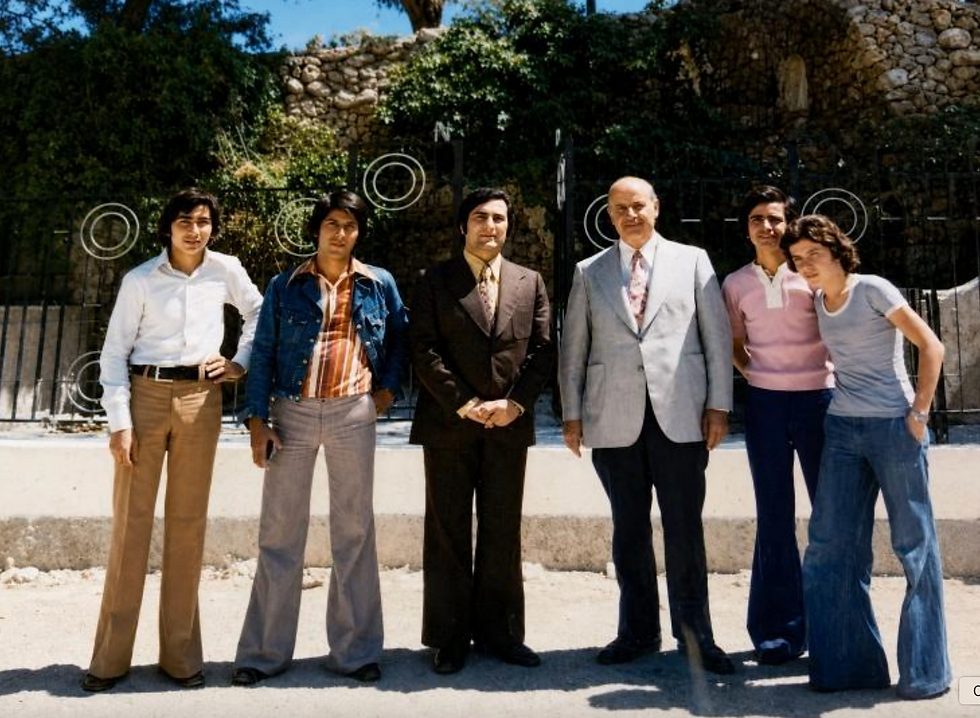
I mention this only because each move required something more complicated than learning where to live, what to eat, or how to get to work. Every country had its own unwritten rules. How you speak to your boss. How you disagree. What family means. How much of your private life belongs to your relatives. What is considered rude, funny, respectable, offensive, or none of anybody else's business.
The mistake migrants sometimes make is believing that migration is mainly geographic. You leave Jordan, Palestine, India, China, or Lebanon and move to Sydney, Toronto, or Los Angeles. Your body has certainly migrated. Whether the rest of you has moved is another question entirely.
America was my first major cultural adjustment. The individual mattered more than the family unit I had grown up with. Young people were expected to become independent earlier. People spoke to professors and bosses with a casualness that would have seemed strange in Jordan. Ambition was not something to hide. Americans were comfortable telling you what they had achieved and what they planned to achieve next.
Canada had similarities, but the edges were softer. Saudi Arabia then moved me back into an Arab environment, but certainly not the same Arab environment I had left. That itself was an education. We often speak about “Arab culture” as though several hundred million people from Morocco to Iraq received the same operating manual. They didn't.
Then came Australia. By then, I had learned one useful lesson, when you enter another culture, don't immediately decide that everything they do differently is wrong. That sounds obvious. In practice, it is much harder.
Every culture has characteristics that affect work, family, and personal relationships. Australians tend to be informal, direct, egalitarian, and suspicious of anyone who takes rank or status too seriously. Jordanians tend to place greater importance on family, relationships, hospitality, respect, reputation, and social obligations. Neither description applies to everyone, and neither culture is better, but pretending those differences don't exist is equally silly.
At work, the differences become obvious very quickly. An Australian employee may openly disagree with the boss in a meeting and think absolutely nothing of it. A Jordanian employee may regard doing that publicly as disrespectful and instead raise the issue privately, or perhaps not raise it at all. The Australian manager can interpret silence as agreement. The Jordanian employee can interpret the manager's bluntness as arrogance. Both go home convinced the other person has a problem.
Australians also separate hierarchy from personal dignity more easily. The Chief Executive Officer (CEO) and the junior employee may call each other by their first names. Someone can challenge my idea without challenging me. In much of the Arab world, relationships, seniority, and the manner in which disagreement is expressed can be just as important as the disagreement itself.
Neither approach is automatically right. In Australia, excessive directness can become unnecessarily insensitive. In Jordan, excessive concern about hierarchy can stop people telling the boss something he desperately needs to hear. Having worked in both cultures, I would rather understand the strengths and weaknesses of each than pretend one has discovered the perfect management system.
Family life is where adaptation becomes much more personal. Jordanian family culture can be wonderful. Families are close. People show up. Parents remain involved in their children's lives well into adulthood. Hospitality is genuine. If something goes wrong, you can suddenly discover relatives you didn't even know you had offering to help.

There is another side. Family involvement can become family interference. Concern can become control. Everybody can know everybody else's business. Privacy sometimes appears to be a suspicious Western invention. A family disagreement can rapidly acquire advisers, commentators, historians, and several people who were not present but nevertheless know exactly what happened.
Australia is different. Families can be extremely close, but adulthood usually carries a stronger expectation of independence. Your adult child's decisions are ultimately their decisions. Your neighbour does not need to know where your daughter went last night. Your cousin does not automatically acquire voting rights over whom your son marries.
For a migrant, this is where things become complicated because you don't simply observe the difference. You have to decide which rules you are actually going to live by.
I have watched immigrants move to Australia and then spend decades recreating the country they left.
This is not particularly Jordanian or Palestinian. Almost every migrant community does some version of it, but I know my own community best, so I can make fun of us with greater authority.
Some Jordanians and Palestinians effectively build a small Jordan or Palestine in Sydney. They live near each other, socialise almost exclusively with each other, eat the same food, watch Arab television, follow Jordanian or Palestinian politics, use Arabic at home, shop at the same businesses, and sometimes know more about what happened in Amman yesterday than what happened in Australia. The neighbours change, but the neighbourhood in their heads doesn't.
Then comes the gossip. Who married whom? Who divorced? Whose daughter was seen with somebody? Whose son is earning what? Who bought a house and how much did it cost? Why wasn't someone invited to a wedding? Why was somebody invited and seated at table seventeen rather than table twelve?
We have successfully transported an ancient communications system across continents without requiring fibre-optic cable.
The food, incidentally, should absolutely survive migration. I am strongly in favour of cultural integration, but there are limits. Nobody needs to abandon mansaf to prove commitment to Australia.
The problem is not keeping your food, language, traditions, or friendships. Those are part of who you are. The problem begins when you move to another country but construct your life so carefully that you never really have to encounter it.
There is an enormous difference between living in “Jordan-Australia” and living in Australia. If almost everyone you see socially shares your background, values, and assumptions, adaptation becomes optional. You can live in Sydney while continuing to apply Amman's social rules.
Your children, however, cannot. They go to Australian schools. Their friends are Australian, Chinese, Indian, Lebanese, Korean, Greek, Vietnamese, Muslim, Christian, Jewish, Hindu, atheist, and everything in between. They absorb Australian humour, attitudes, and expectations.
Then they come home to parents who occasionally appear surprised that Australia has somehow entered the house.
This is where migrant parents can make life unnecessarily difficult for their children. Adaptation means accepting that your host society will contain behaviour you don't like. Sometimes behaviour you strongly dislike.
You may come from a conservative society and see teenagers kissing in the street. You may see young women wearing clothes you would never have imagined your daughter wearing in Jordan. Your children may date in ways you did not grow up with. Young people may speak to adults with a level of informality that initially feels disrespectful.
You don't have to like any of it. That distinction matters. Integration does not require you to personally adopt every Australian habit.
I can live happily in Australia without getting a tattoo, wearing shorts to a business meeting, or developing an emotional attachment to Vegemite, but living here does require me to accept that other Australians are entitled to make choices I would not make myself.
You cannot move voluntarily into another society and then demand that the society stop offending you. That is part of the bargain of migration.
This does not mean abandoning your own values. It means understanding the difference between values you choose for yourself and rules you are entitled to impose on everybody around you.
That was particularly important to me in raising children. I never wanted to raise Jordanian children who happened to live in Australia. I wanted to raise Australians who understood and were proud of their heritage. There is a big difference.
Heritage gives children roots. It gives them family history, language, food, stories, and an understanding of where their parents and grandparents came from. It should enrich their identity, not imprison it.
My children did not grow up in the Jordan I grew up in. Why would I expect them to behave exactly as though they had?
They were growing up in Australia and preparing for an Australian future. They needed to be able to form friendships across cultures, operate comfortably in Australian workplaces, make independent decisions, and develop their own identities.
If I had insisted that they live according to the social rules of the Amman of my childhood, I would not have preserved their heritage. I would simply have made their lives more difficult.
This is perhaps the hardest adjustment for first-generation migrants. We sometimes confuse preserving culture with preserving time.
The Jordan I left at seventeen no longer exists exactly as I remember it anyway. Jordanian teenagers today are not growing up as I did. Amman itself has changed enormously. Yet an immigrant can preserve an idealised version of the country from the year he left and then attempt to impose it on children born twenty or thirty years later on the other side of the world.
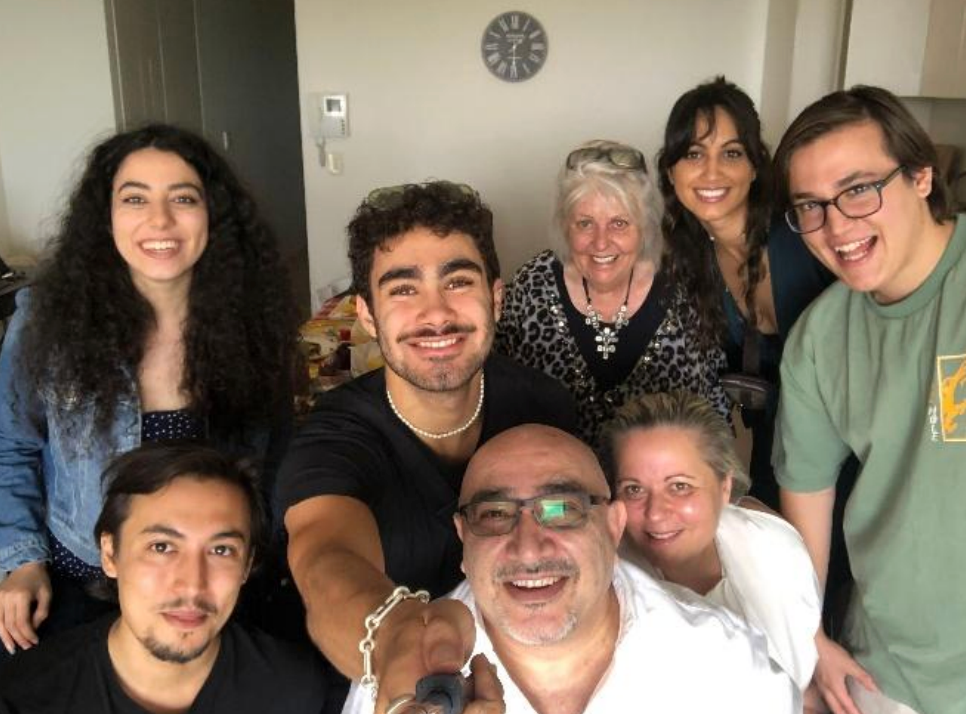
There is something slightly absurd about being more culturally conservative in Sydney in 2026 than your relatives are in Amman.
Successful integration, to me, is not assimilation. I don't believe people should erase themselves when they migrate. Australia would be a poorer country if every immigrant arrived and immediately abandoned their language, food, history, and traditions.
The better outcome is addition rather than subtraction. Keep the mansaf. Keep the Arabic. Keep the family stories, hospitality, generosity, and connection to where you came from.
Teach your children about Nablus, Amman, Jerusalem, or wherever their family story began. Take them there. Let them understand their grandparents and the history that produced them, but also let them belong completely to the country that is actually theirs.
After living across Arab, American, Canadian, and Australian cultures, I have become increasingly suspicious of anyone who tells me one culture has all the answers. Each has given me something. Each also has habits I could happily live without.
The real advantage of living across cultures is that eventually you realise you are allowed to choose.
You can keep the warmth of Arab family life without importing every piece of family interference. You can embrace Australian independence without becoming disconnected from family. You can admire American ambition without needing to announce every achievement before dessert. You can respect tradition without allowing it to dictate your children's future.
Perhaps that is what genuine multiculturalism should mean. Not different communities living beside each other while remaining culturally sealed from one another, but people confident enough in where they came from to participate fully in where they are.
Migration changes your address almost immediately. Changing your habits takes longer. Changing your assumptions takes longer still. Allowing your children to build an identity different from your own may be the hardest move of all, but if you chose another country to build a future, particularly for your children, then surely that was the point.
Give them the roots. Then let them grow in the country you chose for them.
Read more from Dr. Hussein H. Rifai
Dr. Hussein H. Rifai, Thought Leader and Chairman
Dr Hussein H. Rifai is a global business leader, investor, company chairman, and thought leader with more than four decades of experience across 85 countries. His career spans multinational corporations, entrepreneurship, investment banking, private equity and corporate governance, advising boards and business leaders on strategy, mergers and acquisitions, capital raising, business transformation and international growth. Holding a Doctor of Philosophy (PhD) in Business Administration, Hussein writes on leadership, corporate governance, artificial intelligence, international business and global competitiveness, combining academic insight with practical experience gained at the highest levels of global business.