

Why Moms Burn Out During the Holidays and 3 Ways to Find the Joy Again
Written by Lara Dawn, CEO & Founder of The ADHD Village
Lara Dawn, founder of The ADHD Village and ADHD Warrior Mamas, is a 25-year teacher on a mission to transform children's mental health by empowering mothers. She believes parenting is spiritual work, ADHD is a design, not a deficit, and neurodivergent strengths are essential to our AI-driven future.

The holidays are supposed to be magical. But what happens when the person creating the magic is running on empty? Between family expectations, financial pressures and children navigating changes in routine, many mothers enter December already exhausted. One unforgettable Christmas morning taught me that the secret to a happier holiday isn't controlling every moment. It's understanding our expectations, regulating our emotions and rediscovering what really matters.
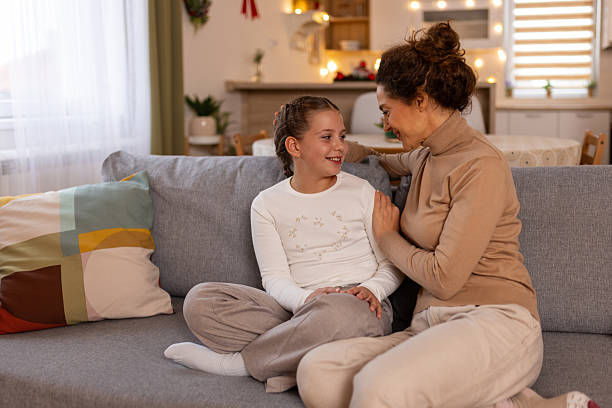
Why do mothers feel so overwhelmed during the holidays?
Let's be honest. Holidays aren't automatically enjoyable. They're enjoyable because someone puts an extraordinary amount of time, energy and love into making them that way. In many families, that someone is Mom.
Think about everything involved in creating the perfect Christmas. The shopping, wrapping, decorating, baking, meal planning, school concerts, family gatherings and endless mental lists. The money you're spending, the work deadlines you're juggling and, of course, at least one relative who's guaranteed to poop on your parade.
Now add attention-deficit/hyperactivity disorder (ADHD), a sprinkling of anxiety, disrupted routines and well-meaning relatives offering unsolicited parenting advice. Suddenly, you've got yourself a festive cocktail that's less merry and more meltdown-inducing.
We carry around this Hallmark-inspired vision of Christmas. The perfectly decorated tree, children joyfully opening presents, laughter around the dinner table and everyone getting along. But then reality happens.
Sometimes, the person who works the hardest to create the magic is the one who enjoys it the least. I know because I've been that mother.
What if, before we spend another holiday season making magic for everyone else, we learn how to turn our own lights ON?
That's why I'm bringing together extraordinary Warriors for Turn Your Lights On: A Warrior Mama Experience, a FREE virtual event happening November 9-13.
These Warriors haven't lived perfect lives. They've navigated anxiety, trauma, burnout and some of life's toughest challenges. Now they're sharing the practical mental health tools that have helped them move forward.
Here's what makes this experience different: You won't just hear their stories. You'll experience their tools.
Because you deserve more than another holiday season spent simply surviving. You deserve to experience the magic, too.
The Christmas morning I almost ruined
I'll never forget one Christmas morning when I was determined to create the perfect family experience. The tree was glowing. Presents were piled high. Everything looked beautiful.
I'd imagined my boys slowly and gratefully unwrapping their gifts, savouring each magical moment while I soaked it all in. But that's not how the morning unfolded.
My boys were bursting with excitement. Wrapping paper was flying. Gifts were being opened faster than I could keep track of them.
My youngest, always the rule-follower, jumped in with a bossy, "Mom said to slow down!" His older brother fired back with a snarky reply.
There I was, holding back tears, blurting out the words I wish I'd never said: "Just behave! Don't ruin Christmas! I worked so hard to make this perfect for you!" Oh, the irony.
Looking back, I can laugh about it. But at the time, I was exhausted, emotionally overwhelmed and desperately trying to control a moment that wasn't unfolding according to my expectations.
My children weren't trying to ruin Christmas. They were excited, happy and experiencing the morning in their own way. I was so busy trying to create my version of Christmas magic that I almost missed theirs.
Looking back through the lens of psychology, I now recognize something fascinating about what was happening.
How cognitive dissonance can influence our parenting
What began as a mismatch between my expectations and reality revealed a deeper psychological conflict known as cognitive dissonance.
Psychologist Leon Festinger introduced cognitive dissonance theory in 1957. His landmark 1959 study with James Carlsmith provided experimental support for the idea that inconsistencies between our beliefs and actions can influence our attitudes and responses.
In simple terms, cognitive dissonance describes the psychological discomfort we may experience when our beliefs, values or behaviours conflict. There I was, living a very human example of that conflict.
I valued connection, joy and unconditional love. Yet my behaviour in that moment was creating tension and disconnection. I wanted my children to experience the magic of Christmas, but I was trying to control exactly what that magic should look like.
My expectations had become more important than my intentions. My children weren't failing to experience Christmas properly. They were experiencing it differently from how I'd imagined.
The cognitive dissonance wasn't simply that Christmas looked different from my expectations. It was the uncomfortable realization that my actions were no longer aligned with the mother I wanted to be. That distinction matters.
Because when we become aware of the gap between our values and our reactions, we have an opportunity to make a different choice.
Instead of asking, "How do I get my children to behave the way I expect?" I began asking, "How can I respond in a way that reflects the parent I want to be?"
That question became part of a much bigger transformation in my life.
Why parental mental health must come first
For years, I believed that if everyone else was happy, I'd be happy too.
I was a teacher for 25 years, including a decade in special education. I was raising two boys, managing a busy household and navigating my own mental health challenges, although I didn't receive my ADHD diagnosis until I was 40.
From the outside, I appeared capable and successful. But I was often exhausted, overwhelmed and giving everyone else the best of me while leaving very little for myself.
Eventually, I experienced burnout severe enough that I couldn't continue working. Through that experience, I learned something that fundamentally changed the way I approach parenting.
We cannot keep expecting overwhelmed mothers to create calm, connected families without supporting their own physical, mental and emotional wellbeing.
In 2024, the U.S. Surgeon General's advisory on parental mental health highlighted the significant stress experienced by parents. Among the findings, 48% of parents surveyed reported that their stress felt completely overwhelming on most days, compared with 26% of other adults.
Those findings weren't specific to the holiday season or neurodivergent families, but they reinforce something I've witnessed throughout my career. Parents need support, too.
That's why I created Turn Your Lights On: A Warrior Mama Experience, a free virtual mental health experience happening November 9-13, 2026.
I've brought together extraordinary Warriors who have navigated their own darkness, including experiences of anxiety, trauma, illness, rejection and burnout, and discovered practical ways to nurture their mental health.
Each Warrior will share a personal mental health "weapon," a strategy or practice they use in their own lives, and guide participants through an experience so they can explore the tool for themselves.
Because hearing someone tell you to breathe, establish boundaries or practise self-compassion is one thing. Experiencing a tool and beginning to practise it is something entirely different.
Before the holiday season begins, I want mothers to have more than good intentions. I want them to have tools they can actually use.
Why holidays can be challenging for neurodivergent families
For many children with ADHD, autism or anxiety, the very experiences that make the holidays exciting can also make them overwhelming.
Think about how much changes in December. School routines become unpredictable. There are parties, visitors, unfamiliar foods, bright lights, late nights and increased social expectations.
Some children may find the anticipation and excitement difficult to manage. Others may experience sensory overload, struggle with unexpected changes or need additional time to transition between activities.
Of course, every child is different. Many neurodivergent children love the novelty and excitement of the holidays. Others enjoy particular traditions but need accommodations to participate comfortably.
The goal isn't to make children fit our holiday expectations. It's to create celebrations that respect the people participating in them.
Now imagine a child who has spent the entire school day managing sensory input, navigating social expectations and working hard to meet the demands of their environment. They arrive home with very little capacity left for additional demands.
Who's waiting for them? A mother who has spent her own day working, managing responsibilities and holding herself together. Two overwhelmed nervous systems. One very busy household.
What looks like defiance may be a sign that a child is struggling with the demands of the moment. What looks like an impatient mother may be someone whose own resources are depleted. Neither needs more judgment. Both need support.
3 mental health tools for a happier holiday season
The goal isn't to eliminate every challenge or create a perfectly peaceful family. It's to develop the awareness, flexibility and tools that help us navigate challenges with greater compassion.
1. Replace perfect expectations with meaningful connection
Before the holiday season begins, ask yourself a simple question: How do I want my family to feel this Christmas? Connected? Loved? Accepted? Joyful? Relaxed?
Now look at your holiday plans. Are the traditions you're trying to maintain supporting those feelings, or are they creating unnecessary stress?
Maybe you order the cookies instead of baking them. Maybe you skip a gathering that leaves everyone depleted. Maybe Christmas dinner looks nothing like the one you grew up with.
Maybe your children open their presents at their own pace, even if it's nothing like the magical moment you imagined.
The magic isn't in everyone following the script. It's in creating an experience where everyone feels welcome to be themselves.
2. Protect everyone's capacity, including your own
Some children benefit from visual schedules, advance preparation and predictable routines. Others may need movement breaks, sensory accommodations, quieter celebrations or the freedom to opt out of particular activities.
Ask your child what they enjoy, what feels difficult and what would help them participate comfortably. But don't forget to ask yourself those same questions.
Are you getting enough sleep? Are you eating regularly? Are you allowing yourself moments of rest? Have you planned any time to do something that genuinely brings you joy?
Perhaps most importantly, are you sharing the responsibility for creating the holiday experience?
For years, I thought self-care was something I'd earn after everyone else's needs were met. Now I understand that nurturing my own wellbeing helps me have greater capacity for the people I love.
Self-care isn't selfish. It's one of the least selfish things we can do.
3. Practise your SWITCH before the chaos
One of the greatest lessons I've learned is that understanding emotional regulation and practising it during a difficult moment are two very different things.
That's why I developed my SWITCH Method, which helps us pause, reconnect with our wisdom and make more conscious choices.
When I notice myself becoming overwhelmed, I begin by stopping. I pay attention to what's happening in my body. I notice my thoughts and the expectations influencing my reactions.
Then I ask myself two questions. Are my actions aligned with my values? Or am I reacting to an expectation that isn't being met?
Sometimes I need to breathe. Sometimes I need to step outside. Sometimes I need to recognize that I'm trying to control something that doesn't actually need controlling. Sometimes I still lose my patience.
That's when I take responsibility, repair the connection and keep practising.
Regulating our own emotions doesn't guarantee that our children won't struggle. Their experiences are real, and their needs deserve support regardless of how calm we are.
But developing our own emotional regulation skills can help us respond with greater awareness and compassion.
This is why practice is central to my work. Transformation doesn't come from simply collecting information. It comes from putting what we learn into practice, repeatedly, especially when life becomes challenging.
This year, let Mom experience the magic, too
When I think back to that Christmas morning, I no longer see two children disrupting my carefully planned celebration.
I see two little boys overflowing with excitement. A mother who was so exhausted and attached to her expectations that she couldn't fully enjoy the moment unfolding in front of her.
My boys didn't need me to orchestrate the perfect Christmas. They needed me to be present enough to enjoy the Christmas we were actually having. I deserved to enjoy it, too.
I still love traditions. I love creating beautiful memories. I love seeing my family happy. But I've learned that joy doesn't come from controlling every detail. It comes from creating space for connection, respecting our different needs and allowing ourselves to be human.
So this year, before you spend another holiday season making magic for everyone else, I invite you to turn your own lights ON.
Join me November 9-13 for the free Turn Your Lights On: A Warrior Mama Experience. You'll meet extraordinary Warriors, hear the stories behind their accomplishments and experience practical mental health tools that you can begin integrating into your own life.
Because your family doesn't need a picture-perfect Christmas. They deserve a celebration where everyone has room to be themselves.
Mama, that includes you.
Read more from Lara Dawn
Lara Dawn, CEO & Founder of The ADHD Village
Lara Dawn is the founder of The ADHD Village and visionary behind ADHD Warrior Mamas, a global movement transforming children's mental health by empowering mothers. A teacher for 25 years with a degree in Psychology and expertise in Special Education, emotional intelligence, women's positive psychology, somatic healing, and neuro transformation, she bridges science and spirituality. Diagnosed with ADHD at 40, Lara challenges conventional parenting beliefs with a bold philosophy: Parenting is spiritual work, and ADHD is a design, not a deficit. She champions neurodivergent creativity and innovation as essential strengths in our AI-driven future. Her mission is to awaken mothers' inner wisdom and redefine parenting for generations to come.







