Why Does Life Feel So Hard?
Written by: Ashley Van Brabant, Executive Contributor
Executive Contributors at Brainz Magazine are handpicked and invited to contribute because of their knowledge and valuable insight within their area of expertise.

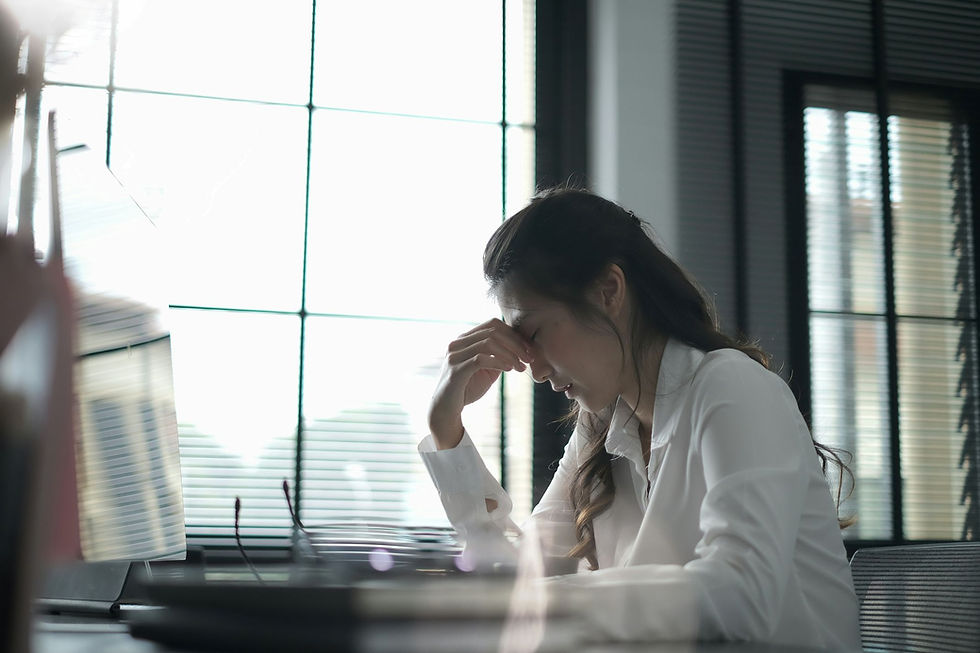
I used to ask myself this rhetorical question almost daily.
In the past, I would use the strength of my willpower to push up against life. I made things happen. I decided the course of my life, or so I thought. What I failed to comprehend was that my experience of life being hard was completely self-made. When I pushed, pulled, and flailed, I caused life to be hard.

And while I continued to ask myself the ceaseless question of “why is life so hard,” I never came up with an answer until I was introduced to Belief Re-patterning.
The Einstein quote is applicable here. You know the one,
“Problems can't be solved by the same thinking that created them.”
I needed to shift my perspective and re-pattern my thinking in order to make a change. I recognized I needed to ask a new question.
It was then that I asked myself, “what would happen if I shifted my perception of life?”. I gave up being dramatic about my life, and that's when my life stopped being 'always hard' and started being 'sometimes difficult.'
I up-leveled my thinking with Belief Re-patterning, and this is what I could finally see about life: Life is not hard - it is sometimes difficult.
Let’s explore the difference.
Hard, by definition, is something not easily broken, bent, or pierced. An action that is hard is done with a great deal of force or strength. Something that is hard is solid, firm, and rigid. The idea of life hard creating a sense of unyielding and insurmountable challenges.
On the other hand, difficult, by definition, needs much effort or skill to accomplish, deal with, or understand something. And while difficult still requires exertion, it suggests the idea of resilience and hope.
Let me share with you a recent experience to show you an example of the difference between life being hard and life is sometimes difficult.
A few months ago, I went hiking in the mountains with my best friend. We reached the most difficult part of the hike up near the top. We were both using our hands and feet to navigate the steep trail.
I was gasping for air, and my legs were burning. My brain slipped into default mode and began to offer up thoughts like:
"This is too hard - I can't."
"My muscles are burning."
"I am not going to make it."
"We should turn around."
I glance up at my friend ahead of me and begin to compare our fitness levels.
"Ugh, she is so fit - how does she work out all the time?"
"I should have worked out, and it's last week."
"Why didn't I prepare more for this?"
"This would have been easier if I would have stuck to my workout plan last week."
Instead of experiencing the moment as something difficult and challenging, I instead choose to see it as hard. Seeing the moment as hard encouraged further thoughts of rigidity, unbending, and intolerable.
In a shining moment of insight, I realized I was taking something difficult and making it hard. I knew I had it within me to finish the hike and reach the summit. I had done it before.
I decided to give it up. I let go of the drama inside my thoughts and focused on putting one foot in front of the other. I shifted my perspective from hard to a challenge of difficulty.
And as we made it to the top, I realized it wasn't hard, only sometimes difficult. I was able to enjoy the view from the summit and recognize the power I had in the way I choose to see the things I experience.
We all have moments like this in life. My mountain hike might be your career or family connection, it’s navigating the little moments in life.
If you want to better understand how your self-talk affects your experience of life, check out the free resource on my website.
Ashley Van Brabant, Executive Contributor Brainz Magazine Ashley Van Brabant is a Belief Re-patterning Practitioner, founder of The Adventurous Spirit, and creator of the Unlearn & Uplevel program. Growing up in rural Alberta, she was a sensitive soul with a passion for horses, nature & spirituality. Now, she is a transformative spirit standing for equality, leadership, hope, and adventure. On any given day, you will find her with her horses, snowboarding, or having hard conversations about environmental, social, and political issues.