When the Lights Go Out, We Don't Disappear
Updated: 13 hours ago
Caren Carnegie is a coach, psychic channeler, and the creator of Transform, a space where fitness, healing, and intuition meet. She helps people return to themselves by honouring the body and awakening the coach within.

There was a time in my life when I struggled with belonging. With acceptance. With feeling like I was either too much or not enough, depending on the environment I found myself in. Perhaps you know that feeling, too.
Not so long ago, I found myself wanting something that felt a little unusual. More confidence. But not the kind of confidence that would make me louder, more visible, or more willing to occupy space. I wasn't looking for the courage to be seen. I've come to recognize that courage has been within me all along.
What I wanted was the confidence to know that I wouldn't become invisible if I chose to leave environments where I no longer felt aligned. That I could step away without disappearing. That I could belong to myself, even when I no longer belonged somewhere else.
Recently, as I reflected on my decision to step away from certain social media environments, something became very clear. What if we really were too much all along?
Not too much as individuals. Not too emotional, too sensitive, too ambitious, too different, or too difficult to understand. What if we've simply been trying to fit into environments that can no longer accommodate the fullness of who we are? And what if that's becoming increasingly difficult to ignore?
When connection becomes exposure
Social media is an interesting environment. It can feel safe, familiar, and even comforting. A place to connect, share our experiences, find community, and be witnessed. Yet, I've been reflecting on just how exposing these environments can be.
Not only what we expose about ourselves, but what we're continually being exposed to. Information. Opinions. Images. Emotions. Conflict. Expectations. The lives and experiences of people we may never meet. All arriving through a screen, often faster than we can meaningfully process.
Our nervous systems are continually responding to the world around us. While humans have an incredible capacity to adapt, I wonder how often we consider the cumulative demands of these digital environments. How much are we taking in without noticing? How much of what we're experiencing actually belongs to us?
And how often are we mistaking constant access to one another for meaningful connection? We are relational beings. We benefit from connection, belonging, and community. But I find myself questioning what happens when we become increasingly connected online while growing more hesitant to engage with one another in the physical world.
When we're comfortable observing someone's life through a screen but uncomfortable meeting their eyes. When we know what someone posted yesterday but haven't asked how they're doing today. When visibility becomes something we measure through engagement rather than presence.
I'm not suggesting that online relationships aren't real or meaningful. They absolutely can be. But perhaps it's worth remembering that being connected to everyone doesn't necessarily mean we're feeling connected to ourselves, or to the people and environments immediately around us.
And maybe that's another part of what we're beginning to outgrow. Not technology itself, but our relationship with it. The ways we've learned to seek acceptance, belonging, and visibility through environments that can simultaneously connect us and overwhelm us.
I don't believe the answer needs to be the same for everyone. For me, stepping away from certain environments isn't about becoming less visible. It's about becoming more available.
To myself. To the humans around me. To the work I'm here to do. To the world I'm actively participating in creating. Because I don't want to be so visible online that I become unavailable in my own life.
The environments that brought us here
As a Human Body Advocate, my work extends beyond the individual human body to include the collective body of humans and our relationship with the Earth. Through this work, I've come to see our environments as an important part of the conversation.
The spaces we occupy. The systems we participate in. The ways we've learned to live, work, communicate, connect, and measure our worth.
Much of what surrounds us today was built through human participation, imagination, necessity, and ingenuity. These structures have served purposes. They've helped us organize, connect, evolve, and arrive where we are today. For that, I am grateful. But gratitude doesn't require us to remain.
There comes a time when even the structures that once supported our growth begin to feel restrictive. Not necessarily because they were wrong, but because we've continued to evolve.
Perhaps we've reached a point where our collective capacity is beginning to exceed the capacity of some of the environments we've created. We're witnessing tension in systems we've long relied upon. Ways of living and working that once seemed sustainable are being questioned. Spaces designed to connect us can sometimes leave us feeling increasingly disconnected.
You don't need to be a visionary to notice that something is shifting. You only need to be willing to pay attention.
The momentum has been building
What we're witnessing now didn't begin yesterday. For a long time, individually and collectively, we've been making choices that have contributed to where we find ourselves today.
We've questioned. We've created. We've challenged familiar ways of thinking and living. We've become more conscious of our bodies, our relationships, our environments, and the influence we have upon one another. Through it all, momentum has been building.
I believe our individual and collective consciousness has been expanding. Our frequency, the way we experience and express ourselves in relationship with the world around us, has been shifting alongside it.
Not everyone will describe or experience this in the same way. Nor do we need to. But I believe something important is becoming increasingly visible.
It isn't simply that our existing structures are falling apart. It's also that we're now able to see where they can no longer hold what we've become capable of creating. The cracks aren't necessarily new. Our willingness to acknowledge them may be.
While much of our attention is drawn toward what's no longer working, something else deserves recognition. There are already humans building.
People who have spent years, sometimes decades, laying foundations for different ways of living, working, connecting, learning, healing, and leading. Some have been doing so quietly, without recognition or an audience. Others have been working within existing structures, strengthening what can be strengthened and creating alternatives where necessary. Their contributions matter.
Because what comes next isn't waiting for us somewhere in the future. Parts of it are already here.
Perhaps what we're experiencing now is the growing realization that we have more choices, more capacity, and more self-responsibility than we've previously recognized. We're not all starting from the same place. We're not all building the same things. But each of us has an opportunity to contribute to what comes next.
From point A to point B
Imagine, for a moment, that we're standing at Point A. It's familiar. We've spent generations building, maintaining, and adapting to life within it. We know its rules, expectations, limitations, and possibilities.
Yet, somewhere beyond what we've become accustomed to, there is Point B. Not necessarily a destination already waiting for us, but something we have the opportunity to create. An environment shaped by a greater understanding of ourselves, our relationships, our bodies, and our collective potential. Not another rigid structure that future generations will eventually need to escape, but foundations capable of evolving alongside the humans who inhabit them.
What if Point B isn't somewhere we're going, but something we're building? And what if the path between the two is already beneath our feet?
There won't be one universal route. For some, the journey may begin with leaving a familiar environment. For others, it may mean staying and contributing to meaningful change from within.
It might look like reconsidering how we work, how we lead, how we care for our bodies, or how we relate to one another, and how we relate to our own beliefs. It might begin with a conversation, a boundary, a new idea, or a decision we've been postponing.
We don't all have to move in the same way. But we do have to participate. While I believe there's no returning to a world entirely untouched by what we've already experienced and created, we still have choices about how we move forward.
The human body was never meant to be reduced
For much of my life, I felt as though I lived in my own world. I sensed things I couldn't always explain. I questioned what was considered normal, even before I had the language to articulate why.
And while that sometimes made belonging difficult, I've come to appreciate that part of myself. Because it encouraged me to listen. To notice what felt aligned and what didn't. To understand that fitting into an environment isn't necessarily an indication that the environment is right for us.
The human body has taught me so much about this. Our bodies are not static structures. They are living, responsive, adaptive systems, continually communicating and responding to the environments we inhabit.
Our physical, mental, emotional, and spiritual experiences are not isolated from how we participate in the world. Neither are we isolated from one another. We are individuals, yes. But we are also a collective body of humans, influencing and being influenced by the world we're creating together.
When I speak about human potential, I'm not suggesting that our bodies have no biological limitations, or that we can simply think our way beyond every challenge. I'm speaking about the possibilities that emerge when we stop treating our current circumstances, beliefs, and systems as the final expression of what humanity can become.
Our potential is not limited to what we've already created. Neither is our responsibility.
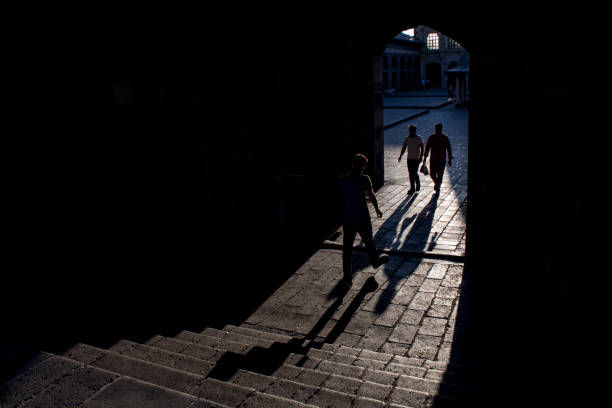
When the lights go out, we don't disappear
Perhaps one of the greatest fears we face when familiar environments begin to change is that we'll somehow disappear alongside them. We've spent so long identifying with the places we occupy, the roles we play, the systems we participate in, and the ways we've learned to be seen.
When those structures begin to shift, it can feel as though we're losing a part of ourselves. But what if we're not losing ourselves at all? What if we're finally beginning to recognize ourselves beyond what we've become accustomed to?
The lights that once illuminated us were never the source of our existence. When those lights go out, we don't go out with them. Perhaps we become more visible than ever.
Not necessarily louder. Not necessarily more recognized or celebrated. But more present. More connected to ourselves, to one another, and to the world we're here to participate in.
I believe this is happening on a much larger scale. As familiar structures reveal their limitations, we're being invited to recognize something we've carried within us all along. Our capacity to imagine. To adapt. To connect. To create.
The human potential that existed before any of these environments were built.
We aren't disappearing with the world we've known. We're becoming more visible beyond it. Perhaps, as we begin to recognize that light within ourselves and one another, we'll discover just how much more we're capable of creating together.
Not because we suddenly became more powerful. But because we're remembering what was there all along.
Now let's go build
I don't believe the journey between Point A and Point B needs to be perfect. In fact, I don't expect it to be. We're human.
We'll question ourselves. We'll make mistakes. We'll stumble. We may discover that something we thought was the answer was simply another part of the learning.
There may be moments when the path feels uncertain, unfamiliar, or dark. If it gets dark, I want you to know that you are still visible. Not because someone is watching. But because your presence in this world is not dependent on an audience.
We don't need everyone to agree on what comes next. We don't need identical beliefs, experiences, or visions of the future. We certainly don't need to wait until we have everything figured out.
What we need is a willingness to participate with greater awareness, responsibility, imagination, and care. To recognize what has brought us here without insisting that it must carry us forever. To honour the people who have already been laying foundations, and recognize that each of us has something to contribute.
To create environments that honour the humans who inhabit them, rather than continually asking humans to become less of themselves in order to belong.
I don't know exactly what Point B will look like. None of us do. That's part of what makes our participation so important.
But I do believe we're capable of creating something that reflects more of who we are and what we've yet to discover together. Perhaps we were never meant to fit forever into the spaces we've known. Perhaps we were meant to grow, and eventually, build something new.
Turns out, we were too much all along. All of us. We're about to become a whole lot more.
Now, let's go build.
Visit my website for more info!
Read more from Caren Carnegie
Caren Carnegie, Founder, Intuitive Momentum Coach, Speaker & Writer
Caren Carnegie is an Intuitive Momentum Coach, Certified Personal Trainer, and Speaker. She is the founder of Transform Fitness Coaching and creator of Transform HQ in Sebringville, Ontario, a holistic training space redefining strength for the New Human. Caren is an Executive Contributor for Brainz Magazine and an emerging voice in embodied leadership and soul-aligned well-being.