When Success No Longer Feels True – An Interview with Conscious Strategist, Nathalie Piquionne
Nathalie Piquionne is the founder of Deux Noix de Coco, creator of Quality of the Heart Immersion, and the force behind The JOY Creative Renegades Collective, a living cultural ecosystem where legacy becomes culture. Drawing on more than two decades as an executive in global advertising, she brings together strategic rigor, heart coherence, art, and cultural immersion to help creative leaders and founders move from overdrive and misalignment toward clarity, meaningful direction, and deeper renewal.
In this interview, Nathalie explores why traditional strategy often falls short when success no longer feels true, how coherence changes the way people lead and make decisions, and why art, deep looking, and cultural connection can open a path toward more honest leadership and soul healing.
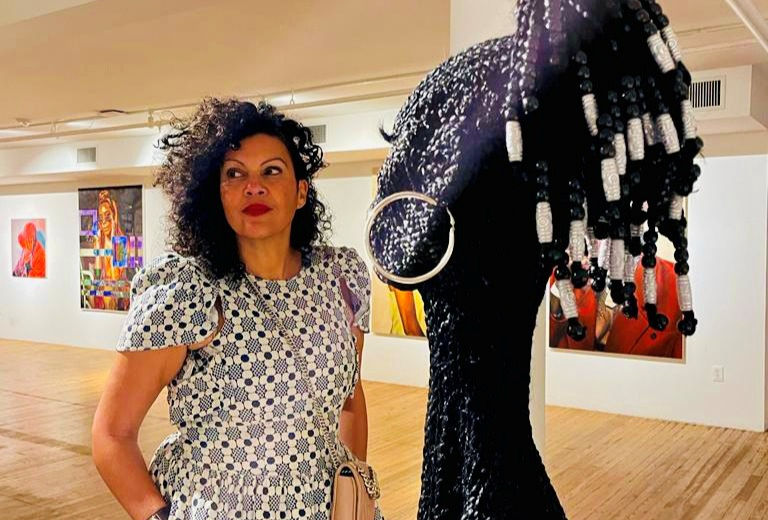
Nathalie Piquionne, Founder & Lead Facilitator, Conscious Strategist
What led you to create Quality of the Heart Immersion as the foundation of your work today?
Quality of the Heart Immersion grew out of a very real question in my own life: what happens when the life you built no longer feels like the life you are meant to live?
For many years, I worked at a high executive level in global advertising and business. I understood performance, responsibility, deadlines, and decision-making. After a tragic breaking point in my life, I could no longer move through life on momentum alone. I had to stop and ask what was actually true for me beneath achievement, expectation, survival, and the carefully curated life I had built.
That experience showed me how many people are functioning well on the outside while feeling disconnected on the inside. They are successful, capable, and deeply tired. They know how to keep going, but they no longer know what they are going toward.
Quality of the Heart Immersion was created as a way back. It begins with the body and nervous system, but it is ultimately about returning to inner truth, clearer choices, and a deeper relationship with one’s own life. Through perception, expansion, and unity, it opens a path toward soul healing.
How did your years as an executive in global advertising shape the way you now think about leadership, strategy, and human coherence?
My years in global advertising taught me how much pressure leaders carry and how quickly strategy can become disconnected from the human beings expected to deliver it.
I worked in environments where decisions had financial, creative, and organizational consequences. That gave me discipline, commercial judgment, and a deep respect for structure. But I also saw how often important decisions are made while people are exhausted, emotionally flooded, or disconnected from what they actually believe.
A strategy can look perfect on paper and still fail because the people leading it are not internally coherent. They may be acting from fear, urgency, image, or habit rather than clarity.
Today, I do not separate strategy from the inner state of the person making the decision. Coherence does not replace analysis. It improves it. It helps a leader distinguish between what is merely impressive and what is genuinely aligned, sustainable, and meaningful. The strongest strategy is not only intelligent. It is honest enough to be lived.
What does coherence change in the way a founder or creative leader makes decisions, leads others, and shapes a brand?
Coherence changes the quality of the decision before it changes the decision itself. When someone is in overdrive, everything can feel urgent. They may overthink, seek constant reassurance, change direction too quickly, or remain loyal to ideas that no longer fit. Even strong leaders can lose trust in themselves when their nervous system is overwhelmed.
Coherence creates enough inner space to see clearly again. A founder becomes less reactive and more discerning. They can feel the difference between an opportunity that expands the work and one that simply creates more noise.
It also affects leadership. People can sense when a leader is speaking from conviction rather than performance. A coherent leader communicates more clearly, sets cleaner boundaries, and creates greater trust.
The same is true for a brand. A meaningful brand is not built only from messaging. It grows from what the founder truly values, what the team consistently embodies, and what people genuinely experience when they encounter it.
Where does traditional strategy fall short when a leader is outwardly successful but inwardly misaligned?
Traditional strategy often begins with the question, “What should we do next?” But for someone who is deeply misaligned, that may be the wrong first question.
A person can have a strong business plan, excellent advisors, and multiple opportunities, yet still feel unable to move. The problem is not always a lack of information. Sometimes they have become disconnected from their own internal signal.
When that happens, more analysis can create more noise. They begin comparing, optimizing, and projecting without asking whether the direction itself still feels alive.
I believe strategy must also ask: What are you no longer willing to abandon in yourself? What kind of success can your body, relationships, and spirit actually sustain? What are you building, and what is it building in you?
This is where inner coherence becomes practical. It helps leaders stop solving the wrong problem. Once they reconnect with what is true, strategic choices become cleaner, more focused, and often much simpler.
Why are art, deep looking, and cultural immersion central to your work rather than simply complementary experiences?
Art asks something different from us. It does not always give an immediate answer. It asks us to slow down, stay present, and notice what is happening within us.
That is why deep looking is central to my work. Most people are trained to scan, judge, categorize, and move on. But when we truly look, without rushing to explain, our perception changes. We begin to notice emotions, memories, resistance, beauty, and meaning that were already present but hidden beneath speed.
Cultural immersion works in a similar way. It places us inside another rhythm, another story, another way of experiencing life. That can loosen the identities and habits we have mistaken for truth.
For me, art is not decoration around transformation. It is one of the doors into it. It can help people reconnect with feeling, imagination, cultural memory, and the parts of themselves that do not speak through logic alone.

How did JOY Creative Renegades evolve into a living cultural ecosystem, and what do you mean when you say “legacy becomes culture”?
JOY Creative Renegades grew from legacy, Love, and the question of how creative work continues after the person who helped shape it is no longer physically present.
My late husband, Caryl, was a curator, gallerist, producer, and writer – a cultural visionary and fiercely independent spirit who believed deeply in the power of art, cultural exchange, and creating meaningful relationships between artists, audiences, and communities. After his passing, I did not want his legacy to become something static, preserved only through memory. I wanted it to remain alive, generative, and in conversation with the present.
That is what I mean by “legacy becomes culture.” Legacy is not only what we inherit. It is what we activate, reinterpret, and carry forward through new people, new gatherings, and new creative expressions.
JOY Creative Renegades is evolving into a living cultural ecosystem through salons, artistic encounters, residencies, conversations, deep-looking practices, and collaborations. It is a space where art, community, thought, and inner life meet.
It is not simply an audience gathered around culture. It is a living network of people who participate in creating it.
What is the relationship between nervous-system reset, aligned decision-making, and the path toward soul healing?
The sequence matters. When the nervous system is constantly in survival mode, it is difficult to hear anything subtle. A person may know intellectually that something is wrong, but still feel unable to pause, choose differently, or trust what they sense.
The first step is creating enough safety in the body for the system to soften. From there, people can become more intimate with what is actually present instead of immediately escaping, fixing, or performing.
That intimacy creates clarity. They begin to recognize what belongs to them, what has been imposed, and what they are ready to release. Decisions become more aligned because they are no longer made only from fear or external expectation.
Soul healing, as I understand it, comes later. It is not a quick promise or a single experience. It is the deeper process that becomes possible when someone repeatedly chooses truth, coherence, and a more honest relationship with their own life.
How can creative leaders and value-aligned brands bring more coherence into the way they lead, communicate, and create?
They can begin by making sure their external message is not more evolved than their internal reality.
Many brands speak beautifully about values, community, wellbeing, or purpose. But coherence is revealed in decisions: how people are treated, what is rewarded, what is tolerated, and what happens when pressure rises.
For creative leaders, the first step is often to slow down enough to notice where the brand is saying one thing while the organization is living another. That gap creates confusion internally and distrust externally.
Coherence means that vision, culture, leadership behavior, and creative expression begin to reinforce one another. It also means being willing to make decisions that protect meaning, even when a faster or more fashionable choice is available.
A value-aligned brand should not only look good or sound intelligent. People should be able to feel what it stands for through every meaningful interaction.
If someone feels successful but no longer trusts their direction, where should they begin?
Begin before the next decision. Most people try to solve uncertainty by immediately choosing a new direction. But when you no longer trust yourself, the first task is not to move faster. It is to restore the relationship with your own inner signal.
Create a small amount of space without performance. Sit somewhere quiet. Walk without listening to anything. Look deeply at a work of art. Notice what your body tightens around and what allows you to breathe more freely.
Then ask yourself a simpler question than, “What should I do with my life?” Ask: What feels true today? What am I maintaining only because I am afraid to disappoint someone? What part of me has been asking for attention?
Clarity often returns in fragments before it returns as a plan. You do not need to force the full answer. You need to become available to hear it.
Read more from Nathalie Piquionne