When Engines Breathe and Heart Roars
Updated: Mar 9
Written by Dr. Sunil Prakash, Certified Clinical Hypnotherapist and Certified Trainer of Clinical Hypnotherapy
Dr. Sunil Prakash is a Certified Clinical Hypnotherapist and Trainer. He is the CEO of the California Hypnosis Institute Gurgaon, an online and offline learning platform. An author of The Mental Vault and a presenter at various international conventions and meetings.

It was a hot Saturday afternoon in the narrow by lanes of a bustling Indian city. The sun gleamed off the chrome pipes and greasy tools scattered in the garage of Raghav Mehra, a skilled and seasoned motorcycle mechanic who’d been in the business for over 20 years. He wasn’t just a mechanic, he was an engineer by education, but by choice and passion, he worked with machines that roared and rumbled.
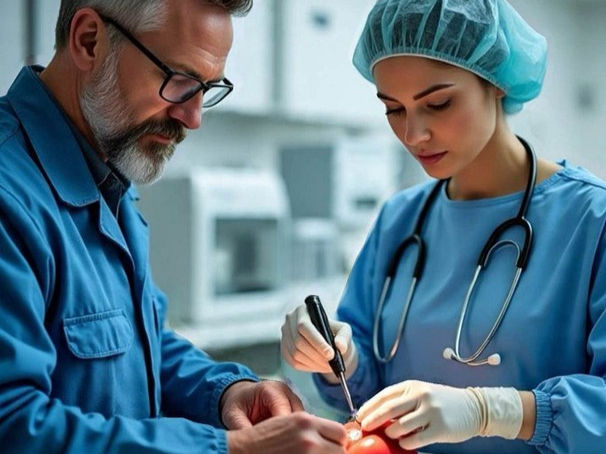
On that day, a black Royal Enfield sat half-dismantled in front of him. Its engine was cracked open like a chest cavity. Raghav’s hands, blackened with oil, moved like a surgeon’s, delicate, precise, rhythmic. His assistant, a teenage boy named Imran, stood nearby handing him tools, occasionally wiping sweat off his forehead with the back of his palm.
Just then, a sleek white Mercedes-Benz rolled up outside the garage. A man in a crisp blue shirt stepped out, polished shoes, aviator glasses, a Rolex peeking from beneath his cuff.
Imran gasped. “Sir, isn’t that Dr. Sameer Arora, the famous cardiac surgeon from Galaxy Hospital?”
Raghav looked up, wiped his hands on a rag, and smiled. “Yes, it is. He’s the guy who repairs hearts. I repair machines with heart.”
The doctor walked in casually, nodding with familiarity. “Raghav bhai, I’ve heard you’re the best in the city. My brother-in-law’s bike isn’t breathing right. Thought I’d come to the expert.”
Raghav laughed, “You’ve come to the right ICU. Come, see what I’m working on.”
The doctor walked up to the Enfield’s open engine. Raghav, with boyish enthusiasm, began showing him the piston, the valves, the camshaft. “Look here, sir. I opened the heart of this beast, took out the valves, cleaned the carbon, recalibrated the tappets, changed the timing chain, almost like angioplasty, no?”
Then with a slight edge in his voice, he looked up at the doctor and said:
“Doctor Saab, I open engines. I study them, diagnose the fault, fix them with precision, and put them back together. So tell me, why do you earn crores while I earn thousands?”
The air hung heavy for a second. Imran looked nervously between the two grown men.
But Dr. Arora didn’t flinch. He smiled, stepped closer to Raghav, leaned in, and whispered with a twinkle in his eye:
“Raghav ji, try doing that while the engine is running.”
Raghav paused for a moment. Even Imran raised his eyebrows. It was a good one. The kind that made you nod in appreciation.
But then Raghav wiped his hands slowly, turned off the work light above the engine, and took one confident step toward the doctor. He leaned in just as close and whispered back:
“Doctor Saab, I can pick up a dead engine and bring it back to life. Can you?”
Boom. Mic drop.
The silence between them exploded into shared laughter. Dr. Arora clapped Raghav on the shoulder, amused and impressed. “Touché, Raghav bhai! You’ve got a point. Both of us bring life back, but in our own ways.”
Raghav smiled. “Exactly. Machines and humans, they’re not that different. Both need fuel, timing, breath, and care. And sometimes, they need someone who believes they can roar again.”
They shared a cup of chai after that, two professionals from different worlds, connected by their love for bringing things back to life.
Reflection:
Both the engineer and the heart surgeon perform delicate, life-restoring work, one with human organs, the other with mechanical organs. The skillsets differ in tools, environment, and stakes, but at their core lies the same dedication: to revive, restore, and breathe life into something that had stopped moving.
The real question isn’t who earns more, but who adds life, who adds meaning. Whether it’s a stethoscope or a spanner, it takes precision, patience, and passion to fix a heart, metal or flesh.
So what would you say? Are you the one who keeps the engine alive, or the one who starts it again when it dies?
Either way, salute to the life-givers.
Follow Dr. Sunil on his Facebook, Instagram, and LinkedIn, or visit his website for more info!
Dr. Sunil Prakash, Certified Clinical Hypnotherapist and Certified Trainer of Clinical Hypnotherapy
In 2008, Dr Sunil Prakash had a life-changing encounter while attending a Psychotherapy conference in the USA. He met a Clinical Hypnotherapist who introduced him to the remarkable effectiveness of Hypnotherapy as a healing modality. Inspired by this newfound knowledge, he determined to pursue his passion for healing and teaching. Dr Sunil Prakash spent little time completing his Hypnotherapist course and Trainer's program from CHI USA. Within a year, he started his hypnotherapy academy. Since 2009, he has been successfully running the California Hypnosis Institute Gurgaon in India, where he practices and teaches Clinical Hypnotherapy.