

What the UK Budget Really Means for New Business Owners in 2025/2026
Written by Abi Hill, Entrepreneur, Mentor & Coach
Abi Hill is a UK entrepreneur, mentor & coach, and the founder of Just Starting Out. Widely recognised for championing underserved communities and cost-of-living resilience, she’s on a mission to cut first-year failure rates. “If you want to make waves, pack a swimsuit!”

UK Budgets are rarely delivered with first-time business owners in mind, yet they are often felt by them first. For those considering self-employment, freelancing, or launching a small business, the Budget is not about party politics or headlines. It is about confidence, affordability, and whether now feels like a sensible time to start.
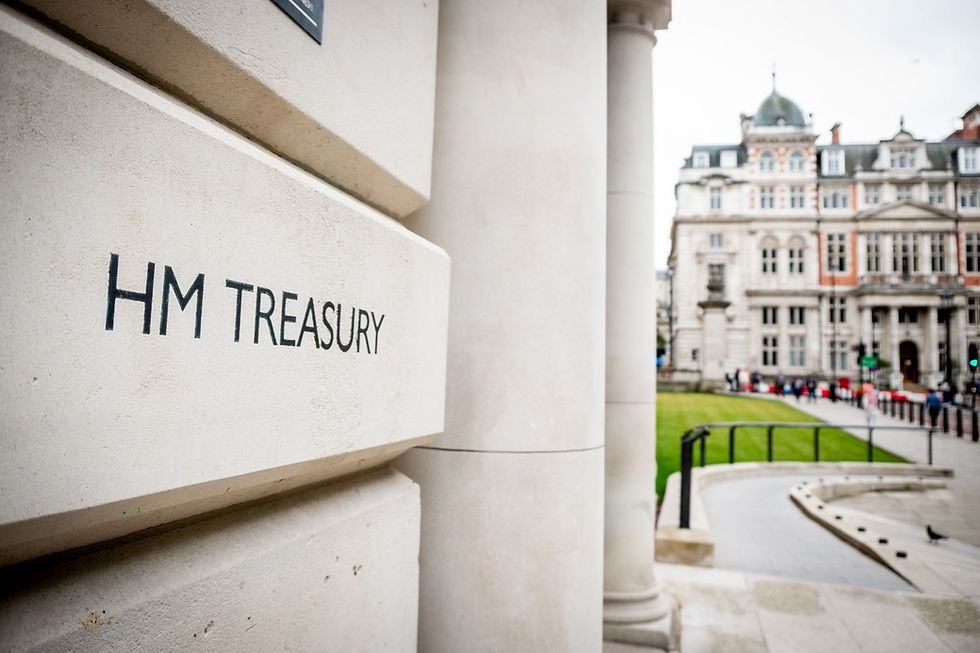
This year’s Budget focused on stability, fiscal responsibility, and long-term growth. While some measures may appear subtle on the surface, their impact on new and early-stage businesses is significant. From tax thresholds and cost pressures to hiring incentives and digital investment, this article explores what the Budget actually means for people at the very beginning of their business journey, and how to respond with clarity rather than caution.
1. Stability sends a signal – even without sweeping giveaways
One of the most important outcomes of this Budget is not a specific policy, but the message it sends. For aspiring entrepreneurs, stability matters. Consistency in tax policy, employment rules, and fiscal direction reduces uncertainty, and uncertainty is the enemy of start-ups.
While there were no dramatic tax cuts tailored specifically to new businesses, there were also no sharp shocks. For those weighing up whether to leave employment, register as self-employed, or launch a side business, that steadiness helps remove one of the biggest psychological barriers, fear of sudden rule changes.
Why predictability matters more than perks
New business owners plan in weeks and months, not decades. When thresholds, allowances, and compliance requirements remain broadly stable, founders can focus on building customers rather than second-guessing the system. In practice, predictability often does more to encourage start-ups than one-off incentives.
A confidence budget, not a headline budget
In her address, Rachel Reeves repeatedly emphasised responsibility, stability, and long-term economic renewal. While these may sound abstract, for new business owners, the message is practical, the fundamentals are not shifting overnight. When founders believe the rules of the game will stay broadly consistent, they are more willing to take measured risks. Confidence, in this context, becomes a form of economic stimulus, particularly for those standing on the edge of self-employment.
2. Cost pressures remain – but smarter spending matters more than ever
The Budget acknowledged continued pressure on household and business costs, from utilities to borrowing. For new business owners, this reinforces the need for realism. Starting lean is no longer optional, it’s a strategic advantage.
However, lean does not mean cheap at all costs. It means spending intentionally.
The rise of accessible and early-stage services
An understated opportunity for both consumers and founders is the growing openness to using newer professionals. From trades and personal services to digital support, many early-stage businesses offer reduced pricing in exchange for experience, testimonials, or early traction.
For the public, this can mean meaningful savings. For new entrepreneurs, it provides a route to build confidence, credibility, and cash flow without excessive marketing spend. The Budget climate reinforces this mutually beneficial dynamic.
Lean does not mean under-investing
Many first-time founders respond to economic pressure by delaying spending entirely. However, cutting too deeply (particularly in areas like compliance, basic tools or professional support), can create bigger problems later. The current environment rewards thoughtful prioritisation rather than total restraint, spending where it reduces risk, saves time, or directly enables revenue.
Household finances and business finances are increasingly linked
For sole traders, freelancers, and micro-business owners, personal and business finances are rarely separate in the early months. The Budget’s acknowledgement of ongoing household cost pressures recognises this reality. When energy bills, childcare, and mortgages remain tight, aspiring founders must build businesses that work within real-life constraints, not idealised projections. Businesses designed around flexibility and affordability are better positioned to survive their first year.
3. Employment incentives support sustainable growth
Hiring remains one of the biggest psychological steps for small business owners. Ongoing support for apprenticeships, training, and workforce development signals that when businesses are ready to grow, they will not be penalised for doing so.
While many first-time founders will not hire immediately, knowing that pathways exist for flexible and supported employment matters, especially for businesses with ambitions beyond solo trading.
Skills over sale
The Budget’s continued emphasis on skills development aligns well with early-stage businesses, where adaptability matters more than headcount. Founders who invest time in upskilling (whether in finance, digital tools or leadership), are often better positioned than those who scale too quickly without foundations in place.
Hiring is a future option, not a first step
The Budget reinforces an important truth, growth does not need to be immediate to be valid. Many of the employment and training incentives in place are designed to support businesses once they are ready, not to pressure founders into premature hiring decisions. For new business owners, this should remove pressure rather than add it. The early focus can remain on viability, customers, and cash flow.
Apprenticeships and training broaden access to talent
Continued support for skills and apprenticeships helps smaller businesses access talent in a more balanced way. For founders who may never have hired before, these pathways reduce risk and make future growth feel more achievable. Importantly, they also encourage businesses to think about culture and capability early, rather than scaling reactively.
4. Digital infrastructure favours agile start-ups
Ongoing investment in digital infrastructure and technology adoption continues to favour smaller, more agile businesses. New founders often start with fewer legacy systems and are able to adopt modern tools from day one.
This levels the playing field considerably.
Using technology to reduce overheads
From accounting software and banking apps to scheduling, invoicing, and marketing tools, technology now allows new business owners to operate professionally at a fraction of the historic cost. In the current economic climate, this efficiency is not just helpful, it’s essential.
Those entering self-employment today have access to tools previous generations of founders simply did not.
Modern businesses start digital by default
Unlike larger organisations burdened with legacy systems, new businesses are starting with digital-first models as standard. The Budget’s commitment to digital investment aligns with this shift. From cloud accounting to digital banking and remote working tools, founders can now operate nationally (or even globally), without the infrastructure costs that once acted as barriers to entry.
Technology reduces risk as much as cost
Digital tools do more than save money, they reduce error, improve visibility, and support better decision-making. For new business owners, having real-time insight into cash flow, invoices, and customer pipelines can be the difference between confidence and constant stress. In an economy focused on responsibility and sustainability, this kind of operational clarity is invaluable.
Visibility matters more than scale
Digital platforms allow early-stage businesses to build credibility before they build size. Reviews, testimonials, professional listings, and social proof now matter as much as physical premises once did. The current climate rewards businesses that focus on trust and transparency, not just rapid expansion.
5. The budget reinforces a truth many overlook – confidence is as important as capital
Perhaps the most important takeaway for aspiring business owners is this, the Budget does not discourage entrepreneurship. But it does demand preparation.
We are seeing a shift away from “fast growth at any cost” toward sustainable, confidence-led starts. The businesses most likely to succeed in this climate are not necessarily the most ambitious, but the most realistic.
Starting small is not thinking small
Launching gradually, testing services, building reviews, and learning in real time are not signs of weakness - they are signs of professional maturity. In a steady but cautious economy, credibility, visibility, and support networks matter as much as funding.
For many, the right question is no longer “Can I afford to start a business?” but “How can I start in a way that reduces risk while building momentum?”
If you are considering self-employment or are in the early stages of building a business, now is a time for clarity rather than hesitation. Understand the landscape, keep costs intentional, invest in skills, and focus on confidence-building steps that move you forward sustainably. With the right support and mindset, this Budget offers reassurance rather than restraint.
Media contact
Amanda Grant
Communications Manager
0203 633 0286
Read more from Abi Hill
Abi Hill, Entrepreneur, Mentor & Coach
Drawing from a Senior Management background and 20+ years working alongside minority and underserved communities, Abi is best known for advocating within the start-up community, her mission being to reduce the 20% of small businesses that don’t make it through year one by giving them the tools, training, and trust they deserve. Because why should starting out mean forking out?


