

What Is Mindfulness and Why Practice It?
Ingrid is a certified Mindfulness Instructor, MSc, certified Yoga Instructor & Sound Healing Practitioner. She is the Founder of The Mindful Way, where she offers online, evidence-based mindfulness courses, guided meditation sessions, and 1:1 women's coaching. Ingrid also holds yoga classes and sound healing journeys locally in Stockholm, Sweden.

The most common question I get around mindfulness is quite simple, what is it? While often talked about in relation to wellness, mindfulness practice is rarely understood in a way that feels accessible, practical, and relevant to everyday life. If you’ve ever wondered what mindfulness actually is and why so many people turn to it during stressful seasons of life, this article offers a clear, scientifically grounded explanation of what it entails and why it is so beneficial for our personal lives and professional success.
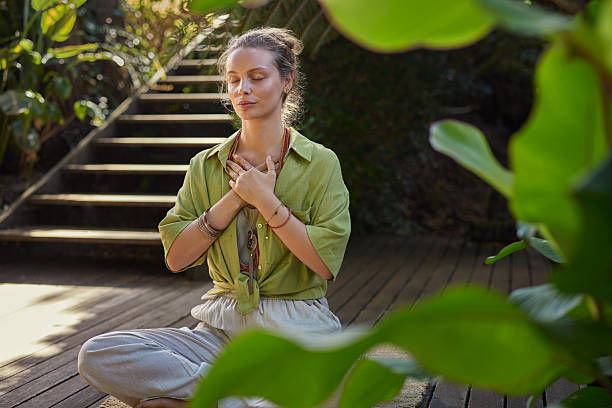
What is mindfulness?
According to Rob Nairn, renowned author and co-founder of the Mindfulness Association, through which I was trained, mindfulness is defined simply as knowing what is happening while it is happening, without preference. This definition contains two essential elements:
A skill: Present-moment awareness, or noticing your experience as it unfolds.
An attitude: Awareness without preference or judgment, by meeting your experience with kindness rather than criticism, towards yourself and/or others.
So, when practicing mindfulness, we are building a certain skill while employing a certain attitude. Mindfulness is not about clearing the mind, achieving perfect calm, or forcing yourself to “think positive.” Quite the opposite. It is about learning to stay present with yourself gently, honestly, and compassionately, especially when life feels hard. Thankfully, when we manage to do this, the outcome is often reported as a clearer mind, a steady inner calm, and more positive thoughts.
Why the skill of present-moment awareness is so powerful
When the brain is not actively engaged in a task, it will instinctively fall back into its default mode network, which is responsible for scanning for threats as an ancient survival mechanism. Today, this manifests as the mind wandering off into time-traveling, either worrying about the future or ruminating about the past. Very rarely do we actually live in this present moment simply as it is, and yet it is only when we live in the present that we can interrupt the brain’s automatic stress response of scanning for threats.
When we practice the skill of noticing what is happening while it is happening, for example, noticing when the heart starts racing during a stressful moment, we activate the brain’s regulatory systems rather than its survival systems. This simple act of noticing sends a message to the nervous system, despite the challenging moment, I am here. I am aware. I am not in actual danger.
When practiced over time, this present-moment awareness becomes a stabilizing force. You begin to catch your stress earlier, respond to it more consciously rather than resist it, and stay connected to yourself beneath the noise. I discuss how this helps us in the workplace in my interview with Brainz here.
Why the attitude of non-judgment is so powerful
According to a compelling 2021 study published in the Behavioural and Cognitive Psychotherapy journal, internal self-judgment is one of the biggest amplifiers of stress. The moment we feel overwhelmed, the inner critic makes a cameo, “I should be coping better.” “Why am I like this?” “Everyone else seems fine.”
This self-judgment activates the same physiological pathways as threat does. Physical sensations manifest in response, muscles tighten, the breath shortens, and the mind spirals into panic mode. In some cases, this can contribute to chronic physical health conditions.
Practicing the attitude of non-judgment interrupts this harmful pattern by allowing you to meet your experience with self-compassion rather than self-attack. In trauma-informed mindfulness, non-judgment is not passive acceptance, it is proactive nervous system repair. It teaches the body that it is safe to feel, slow down, and respond thoughtfully rather than react impulsively to a situation.
When you stop judging your inner experience, you stop fighting yourself. When you stop fighting yourself, you give yourself the chance to heal and to thrive.
Why practice mindfulness?
Mindfulness is not a quick fix for emergency situations. It is a long-term, compassionate training of the mind and nervous system. But it is also a superpower.
Practicing mindfulness helps you:
Reduce stress and overwhelm by interrupting automatic reactivity
Build emotional resilience through consistent, non-judgmental awareness
Improve focus and clarity by remembering to return to the present moment
Strengthen self-compassion by detaching from the authority we unconsciously give our harsh inner critic
Support trauma recovery by reconnecting with and creating safety in the body
Improve relationships by learning how to regulate your emotions, build self-awareness, and develop compassion and empathy toward others
A place to start: A simple mindfulness practice
Pause from whatever you are doing at this moment. Bring your attention to where your body makes contact with the floor. Notice one sensation in the body, tension, temperature, movement, or stillness. Name it gently without judgment, for example, “Tension in the chest” or “Tapping the foot.” Then add an element of self-kindness, for example, “This is allowed.” This combination of noticing and allowing is the heart of mindfulness.
Why mindfulness matters now more than ever
In today’s world, which is constantly speeding up, mindfulness offers a radical way to handle it sustainably, presence. Instead of giving in to our habitual stress impulses, we are taking our power back by remaining grounded and calm. We do this by staying conscious and accepting of our internal moment-to-moment experience so that we can choose how we want to respond rather than react.
Once you learn how to incorporate mindfulness into your everyday life, it evolves from a simple practice into a powerful mindset, leading you to move through your days with resilience and empowerment.
Want to learn more about how to transform your life through mindfulness?
I offer online one-to-one coaching sessions for women, online weekly meditation practices, and a transformative, evidence-based online course called The Mindfulness-Based Living Course, designed by the Mindfulness Association. You can also join me on Substack, where I write my free weekly newsletter, The Inner Compass.
Read more from Ingrid Montague
Ingrid Montague, Mindfulness Instructor & Somatic Wellness, MSc
Ingrid is a Mindfulness Instructor & Somatic Wellness Practitioner, MSc, specializing in teaching evidence‑based practices for nervous‑system regulation, emotional resilience, and embodied well‑being. After contracting a severe illness in 2020 that landed her in the hospital, Ingrid learned firsthand how practicing meditation calmed her stress and strengthened her immune system, inspiring her to make mindful and somatic practices the focus of her professional work. Ingrid currently guides and teaches mindfulness classes, yoga, and sound healing journeys online and locally in Stockholm, Sweden.






