What If You’re Not Seeing Yourself As Clearly As You Think?
Updated: Jul 27
Dr Greg Schreeuwer is a Human Behaviour and Health Pattern Specialist, speaker, and Integrative & Functional Chiropractor with over 20 years of experience. His work explores how unconscious patterns shape health, performance, decision-making, and personal growth, helping people create lasting change by addressing causes rather than symptoms.

I’ve spent more than twenty years asking one question, "Why do intelligent, capable people continue recreating experiences they consciously want to avoid?" The answer has gradually changed the way I understand health, human behaviour, and what it truly takes to create lasting change.
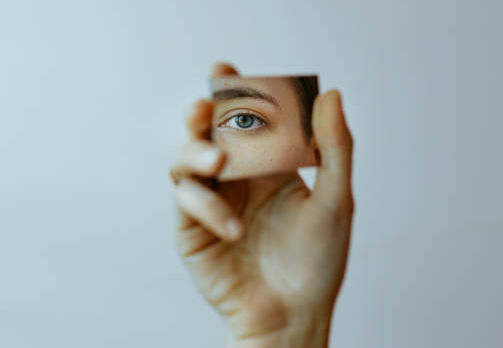
How unconscious lessons shape your choices and future
There is a question that has quietly followed me for much of my adult life, Why do people keep finding themselves in the same situations, even when they genuinely want something different?
I first began asking that question more than twenty years ago while trying to better understand myself. As I reflected on my own life, I noticed recurring challenges that couldn’t be explained by a lack of motivation or effort. I wanted different outcomes, yet I found myself thinking, responding, and making decisions in ways that often felt automatic.
The more I studied human behaviour, the more fascinated I became by the same question in the people around me. Why do some people repeatedly end up in unhealthy relationships? Why do others continually burn out? Why do some struggle with persistent health challenges despite doing everything they believe they should? Why do intelligent, capable people continue recreating experiences they consciously want to avoid?
Over more than 20 years in practice and through conversations with over 30,000 patients, I’ve come to believe the answer begins somewhere most of us rarely think to look. Not in our behaviour, not in our habits, and not even in our goals. It begins with what our experiences have taught us.
Every experience teaches us something
From the moment we’re born, we’re learning. We’re learning what love looks like, whether it’s safe to speak up, how conflict is handled, what success means, whether we’re enough, how relationships work, what earns acceptance, and what leads to rejection.
Every experience teaches the brain something. Some lessons are helpful and continue serving us throughout our lives. Others help us adapt to circumstances that no longer exist.
The challenge is that the brain doesn’t automatically update those lessons simply because our environment changes. Unless we become aware of them, they continue influencing the way we think, respond, and make decisions without us even realising it.
Over time, what we’ve learned becomes so familiar that we stop recognising it as learning. We simply experience it as reality.
Why we keep recreating the same experiences
One of the most consistent observations I’ve made throughout my career is that people often recreate experiences they consciously wanted to avoid. This is not because they want to suffer or because they’re making poor decisions, but because the brain continues responding according to what it has learned.
I recently saw a patient who grew up in a household where men held the power. Whenever she challenged her father, she was met with anger or severe punishment. Without anyone needing to explain it, her brain learned something. Speaking up wasn’t safe, and keeping quiet protected the relationship.
Years later, she promised herself she would never marry someone like her father. Initially, she believed she hadn’t. He was charming, successful, and confident, everything her father appeared not to be. Over time, however, the relationship slowly began to reflect many of the same dynamics she had experienced growing up.
When we explored her story together, something interesting emerged. She remembered noticing warning signs very early, including comments that didn’t sit well, behaviours that made her uncomfortable, and interactions that didn’t feel right. She sensed them, but she overrode them. Her conscious mind had plenty of logical reasons to continue. Looking back, she realised those signals had been there from the beginning.
For me, this wasn’t surprising. It reinforced something I had been observing for years. People often don’t recreate the same experiences because they consciously choose them. They recreate them because the brain continues to respond based on what it has learned, adapted to, and accepted as normal.
The unconscious lessons we live by
One of the biggest mistakes I think we make is trying to change our future without first understanding what our brain has already learned from our past.
We change jobs, relationships, careers, cities, routines, and sometimes even countries. Yet many people continue experiencing remarkably similar outcomes, not because they aren’t trying hard enough, but because the unconscious lessons driving many of their decisions remain unchanged.
If the learning doesn’t change, there’s a good chance the future won’t either.
Awareness changes what becomes possible
One of my favourite moments in practice has very little to do with symptoms improving. It happens when someone pauses and says, “I’ve never thought about it like that before.”
For me, that’s the beginning of meaningful change. Not because they’ve learned something new, but because they’ve become aware of something that has been quietly influencing them all along.
I see awareness as bringing something unconscious into conscious awareness. It’s recognising the hidden order that already exists. It’s seeing what was always there but had remained outside conscious awareness. When awareness changes, something remarkable happens.
New choices become available, not because the world has changed, but because we’ve started seeing more of what’s already there.
A different way forward
I don’t believe lasting change begins with trying harder. I believe it begins with understanding. Understanding what your brain has learned, why those lessons once made sense, and how they continue to shape the way you experience yourself, other people, and the world around you.
Once those unconscious patterns become conscious, they no longer automatically direct your future. You begin responding with greater awareness rather than simply reacting from old learning.
That’s where choice begins, and I believe that’s where meaningful change begins too.
Perhaps the future you’ve been searching for isn’t waiting for you to become someone different. Perhaps it’s waiting for you to become aware of what has quietly been shaping your life all along, because once you can see it, you’re no longer bound to keep repeating it.
Read more from Dr. Greg Schreeuwer
Dr. Greg Schreeuwer, Human Behaviour and Health Expert
Dr Greg Schreeuwer is a Human Behaviour and Health Pattern Specialist with over 20 years of experience helping people create lasting change. After facing years of bullying as a child, he became fascinated by the forces that shape human behaviour, confidence, and self-expression. That journey inspired a career dedicated to helping people break free from limiting patterns, trust their own voice, and live more authentically. Drawing on expertise in health, behaviour, and personal development, Greg writes and speaks about the hidden patterns that influence our lives and how greater awareness creates greater freedom.