What If Meditation Isn’t About Quieting Your Mind? – An Interview with Jennifer Ann Hall
Jennifer Ann Hall spent more than two decades teaching life skills and stress management in psychiatric care and public education before a second cancer diagnosis prompted her to reconsider how she was living. Now a mindfulness practitioner and the writer behind Caught Looking: The Jenny Chronicles, she draws on that experience to help others recognize habitual reactions and approach discomfort with curiosity.
In this exclusive interview, Hall discusses how surviving cancer reshaped her understanding of self-awareness, why meditation doesn’t require an empty mind, and how a simple pause can bring greater presence to everyday life.
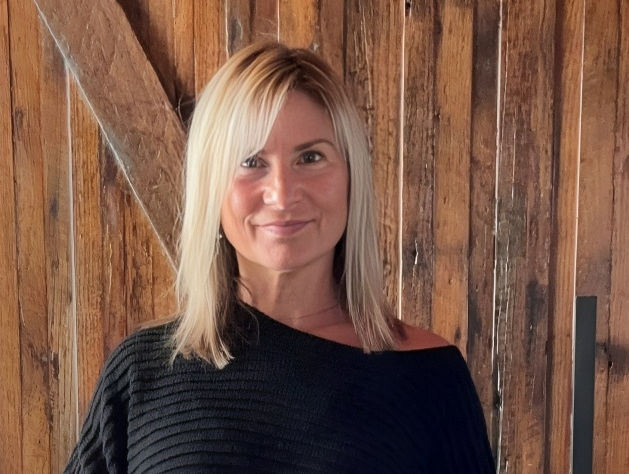
Jennifer Ann Hall, Educator & Certified Mindfulness Meditation Instructor
What led you to bring mindfulness into your work after years in healthcare and education?
When I was diagnosed with cancer for the second time and felt extremely overwhelmed by a life that no longer felt authentic, I recognized the need to turn inward and reflect. After being in an unsupportive relationship and accepting that I wasn’t invincible, I realized I needed to shift my focus from following the script of what I was expected to do to focusing on myself. Only then could I authentically help others from a place of compassion, starting with myself.
I had made so many choices based on the script I had been given that I realized it was time to “do it over.” I had been given an opportunity to save my life, both literally and figuratively, so I took it. This time, I found direction by actually listening to myself rather than my family, doctors, significant others, or the feelings I had disguised as armor.
By paying attention to the process, I discovered the value of leaning into confusion to find clarity and going through difficult experiences to move beyond them. I learned to sit with and make friends with every part of myself, imperfections included.
How has surviving cancer twice changed the way you understand mindfulness and awareness of yourself?
When I was first diagnosed with cancer, I trusted the system and the prevailing narrative without questioning anything. I went through the motions while trying to process the shock of being the healthiest person I knew, doing everything right, and still getting cancer. I had zero known risk factors.
When I was diagnosed a second time, I realized I needed to be more proactive about my health and remission. After five years in remission, I had been given the “cured” diagnosis. Had I stopped paying attention at that point, I might have missed the warning sign in my sixth year, when an ear of corn dropped and splashed boiling water onto the very spot where my chest wall recurrence was located.
Knowing my body and recognizing what was normal for me, and what wasn’t, helped me identify and navigate my illness. Mindfulness meditation also helped me maintain my emotional well-being and navigate the posttraumatic stress disorder (PTSD) associated with both the illness and its treatment.
I came to understand that mindfulness is not simply about paying attention; it is a way of life that encompasses the whole self as we navigate our existence. It offers an opportunity to live authentically, informed by knowledge and experience we may not have had the first time around. It means taking ourselves off autopilot, creating meaningful experiences, and being patient with every process, including our own. It’s almost like an awakening.
What did working in psychiatric care and public education teach you about how people respond to stress and uncertainty?
While teaching life skills, leisure education, and stress management in an acute care psychiatric setting, I took the opportunity to learn about myself through the people I worked with daily. I worked with people who had become so caught up in living life according to their own expectations and other people’s definitions of success that they lost themselves along the way.
People are given so many resources, tools, and skills, but applying them in everyday settings is difficult when we’re on autopilot. When we change, the people around us are impacted as well and sometimes don’t respond how we need them to. When I moved into education and taught similar skills to students from all different backgrounds, my goal was to equip them with these skills before they reached a point in life where they felt like they had no options.
Stress and uncertainty can make us feel like we have very little control over our trajectory, but realistically, it’s our comfort zones that impose those limits. According to Myles Munroe, “Comfort is not your friend; it’s your enemy disguised as your protector.” This was the most important gift the groups I worked with for over 20 years gave me, and I didn’t realize it until I explored my own mindfulness.
My most difficult moments became some of my greatest learning opportunities, but I needed to be mindful to cultivate that. Transforming my pain into purpose helps me help others move past their own fear, comfort, or denial.
What do you think people misunderstand most about the purpose of mindfulness meditation?
One of the most misunderstood aspects of mindfulness meditation is its purpose. People often think the goal is to stop their thoughts or eliminate them altogether. In reality, the goal is to make friends with our thoughts, recognize them for what they are, acknowledge them, and let them go.
When we meditate, we explore our thoughts for what they are without judgment. If a thought doesn’t serve us, we can choose to release it rather than remain attached to it.
The practice can help us interrupt the feedback loops that keep us stuck in repetitive thinking and behavioral patterns. We can begin breaking automatic habits, anchor ourselves in the present moment, and cultivate acceptance by developing curiosity about ourselves.
There is often resistance to using mindfulness meditation as a tool because the practice is misunderstood before it is even attempted. My suggestion is to try it consistently for at least a month before deciding whether it works for you. Aim for 20 minutes per session, at least five days a week.
We often spend more than 20 minutes a day mindlessly scrolling without purpose. In my opinion, dedicating that time to mindfulness meditation can support our overall well-being.
Why is learning to pause before reacting so difficult, even when we know it could help us?
Biology plays a significant role in why pausing before reacting can be so difficult, even when doing so could lead to a more effective and purposeful outcome. Neurobiology, our conditioning and coping patterns, dopamine feedback loops, and a false sense of urgency can keep us repeating the same behaviors unless we intentionally retrain our brains.
Mindfulness meditation gives us a tool for practicing awareness. We can sit quietly, observe the present moment, and notice what arises. From there, we have an opportunity to acknowledge our thoughts and redirect our attention without judgment.
With practice, we can develop new responses that become more natural in everyday situations. I’ve been practicing for almost two years, and sometimes I don’t even realize I’m pausing and responding mindfully. This is similar to how unhelpful learned responses can become automatic. We have simply practiced those responses longer because we learned them first, and in certain situations, they may once have served us well.
Recognizing that we can replace behaviors that no longer honor who we are with ones that genuinely benefit us can be incredibly freeing. The first step is giving ourselves permission to explore that possibility.
What would you recommend to someone who wants to start meditating but struggles to sit still or quiet their thoughts?
First, I would recommend reaching out to me for an initial consultation so I can guide you through a meditation session. The goal isn’t to quiet or eliminate your thoughts; it’s to acknowledge them and allow them to pass.
Second, I often use the phrase “challenge by choice” because, ultimately, you are in control of your comfort zone. We spend so much time trying to escape discomfort that we can miss valuable learning experiences that come from exploring it safely. Moving beyond our comfort zone allows us to examine the things that make us uncomfortable, lean into those experiences at our own pace, and eventually begin to release their hold on us.
In some ways, this is similar to using progressive muscle relaxation as a tool for managing stress. We learn to recognize tension, work with it, and release it. Sometimes, we have to move through an experience to move beyond it, loosen its hold, and let it go.
How can someone practice mindfulness during stressful everyday moments without setting aside time for formal meditation?
When you practice formal meditation, mindfulness can gradually become a way of life. You may find yourself approaching situations with curiosity rather than reacting automatically.
You can practice mindfulness during stressful moments simply by focusing on your breath. When we use the natural rhythm of our breathing as an anchor, we can return to the present moment and navigate situations with greater clarity.
Our breath is a constant reminder of life itself. Without it, life ceases to exist; with it, we are here.
There is no special tool to carry, app to download, feedback to receive, or advice to follow. You simply return your attention to the felt experience of your breath. As long as you are alive, that anchor is always available to you.
It’s a terrible business model because I can’t sell you anything tangible or train you in some special skill that you must continually purchase. My business is my presence and guidance. My role is to be with you to support your journey and guide you through the meditation process so you can develop your own practice and eventually make mindfulness as natural as breathing. In time, you may find yourself practicing it without even realizing it.
Your writing in Caught Looking: The Jenny Chronicles draws on personal experiences, so what has storytelling helped you understand about resilience?
I have always used experiences from my own life to teach others by sharing relatable examples. We tend to trust people who have experienced similar challenges and survived them, especially those who can speak about a subject because they have not only lived through it but also found a way to thrive afterward.
Storytelling draws people in through words and experiences that resonate with them. It also gives us an opportunity to reflect mindfully on our own experiences, consider how they have affected us, and determine what we can do with those experiences moving forward.
When we take a complex experience from our minds and put it on paper, we create distance from it. This can help interrupt the panic response and transform the chaos in our minds into something more structured. That structure gives us an opportunity to acknowledge, process, and reflect on what happened, learn from it, and eventually let it go. I believe that, during my healing, this storytelling helped me develop a deeper understanding of myself and the plight of others, making me a great asset in guiding this practice.
If readers could make one small change to become more present in their daily lives, where would you encourage them to begin?
First, you have to want to begin. Moving beyond the barriers we impose on ourselves can generate the momentum needed for transformational growth. When we stop evolving, we limit our ability to pursue personal fulfillment and explore our full potential.
Once you make a conscious decision to become more present, your anchor can be as simple as your breath. In fact, breathing is the practice.
Focus on your breath and practice pausing in any situation. We often move through life on autopilot, going through the motions without truly experiencing them.
In my mindfulness practice, the breath serves as an anchor. Because breathing sustains life, we can always return to this simple action to reconnect with the present moment. By focusing on our breath, we can engage our senses and experience life as it unfolds rather than allowing moments to pass us by. That awareness is where we can begin to cultivate a deeper appreciation for life.
If you visit my webpage, you can learn more about my mindfulness work. If you or someone you know has been touched by cancer, I also invite you to visit my blog, where I share guidance and resources to help support the journey.
Read more from Jennifer Ann Hall