What If I told You That Teaching Body Safety Could Protect Your Kids… Would You Believe Me?
Written by: Kimberly King, Executive Contributor
Executive Contributors at Brainz Magazine are handpicked and invited to contribute because of their knowledge and valuable insight within their area of expertise.

5 Empowering Body Safety Strategies for Every Family to Start Today! I have good news! Body safety skills can create a power shift! We can help prevent child sexual abuse by learning the facts, eliminating the risks, and educating our families. Together we can take power away from the abuser and empower our families with a prevention toolbox!
It’s easy to tackle this often tricky topic if we start early and use the right tools!
And it doesn't have to be scary!
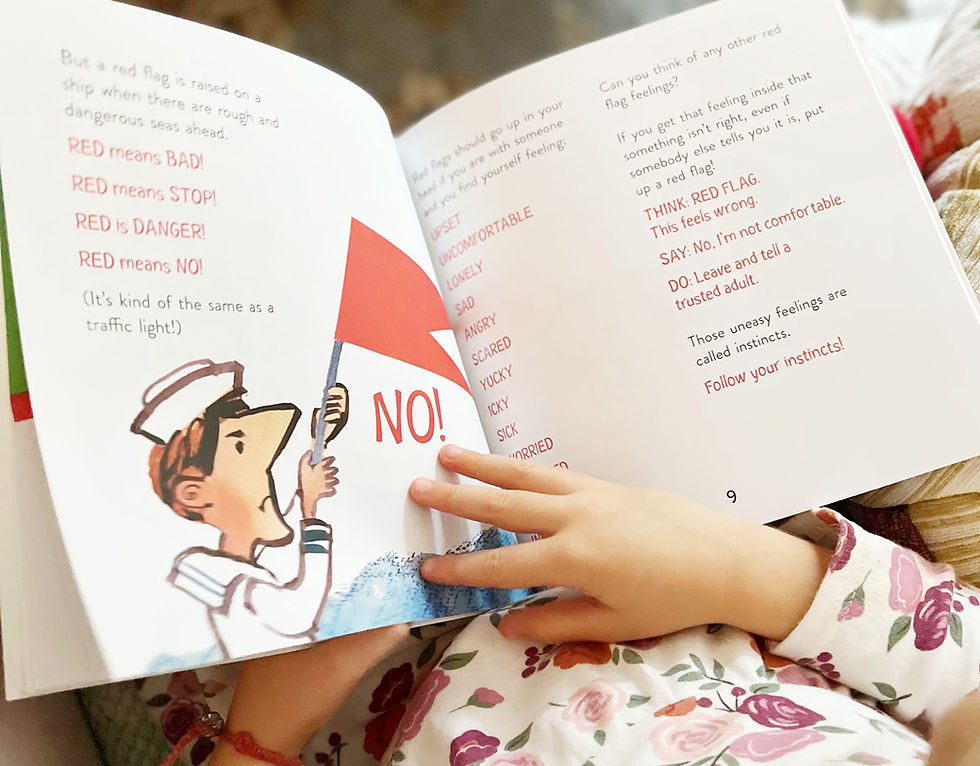
I don’t want anyone to get stuck in fear. We can begin to lay the foundation of prevention education and get ahead ‒ to protect our families with a few simple steps. Let’s start today! It doesn’t matter how old or young your kids are. These safety skills are practical for any child who understands the language. The earliest you start the better, the sooner you reduce your risk. 5 Body Safety Skills to Start Today! ‒ To Start Your Body Safety Toolbox 🚩 Flag Your Feelings: Help your kids learn to identify their feelings by practicing daily open communication. Learn to identify their feelings using red/green flags.
Start with a few great books! I love this new book: The Boy with Big, Big Feelings Create an atmosphere of support and trust in your family where daily sharing of feelings is encouraged and celebrated. Family dinners, rides to school, walks and talks, and family journals are great ways to start.
At the dinner table, instead of asking, “How was school?” Try something different! “Did anybody make you feel really happy today? ‒Tell me more
“Did anybody get in trouble at school today?” ‒ Tell me more “Did you help a friend today?” ‒ How did that feel?
Specific questions that focus on feelings have a better result than… how was school.
The usual answer‒ “Fine!”
🚩 Be the Boss of Your Body: Your kids can learn that they are the boss of their bodies. They have the right to say “no” to unwanted touch and affection. Teach your children that they have a safety bubble around their bodies. If somebody wants to hug them, that person has to ask permission. Model this at home with the kids and your spouse.
Join our Body Boss Bootcamp Safety School for Kids! Teach kids that private parts have different rules! And if anybody asks to touch or see their parts, or asks them to touch or look is a red flag! And they need to seek the help of a Safe Adult.
Avoid using terms like “good touch or bad touch” because this can be very confusing. Sometimes, an unsafe touch can feel good. Keep the focus on body safety, private part rules, boundaries, safe/unsafe touch, or red flags. 🚩 Secrets, Secrets Are No Fun: Encourage truth-telling. Secrets are confusing and dangerous for kids and are used in the grooming process by abusers. Watch our helpful video explaining secrets on youtube. 🚩 Be “THAT MOM!”: Before you say “Yes” to gymnastics, cub scouts, babysitters, play dates, or sleepovers…make sure you know the answers to the following questions:
✓ Do we have a safety plan?
✓ Who are the safe adults in our safety circle?
✓ Does the organization have prevention policies in place?
✓ What access will kids have to phones and cameras?
✓ Do my kids understand body safety?
✓ Have I learned about grooming techniques?
✓ Have I reduced the risk by making responsible decisions?
By the way, it’s ok to be the mom that asks all the questions and perhaps is a little annoying. It’s ok to call a teacher or a coach to get more specifics. The reputation of being “that mom” tells caregivers, coaches, teachers, friends, and family that you are an advocate for prevention.
It’s a clear, “don’t mess with my kid or me ‒ I’m watching you!” Abusers want to get away with it. So who are they more likely to choose? Will they choose a family to target who knows nothing and doesn’t talk about this topic? Or will they choose a family who has: THAT MOM
THAT DAD Or THOSE KIDS We all need to appreciate “that” mom!
Those moms keep us all accountable and help everyone as a result. My fellow educator and advocate, Rosalia Rivera from Consent Parenting, has some great resources here for more guidance!
🚩Practice Prep: Utilize scenario-based solution solving by teaching your kids how to talk through “what if” situations and help your child brainstorm safe exit strategies.
Help your children learn problem-solving strategies. Give your child a scenario they might encounter at school or a playdate.
“What would you do if you were at school and somebody showed you their private parts in the bathroom?”
What would you think?
What would you say?
What would you do?
Talk scenarios over and encourage kid-generated problem-solving! The research shows that kids are more likely to remember a plan or retain information when they are engaged and personally invested in the solution.
Start with some simple, silly what-if questions.
What if our dog stole your ice-cream cone?
What if dad came down the stairs and had his shirt on backwards?
What if your sister didn’t wouldn’t stop singing and it bothered you?
What if your brother was tickling you, and you wanted him to stop?
I shared my book and the “what if” strategies with D2L.org, and they turned the idea into an amazing conversation starter for families. But, it is easy to make your own “What If” conversation card game out of index cards and a sharpie! Sometimes, the best way to get to solving a problem or overcoming a fear is to ask a question, right⁉
An empowered child has a unique ability to help other children! The magic of a helpful friend can save a life. My Voice Is My Superpower, by Sharia Shoatz, is a book about prevention, boundaries, safety rules, and helping a friend.
What if…you took this information and shared it with all of your friends and family?
You could make a difference! You might even be able to help one person out today.
Because you never know who needs a little help on this topic.
We can create a shift in thinking, a ripple effect, and safer communities by talking about this topic together.
Abuse thrives in silence ‒ so let's talk about it and keep talking about it to protect our kids.
For questions, concerns, resources, and support, please visit my website and follow me on Facebook, Instagram, or Linkedin.
Kimberly King, Executive Contributor Brainz Magazine
Kimberly King, “The Tough Topics Mom,” is the author of the best-selling, most highly recommended book for children on prevention called I Said No! A kid-to-kid guide to keeping private parts private and Finding Your Fit! A kid-to-kid guide to feelings, fitness, and food.
Kimberly is a mom of three children, a survivor, a Sexual Abuse Prevention Facilitator with D2L.org, and a Sexual Assualt Crisis Counselor with The Rowan Center. She spends her time training adults and children on prevention strategies and sharing her expertise as a consultant, advisor, and media source.
Kimberly holds an M.S in Education and is an Elementary School Teacher at Stratford Public Schools.
Her work has been featured in various magazines, podcasts, and blogs, including; ABC, NBC, Capeless Hero, Ticker News, The Chicago Tribune, Women’s Fitness, Child Mind Institute, Social Work Now, US News and World Report, The Health Journal, Modern Mom, PopSugar, Child Life Mom, Harvard Graduate School of Education, Thrive Global, Medium, and Executive Contributor for Brainz Magazine
Podcasts: Dads Divorce, Split, Consent Parenting, Pretty Wellness Podcast, Shock Your Potential, I Heart Radio, Hearts Happiness Podcast, and is highly recommended as a resource by national prevention organizations.
Owner of Body Boss Bootcamp for KIDS!