What Happens to an Insight After the Retreat
Paulina Kulikowska is an Embodiment & Consciousness Guide, meditation teacher, and founder of Healing Institute. Her work integrates contemplative practice, embodiment and self-inquiry to explore perception, awareness and psychological well-being through both traditional and modern frameworks.

During a retreat, an insight can feel less like a possibility and more like something we will never forget. The mind becomes quieter, a familiar pattern is seen with unusual clarity, or something we have understood intellectually for years is suddenly known in the body. In that moment, returning to the old way of living can seem impossible.
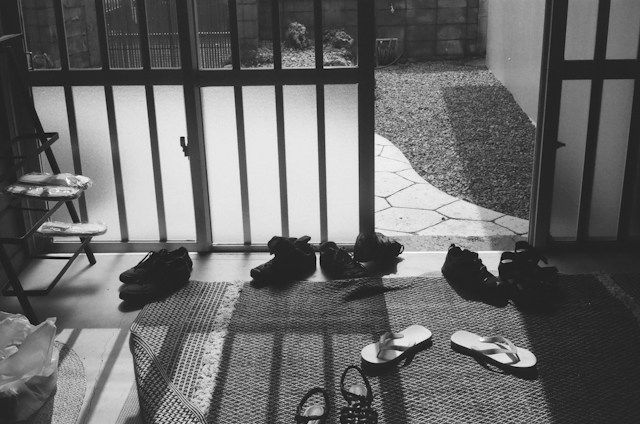
Then we go home. There is an unanswered message, a difficult decision, a child who needs something, a colleague who touches the exact place we thought had softened. We are tired. The insight is still remembered, but it no longer organises experience in the same way.
This can feel disappointing. It may even seem that the retreat failed. However, I think this issue shows something more important: an insight and the capacity to live from it are not the same thing.
What the retreat makes possible
First of all, a retreat changes the conditions in which experience unfolds. What does this mean? There may be silence, fewer decisions, regular practice and distance from the relationships and obligations that usually shape the day. During a retreat, attention is supported by a structure. The same question can be held for hours or days instead of being interrupted after several minutes.
Under these conditions, with fewer distractions, perception may become more subtle. The body may release its usual way of holding tension, and thanks to that, we may see how a pattern is maintained or experience a form of openness that is difficult to access in ordinary life.
None of this makes the insight unreal. An experience can be true in its context without yet becoming a stable capacity. Insights often arise within a particular field of support. When that field changes, the insight meets conditions it has not yet learned to inhabit. What makes things more difficult after coming back home is that those conditions probably shaped and supported the old pattern.
Intensity is not duration
We easily use intensity as evidence, and that assumption is the basis of later disappointment. If an experience moved us deeply, reorganised our sense of self or brought a strong feeling of certainty, we assume that the change must also be profound and lasting. Sometimes it is. But intensity tells us what happened in a moment. It does not tell us how the experience will live in time.
Retreat research points to beneficial outcomes across a range of psychological measures, while also showing considerable variation between studies, practices and participants. Some effects remain at follow-up, others diminish. Different capacities appear to change at different rates.
This should not surprise us, because a clear perception is not yet a habit and a felt sense of compassion is not yet the ability to remain compassionate while being criticised. Seeing a boundary is different from speaking it when something important may be lost. The intensity of the insight may open a door, but it does not walk through the door for us.
Daily life is a second context of practice
After a retreat, the practice enters a less protected environment. Conflict brings speed back into the system, while fatigue reduces the space between sensation and reaction. Familiar relationships react not only to who we are becoming, but also to who we have been with them for years.
This is often where an insight loses its purity and begins to become useful. Can the recognition that arose in silence remain available when another person disagrees with us? Can we feel the body while making a decision that has consequences? Can we recognise fear without allowing it to make every choice? Can we repair after returning to an old pattern?
The questions are less luminous than the original experience, yet they are also closer to the life the insight is meant to enter. Daily life does not merely test the retreat. It shows us which part of the insight has become available as capacity, which part still depends on supportive conditions and which part may have been interpreted too quickly.
Integration becomes visible in small choices
We often look for integration in the return of a particular state. We want the openness, clarity or tenderness of the retreat to feel present again, but I underline this often during the retreats I am facilitating: integration may be happening elsewhere, without much applause or dramatic shifts.
It is usually very simple, like the pause before sending a defensive message or noticing that the body has reached its limit and ending a conversation. In asking a question instead of assuming we know what another person meant. My favourite one: choosing not to use spiritual language to avoid a practical responsibility. These moments can seem small compared with the original insight, as they have less intensity and are more focused on consequences.
This is where contemplative practice begins to leave the private interior and enter relationship. The question changes from “What did I experience?” to “What becomes possible in how I live?” Within this framework, no single decision proves that an insight has been integrated. Over time, however, a pattern of choices begins to show whether something is reorganising.
Repetition without trying to recreate the experience
Continuing practice matters, but continuation does not mean reproducing the retreat or the states one touched on the retreat. With the mind's tendency to attach, when an experience has been powerful, practice can become an attempt to return to it. We compare today’s meditation with the clarity we remember. Ordinary sittings feel flat, and the memory of insight becomes a standard against which the present is measured. This can prevent us from noticing what practice is showing us at the moment.
However, repetition has another very important function: it gives the nervous system and attention many encounters with the same territory under different conditions. We practise when rested and when distracted, when the body is open and when it is defended. The insight becomes less dependent on one state because it is revisited without demanding the same experience. What is repeated is not the peak, but the willingness to return, no matter what.
Feedback protects us from private certainty
Some insights concern the nature of our own experience. Others contain conclusions about a relationship, a teacher, a vocation or a decision that will affect other people. These conclusions need contact with reality, because a powerful experience can make an interpretation feel self-evident.
Feedback introduces another much-needed perspective. A trusted person may notice that we are more present or that we have become strangely certain. Someone close to us may experience our new boundary as clarity, or may reveal that we are using the language of boundaries to withdraw without conversation.
We learn along the way that feedback is not always correct, nor is the private meaning we give to an insight. That’s how we develop discernment, in the movement between our own experience and the world that answers back.
Ethical responsibility is part of integration
An insight is sometimes treated as private property: something that belongs to my path, my awakening or my truth. But its consequences are always relational.
If I return from retreat feeling freer, what happens to the commitments I made before I left? If I see that a relationship cannot continue in the same form, how do I speak and act? If I feel called to teach, lead or guide others, what structures of accountability accompany that conviction?
A contemplative experience does not remove the need to consider power, consent and consequence. In some cases, it makes that responsibility more important because the experience carries a unique kind of authority for the person who had it. Integration, in that case, includes the willingness to ask not only whether an insight feels true, but how living from it affects other people.
Time is not a delay in the process
There is a temptation to think of the weeks after retreat as the period in which we either preserve the insight or lose it. That temptation gets stronger when we add time pressure to the equation. That’s why I would like to offer a slightly different perspective: treating time as part of the inquiry.
Some insights become quieter and more trustworthy with time, while others reveal an element of projection, idealisation or retreat intensity. A sentence we wrote down as absolute truth may become more precise after meeting several real situations. Something that seemed central may fade, while one small recognition continues to influence decisions months later.
This is how experience meets a larger field of evidence. That’s why treating it as a failure of memory or discipline leads us nowhere, because the task is not to protect an insight from change. It is to remain close enough to see what the insight becomes when life participates in its meaning.
What remains after the feeling fades
The most important and so often forgotten part of a retreat may not be the experience we can still describe vividly, but the moment, weeks later, when we recognise an old reaction and do not follow it immediately. The conversation in which we remain present for one sentence longer or the decision that becomes clearer because we can feel both fear and responsibility without asking one of them to disappear. This is less dramatic than a breakthrough and much more difficult to perform.
In my observation, integration often becomes visible after the special feeling has faded. This is an observation from practice and work, not a claim that any particular method reliably produces these changes.
A retreat can show us something. Practice helps us return to it, and relationship, feedback, choice and time reveal whether it is becoming part of how we live. The insight is not left behind when the retreat ends. It meets a more demanding teacher: ordinary life.
Read more from Paulina Kulikowska
Paulina Kulikowska, Embodiment & Consciousness Guide
Paulina Kulikowska is an Embodiment & Consciousness Guide, meditation teacher, author, and founder of Healing Institute. Her work explores the relationship between embodiment, perception, contemplative practice and psychological well-being through both traditional and modern frameworks. She leads retreats, trainings and educational programs integrating meditation, yoga, Tantra, and self-inquiry. Pauli is the author of Life of Ultimate Freedom (2024) and is currently developing frameworks focused on embodied perception and contemplative education. Her work is rooted in the belief that transformation begins not in improving personality, but in learning how to inhabit consciousness more fully.
References:
Bassam Khoury et al. Effectiveness of traditional meditation retreats: A systematic review and meta-analysis. Journal of Psychosomatic Research 92, 2017.
Roman Linz et al. Investigating the impact of distinct contemplative mental trainings on daily life stress, thoughts and affect. Psychoneuroendocrinology 142, 2022.
Jared R. Lindahl et al. The varieties of contemplative experience. PLOS ONE 12, no. 5, 2017.
Willoughby B. Britton et al. Defining and measuring meditation-related adverse effects in mindfulness-based programs. Clinical Psychological Science 9, no. 6, 2021.