What Actually Drives You In Every Moment
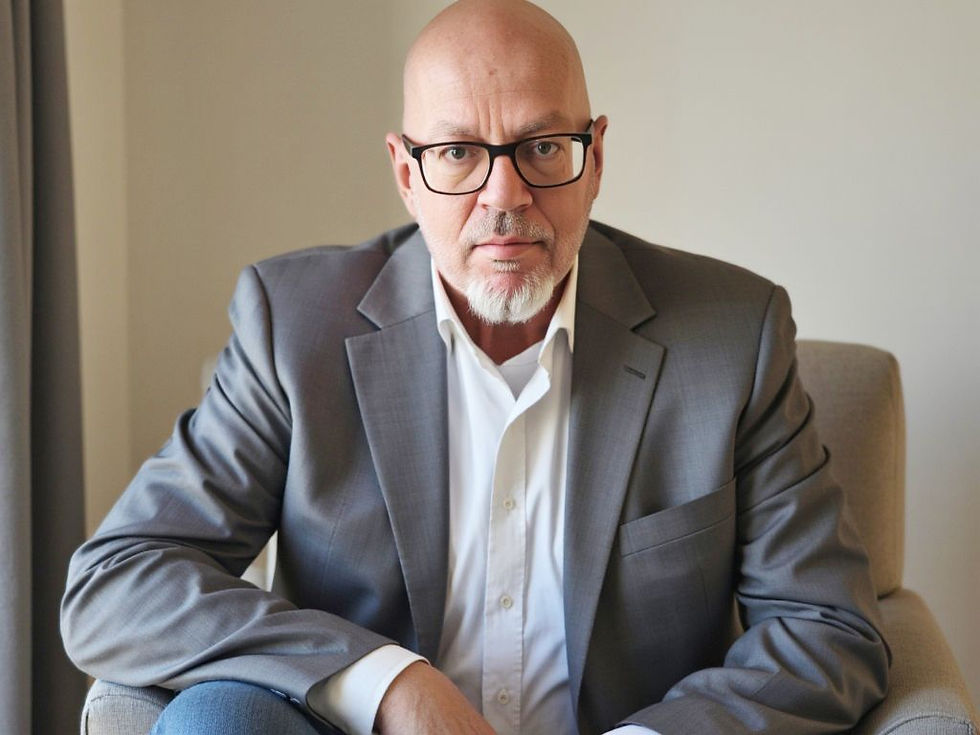
Arne Salig is a psychological consultant, author of several books, and co-creator of the Self-Competence Model. With over 25 years of experience, he helps people grow from within and live with clarity, resilience, and authenticity. His work bridges deep psychology and real-life transformation.

There’s a quiet frustration many people carry with them. They’ve reflected. They’ve learned. They’ve tried to change. And still, certain patterns keep returning almost as if something inside them refuses to move forward.
It doesn’t always look dramatic. Sometimes it shows up in hesitation. In overthinking. In that subtle sense of knowing what to do and not doing it. Not because of a lack of discipline. Not because of a lack of intelligence. But because the real driver of our behavior often remains unseen.
Beyond behavior and thought
Most approaches to personal growth focus on what we do or what we think. Change your habits. Reframe your mindset. Try harder, stay consistent.
And while these approaches can create short-term improvements, they often don’t reach the level where lasting change begins. Because behavior is not the starting point. It’s the result of something deeper. What we do is shaped by what we feel and even more by what we are not yet aware of feeling.
What actually drives you
If you slow down for a moment and observe yourself honestly, a pattern becomes visible. Many of your reactions, decisions, and internal dialogues are shaped by one of two fundamental emotional states: fear or love.
Fear can be subtle. It doesn’t always appear as anxiety. It can show up as perfectionism, control, withdrawal, or the constant need to prove something. It can look like strength on the outside — while being driven by tension on the inside.
Love, on the other hand, feels different. It carries a sense of openness, clarity, and inner stability. It allows connection not only with others, but with yourself.
The challenge is not that fear exists. It is a natural and necessary part of being human. The challenge is that most people are not aware of when fear is in control. And as long as that remains unconscious, change will feel like an uphill battle.
Why insight alone doesn’t change you
Many people have already had powerful insights about themselves. They understand their patterns. They see where they hold themselves back. They can even explain it. And yet in the decisive moment, they react in the same old way.
This is the point where frustration begins to grow. Because it feels like knowing should be enough. But it isn’t. Insight without integration often leads to more pressure, not more freedom.
Or as Arne Salig, co-developer of the Emotion-Based Self-Competence Method (ESM), puts it: “Most people don’t struggle because they lack knowledge. They struggle because they don’t fully understand what is driving them in the moment.”
A more practical way to understand yourself
Real change requires more than awareness. It requires the ability to work with what you become aware of. This is where the concept of self-competence becomes essential.
Instead of trying to fix behavior directly, self-competence focuses on developing a deeper, more stable relationship with your inner world. It is not about optimizing yourself. It is about learning to understand yourself in real time.
This includes the ability to recognize your internal state, to stay present with it without rejecting it, and to take responsibility for how you respond to it. These capacities don’t emerge overnight. But when they develop together, something begins to shift. You stop fighting yourself. You start seeing yourself more clearly. And from that place, different choices become possible, not forced, but natural.
The moment where change begins
There is a subtle but powerful moment in every process of change. It is the moment when you recognize what is happening inside you, not afterward, but while it is happening.
“This is fear right now.” Not as a judgment. Not as a label to push something away. But as a clear observation. And in that moment, something opens. A small space between impulse and reaction. A space in which you are no longer fully identified with what is driving you. And that space changes everything.
A shift in perspective
Many people believe that overcoming inner blocks means pushing harder. Becoming more disciplined. Finally, “getting it right.” But often, this approach only reinforces the very patterns they are trying to overcome. Because what looks like resistance on the surface is often protection on a deeper level.
When you begin to understand this, your relationship with yourself changes. And with it, your ability to change. As Arne Salig describes it: “ESM is not about becoming a better version of yourself. It’s about understanding yourself in a way that naturally changes how you think, feel, and act.”
A more human way forward
You are not a problem to be solved. You are a human being navigating complex emotional dynamics shaped by your experiences, your history, and your way of relating to yourself.
Lasting change does not come from forcing yourself into a new version of who you think you should be. It comes from developing the capacity to see, understand, and guide what is already there. And when that happens, something shifts quietly but deeply. Not because you tried harder. But because you finally began to see clearly.
Start your journey today
If something inside you is nodding right now, that quiet yes, don’t ignore it. Self-competence isn’t just a concept. It’s a practice. A path. And you don’t have to walk it alone. Join our free Self-Competence Community and connect with others who are ready to grow gently, truthfully, and from the inside out.
Grow within. Shine beyond. It starts with you.
Read more from Arne Salig
Arne Salig, Psychological Consultant, Mentor, and Author
Arne Salig is a psychological consultant, author of several books, and co-creator of the Self-Competence Model. With over 25 years of experience, he supports individuals and organizations in developing inner clarity, emotional resilience, and authentic presence. His work combines deep psychological insight with real-world practicality. Arne’s approach is rooted in the belief that lasting change begins within – not with perfection, but with honest self-connection. He works internationally as a mentor, speaker, and trainer.