Toast Over the Sink and What Eating Alone is Really Doing to Your Health After 50
Sonia Grant is a certified health and wellness coach specializing in helping adults 50+ restore energy, improve digestion, and build sustainable vitality through whole-food, plant-based nutrition. Through her signature E.N.E.R.G.Y Method, she empowers clients to transform their health with real food, gut-healthy support, and lasting habits.

Dinner used to be the center of the day. Someone set the table, someone asked how your day went, and the meal felt like an event. Then life shifts, often so gradually that nobody notices. The children move out, a partner works different hours, or you find yourself living alone. Dinner becomes toast over the sink, cereal in front of the television, or nothing at all. It’s easy to call that a small thing. New research suggests it isn’t, and that how we eat matters almost as much as what we eat.
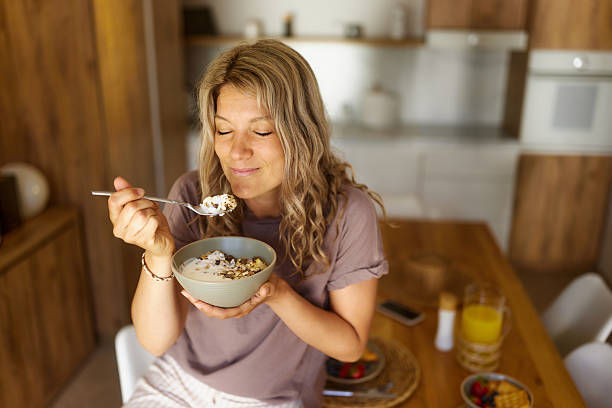
Who’s sitting at your table?
Most nutrition advice for women over 50 sounds familiar. Eat more vegetables. Cut back on sugar. Get enough protein. All good advice, and all of it about the food itself.
What almost never comes up is the company. When did you last sit down to a proper dinner on your own, with a plate and a fork and no screen? If you had to stop and think about it, you’re in good company.
For a lot of women, the way we eat changes in midlife without any new diet. The household gets smaller, and so does the effort. A pot of soup becomes a handful of crackers. Dinner at six becomes a snack at nine. Nobody decides this. It creeps in a little at a time, and it can affect your energy and strength as much as anything on your grocery list.
What the research shows about eating alone
In late 2025, researchers at Flinders University in Australia published a systematic review in the journal Appetite. They pooled 20 international studies covering more than 80,000 adults aged 65 and over in 12 countries.[1]
The pattern was consistent. Older adults who regularly ate alone tended to have poorer diet quality and ate less fruit, fewer vegetables, and fewer protein-rich foods. Some studies also linked eating alone to unintended weight loss and a higher risk of frailty. A small number of studies found no difference, so eating alone isn’t a guarantee of poor health. But it is a real and often overlooked risk.
The lead researcher, dietitian Caitlin Wyman, summed it up simply: “Eating together fosters connection, enjoyment and nourishment.”
This isn’t a rare situation. In Canada, the National Institute on Aging’s 2025 survey found that 57 percent of adults aged 50 and over experience loneliness, and 43 percent are at risk of social isolation.[2]
The studies focused on people over 65, but the habits that lead there often start much earlier. The years after 50 are exactly when many of us first find ourselves eating alone more often, and when small changes are easiest to make.
Why a table for one is harder than it looks
This isn’t about willpower or not caring. Eating alone changes the whole meal experience in a few predictable ways.
Cooking for one feels like too much effort
Recipes are written for four. Shopping for one leads to wasted produce. When nobody else is waiting, chopping vegetables for a single plate can feel pointless, so the easiest option wins.
Appetite needs a reason
Appetite naturally becomes quieter with age. Company, conversation, and the smell of a meal being cooked for others all help switch it on. Without them, it’s easy to drift from meal to meal on snacks, or to forget to eat at all.
Mood and meals feed each other
Loneliness can dampen the motivation to cook, and poor nutrition can in turn leave us feeling flat and tired. A study of 1,200 older adults found that both social isolation and feelings of loneliness were linked to a higher risk of malnutrition.[3]
The routine disappears
Shared meals come with built-in structure: a set time, a sit-down plate, a reason to stop. When that structure goes, meals tend to become irregular, rushed, and eaten standing up or in front of a screen.
6 simple ways to make solo meals nourishing again
The goal isn’t to cook elaborate dinners every night. It’s to make a good meal the easy option, even when it’s just you. These whole-food, plant-based ideas take very little time.
Cook once, eat three times
Make one big pot each week, such as lentil soup, vegetable chili or a bean stew. Eat it fresh once, refrigerate a second portion, and freeze the rest in single servings. On a tired evening, a nourishing meal is only a few minutes away.
Use a no-recipe plate formula
When you can’t face cooking, build a plate from four parts: a whole grain, a bean or lentil, a vegetable and a sauce. Think brown rice, black beans, frozen peppers and salsa. Or quinoa, chickpeas, spinach and a spoon of tahini with lemon. No recipe, no waste.
Keep protein within arm’s reach
Since solo eaters tend to eat fewer protein-rich foods, make them effortless. Keep canned chickpeas and lentils, tofu, edamame, nut butter, and hemp seeds on hand. A handful sprinkled on toast, soup, or salad quickly turns a snack into a meal that supports your muscles.
Let the freezer do the shopping
Frozen vegetables, berries, and greens are picked at their best, last for months, and never go limp in the drawer. They’re one of the easiest ways to keep color on your plate when you’re cooking for one.
Set the table for yourself
Use a real plate, sit down, put the phone away, and give the meal your attention. It sounds small, but treating your own meal as worth the effort helps your body register that you’ve eaten and makes the meal more enjoyable.
Make one meal a week a shared one
Invite a neighbor for soup, start a monthly potluck with friends, join a community meal or have a video-call dinner with someone you love. The Flinders researchers point to community meal programs and social dining as practical ways to eat alone less often. One shared meal a week is a wonderful place to start.
You deserve a proper meal even when it’s just you
Eating alone isn’t a failure, and it isn’t something to feel embarrassed about. For many of us, it’s simply part of this chapter of life. But it deserves the same care we once gave to feeding everyone else. Your body still needs color, protein, and regular meals, and it still responds beautifully when it gets them. Pairing these ideas with other simple habits that support your energy can make a real difference to how you feel each day.
If you’d like support building these habits, and some company while you do it, join my free 5-Day Energy Challenge for women over 50. It’s five 30-minute sessions on Zoom, full of simple, practical steps to help you feel more energized. You can also find me on Facebook, on Instagram, or at Empower and Nourish.
Follow me on LinkedIn for more info!
Read more from Sonia Grant
Sonia Grant, Certified Health & Wellness Coach
Sonia Grant is a certified health and wellness coach and founder of Empower and Nourish, helping adults over 50 restore their energy and improve digestion through simple, whole-food, plant-based nutrition habits. Through her signature E.N.E.R.G.Y Method, she guides clients to build lasting habits so they can wake up feeling energized, clear-headed, and confident in their health again.
References:
[1] Flinders University research summary
[2] NIA 2025 Ageing in Canada Survey
[3] Geriatrics and Gerontology International study