The Throat Chakra – A Silent Victim of Grief
Updated: Apr 6, 2025
Sabine is a pioneering force in grief support and holistic healing. As a Registered Nutritionist and Yoga Therapist, she combines ancient wisdom with modern science to help the bereaved cope better with grief by establishing a healthy daily routine and addressing the wide range of ‘grief’ symptoms early on to restore balance in body and mind.

When we think of grief, we often focus on the emotional turmoil that accompanies loss: sorrow, anger, confusion, and despair. However, grief can manifest physically in ways that can be equally profound yet often overlooked. One such hidden consequence is the impact of grief on the throat chakra and, by extension, on thyroid health. Understanding this connection can play a crucial role in our healing journey.

The throat chakra: The voice of your inner truth
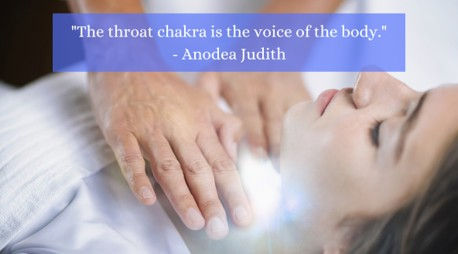
The throat chakra, or Vishuddha in Sanskrit, is the energy centre located at the base of the throat. It governs our ability to communicate, express our truths, and convey our emotions to the world. When balanced, the throat chakra enables us to speak with clarity and confidence, ensuring that our inner voice is heard.
However, grief can create a blockage in this vital energy centre. The overwhelming emotions we experience can manifest as a tight throat, difficulty speaking, or a persistent lump in the throat. These physical sensations are more than just metaphorical; they can have real implications for our health.
The link between emotional stress and thyroid health
The throat chakra's connection to physical health becomes even more significant when we consider its proximity to the thyroid gland. This small, butterfly-shaped gland in the neck plays a critical role in regulating our metabolism, hormone balance, energy levels, and overall well-being.
Recent research has begun to explore the connection between emotional stress and thyroid function. A 2024 study published in the Journal of Family Medicine and Primary Care found that high stress levels can lead to alterations in thyroid hormone levels and thyroid dysfunction. Grief equals high emotional stress.
When grief blocks the throat chakra, it can disrupt the thyroid's balance, often contributing to hypothyroidism (underactive thyroid), or less commonly, hyperthyroidism (overactive thyroid). In acute grief, it's possible to fluctuate between these two states, but hypothyroidism tends to be more common, especially as time goes on.
Hypothyroidism: A hidden companion to grief
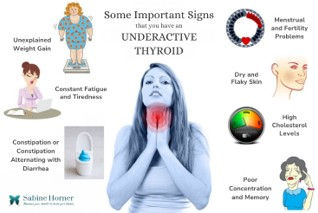
Hypothyroidism occurs when the thyroid gland doesn't produce enough thyroid hormones. Symptoms of hypothyroidism, such as fatigue, weight gain, depression, and cognitive difficulties, often mirror the emotional and physical toll of grief.
This overlap can make it challenging to identify thyroid issues, as these symptoms might easily be attributed solely to grief. As a result, many grieving individuals don't receive the thyroid support they need during this difficult time.
The pitfalls of thyroid testing
Even when thyroid function tests are conducted, standard testing often falls short. Most routine tests typically measure Thyroid-Stimulating Hormone (TSH) and occasionally Thyroxine (T4), but often neglect Triiodothyronine (T3), the active form of the hormone that significantly influences metabolism and energy levels.
Additionally, tests are usually performed on symptomatic individuals, which means that even with 'normal' results, someone can still experience suboptimal thyroid function compared to the general, asymptomatic population.
A more reliable indicator: Monitoring body temperature
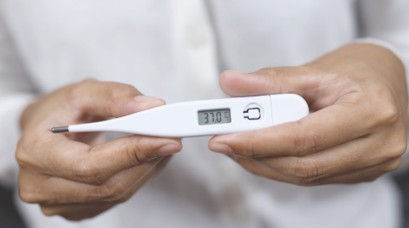
An alternative approach to identifying thyroid issues is to monitor your basal body temperature, a method pioneered by Dr Broda Barnes in the mid-20th century. While this method is not a replacement for professional medical advice, it can provide valuable insights into your thyroid function.
Dr. Barnes found that consistently low body temperature is a reliable sign of low thyroid function because thyroid hormones directly affect metabolism and heat production.
How to monitor your temperature
1. Take your temperature four times a day
Upon waking (before getting out of bed)
At three regular intervals (e.g., 10 a.m., 2 p.m., and 6 p.m.)
2. Track for consistency
Keep a record of your temperature over several days to establish an accurate baseline.
3. Interpret the results
A consistently low average body temperature (below 36.5°C or 97.8°F) can indicate low thyroid function, particularly if you experience symptoms of hypothyroidism.
A normal average temperature suggests your thyroid is functioning well.
This simple method provides a practical way to assess thyroid function, especially when blood tests don't tell the full story.
The importance of nutrients for thyroid health
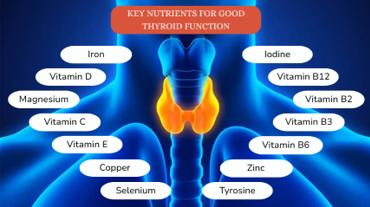
What is also often overlooked is the importance of various nutrients, beyond just iodine, for optimal thyroid function. Iron, in particular, is crucial and frequently ignored, yet it's even more important than iodine for thyroid health. In fact, when someone has anaemia, they automatically have low thyroid function!
Other essential nutrients include selenium, zinc, and specific vitamins. This nutritional aspect of thyroid health is often underestimated, leading to incomplete approaches in addressing thyroid issues.
If you're interested in exploring how thyroid imbalances can also affect weight management, listen to my radio episode 'Tipping The Scales: How Your Thyroid Affects Your Weight, ' where I discuss the intricate relationship between thyroid health and weight fluctuations.
The 'Ham' Beej Mantra: A tool for healing
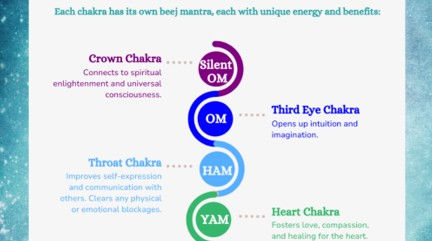
Beyond physical monitoring, it's important to address the energetic blockages caused by grief. One effective way to unblock the throat chakra is by chanting 'Ham, ' the beej mantra (seed sound) associated with this energy centre.
Chanting 'Ham' creates a powerful vibration in the throat area, helping to release tension and emotions that may be stuck there. It can promote clearer communication, ease tightness in the throat, and support the healthy flow of energy to the thyroid gland, thereby improving its function.
Additionally, this practice naturally extends the exhale, calming the nervous system and promoting overall relaxation.
Bringing it all together: Nurturing ourselves on every level
Grief affects our whole being emotionally, mentally, physically, as well as spiritually. Recognising the profound connection between grief, the throat chakra, and thyroid health opens the door to a truly holistic healing journey.
Integrating practices like the 'Ham' mantra into our daily routine while at the same time addressing nutrient deficiencies triggered by grief can ensure a better path to healing after a devastating loss. This approach allows us to reclaim our voice, our vitality, and our sense of self during one of life's most challenging transitions.
What to do next?
Are you experiencing symptoms of thyroid imbalance despite "normal" test results? I invite you to schedule a complimentary 30-minute consultation to discover how we can address your symptoms and help you regain your energy and balance while navigating grief.
If you are looking for community support, my specialised grief yoga classes offer a safe and nurturing space where we practice transformative techniques like the 'Ham' meditation in a supportive environment. Visit here to schedule your free call or book your place in one of my upcoming yoga classes.

Sabine Horner, Grief Nutritionist, Ayurvedic & Yoga Therapist
After losing her partner to leukaemia, Sabine turned her grief into a mission of hope. As a Registered Nutritionist and Yoga Therapist, she uncovered the hidden link between bereavement and gut health, revealing how profound loss impacts the entire body, not just the mind. Now, Sabine is transforming grief support by harnessing the power of food and breath. Her unique blend of ancient wisdom and modern science equips the bereaved with practical tools to navigate grief with greater resilience, empowering them to understand their innate strengths and address grief-related imbalances. Through speaking events, podcasts, and writings, she helps people proactively safeguard their health after profound loss. Sabine firmly believes in the body's healing power and that, while pain may be inevitable, suffering doesn't have to be.
References:
Singh M., Narayan J., Thakur R., et al. 2024. Association of stress and primary hypothyroidism. In: Journal of Family Medicine and Primary Care. 13(3):1073-1078.