The Space Between Who You Were and Who You Are Becoming
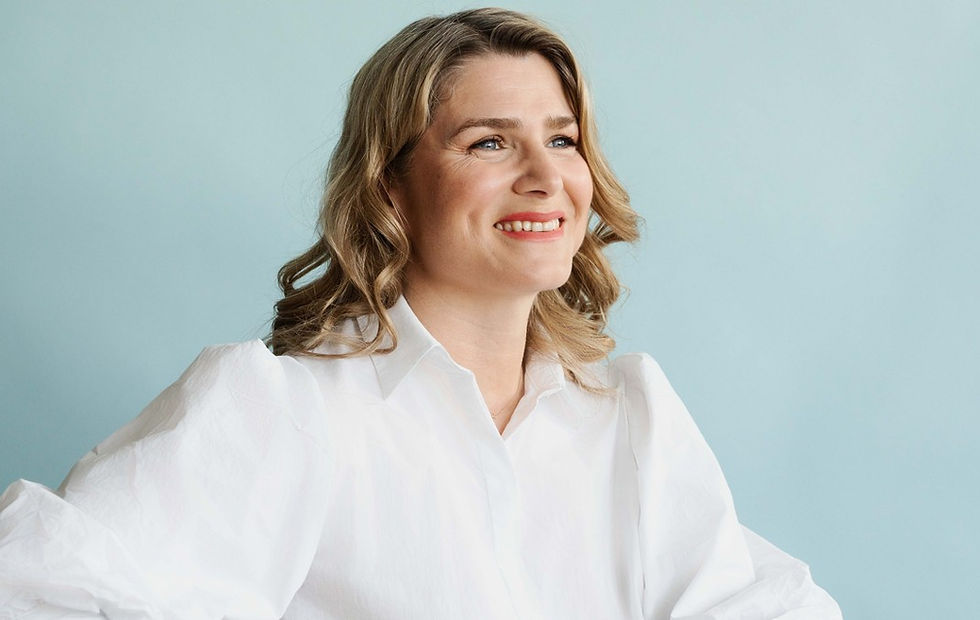
Written by Zeljka Cacic-Escalera, Transformation Coach
Zeljka is a transformation coach and founder of Day One with Zeljka. She coaches ambitious women through personal and professional change using mindset work, self-leadership, and the body-mind connection. Her mission is to help you take your power back and create a life that finally feels like yours.

Are you in a season of life where you feel stuck somewhere between the old and the new? Maybe you left your job, moved to a new country, ended a long-term relationship, or simply realized that the life you once knew no longer fits. You know you have moved on, but you haven't quite arrived at what's next. You're not alone. These in-between phases can bring uncertainty, fear, and the temptation to return to what feels familiar. But they can also be some of the most transformative seasons of our lives.
In this article, you will discover practical tools to help you navigate uncertainty, stay grounded, and keep moving forward when the path ahead isn't clear. Because sometimes, being in between isn't a sign that you're lost. It's a sign that you're becoming.
What happens when you have left your old life, but your new life hasn't fully arrived yet?
A particular kind of uncertainty comes with being between chapters. Maybe you have left a corporate career to build something of your own. Maybe you have moved to another country, and suddenly everything familiar is behind you. Maybe you have ended a long-term relationship and are learning how to build a life that looks different from the one you once imagined.
Whatever the circumstances, there are moments in life when you find yourself somewhere in between. You are no longer where you were, but you are not yet where you want to be. This space can feel incredibly uncomfortable.
When you have left, but haven't arrived yet
We often imagine transformation as a clear process. You make a decision. You take action. You move forward. Eventually, you arrive at your new life.
But real transformation rarely looks that simple. There is often a messy middle. The old routines are gone. The familiar identity may no longer fit. The people, places, or structures that once gave you a sense of security may have changed. Yet, the new chapter has not fully taken shape. This is where doubt can become loud.
Did I make the right decision? What if this doesn't work? What if I have made a huge mistake? What if I should just go back?
These questions are normal. They don't necessarily mean you made the wrong decision. Sometimes they simply mean you are standing in unfamiliar territory.
When uncertainty feels like failure
One of the hardest things about being in between is that we often interpret uncertainty as a sign that something has gone wrong.
We want reassurance. We want a plan. We want to know that everything will work out before we take the next step. But life rarely gives us that kind of certainty.
When you leave a stable job to pursue something of your own, there may be months when your business doesn't look anything like the vision you had.
When you move to a new country, there may be days when you question why you ever left the comfort of home. When you leave a long-term relationship, loneliness may make the familiar past look much more attractive than it actually was.
The temptation is to return to what you know simply because it feels safer. But familiar does not always mean right. Sometimes it simply means familiar.
When fear makes the past look better than it was
Fear has an interesting way of rewriting our memories. When the future feels uncertain, the past can suddenly look incredibly comfortable. We remember the security of the salary but forget the reasons we wanted to leave the job. We remember the familiar routines of our old home but forget why we wanted a different life. We remember the good moments in a relationship but sometimes forget the reasons it ended.
This doesn't mean the past was bad. It simply means that our minds often romanticize what is familiar when we are confronted with uncertainty.
This is why it can be helpful to ask yourself: do I actually want to go back, or do I simply want to stop feeling uncomfortable? There is a big difference.
The temptation to return to your comfort zone
Human beings naturally seek safety and predictability. Our comfort zones give us a sense of control. They let us operate in environments we understand, surrounded by things we know how to navigate. But comfort and fulfillment are not always the same thing.
Sometimes the very thing that feels safest in the moment is the thing that keeps us from becoming who we are capable of becoming. Growth requires us to do things differently. To have conversations we have been avoiding, take risks, make decisions without having every answer, tolerate moments of uncertainty, and become a beginner again. That can feel uncomfortable. You cannot step into a new chapter while constantly trying to make the old chapter feel comfortable again.
You don't need to see the whole path
One of the biggest mistakes we make during times of transition is believing that we need to know exactly where we are going before we can move forward. But clarity often comes through action. You don't need to know exactly how your business will look three years from now to take the next step today. You don't need to know where you will live forever to begin creating a home where you are right now. You don't need to know who you will become after a breakup to begin reconnecting with yourself.
Sometimes we create unnecessary pressure by trying to solve the entire future at once. Instead, ask yourself, What is the next right step? Not the next ten steps. Not the entire plan. Just the next one.
Create anchors when everything feels uncertain
When your external world is changing, creating small points of stability can make a significant difference. Your morning routine, moving your body, spending time outside, eating nourishing meals, getting enough sleep, journaling, calling someone who makes you feel grounded, creating a weekly routine.
These things may seem simple, but they can provide structure when so much else feels uncertain. You don't need your entire life to feel stable. Sometimes you simply need a few stable things within your day.
Ask yourself better questions
The questions we ask ourselves during uncertain times can either increase our fear or open up possibilities:
Instead of asking, "What if this doesn't work?" try asking, "What if it does?"
Instead of asking, "Did I make the wrong decision?" try asking, "What is this experience teaching me?"
Instead of asking, "When will I finally feel settled?" try asking, "What can I do today to feel more grounded?"
Instead of asking, "What if I fail?" try asking, "Who could I become by trying?"
Changing the question doesn't magically remove uncertainty. But it can change the way you relate to it. Sometimes that is where the transformation begins.
Let yourself grieve what you left behind
Moving forward doesn't mean you have to pretend you don't miss your old life. You can be excited about your future and still grieve your past.
You can know that leaving was the right decision and still miss what was familiar. You can love your new chapter and still have moments when you long for the old one. These emotions can coexist.
Give yourself permission to feel them without allowing them to dictate your next decision. Your past wasn't a mistake just because you have outgrown it.
Sometimes a chapter can have been beautiful, meaningful, and exactly what you needed at the time, while still being finished.
Growth begins where certainty ends
We often say that growth happens outside of our comfort zone. But perhaps the more important lesson is learning to become comfortable with being uncomfortable. Because the space outside our comfort zone is not always exciting. Sometimes it is lonely. Sometimes it is confusing. Sometimes it feels like failure. Sometimes it looks like taking one tiny step forward and then questioning everything the next day. That doesn't mean you are not growing. Growth is not always visible. Sometimes growth looks like staying committed to a decision even when you haven't received proof that it will work. Sometimes it looks like choosing yourself again after doubting yourself. Sometimes it simply looks like not giving up.
Trust the chapter you cannot see yet
There will be seasons in life when the path ahead feels obvious. There will be others when it feels like you are walking through fog.
The difficult part is that we often want certainty before we are willing to trust ourselves. But what if certainty isn't required? What if you can move forward while still being afraid? What if you can take the next step without knowing exactly where it will lead? What if being in between isn't a sign that you are lost, but a sign that you are transitioning?
Sometimes we focus so much on reaching the next destination that we forget the person we become along the way is part of the transformation.
Final thoughts
If you are currently somewhere between chapters, I want you to know that you are not alone. There may be days when you question everything. There may be moments when going back feels easier than continuing forward. There may be times when your old life looks safer, and your new life feels frighteningly uncertain. Don't automatically interpret that fear as a reason to stop.
Pause. Breathe. Come back to the present moment. Create some stability around yourself. Ask yourself better questions. Then take the next step.
You don't need to have everything figured out. You don't need to know exactly how the story ends. You simply need to trust yourself enough to keep turning the page.
Because sometimes the space between who you were and who you are becoming is where the greatest transformation takes place. You are not stuck. You are in between. There is a difference.
If this article resonated with you, consider sharing it with someone who may be navigating their own in-between season. If you're going through a significant life or career transition and would value support along the way, I invite you to connect with me on social media or book a discovery call. You don't have to navigate transformation alone.
Follow me on Instagram for more info!
Read more from Zeljka Cacic-Escalera
Zeljka Cacic-Escalera, Transformation Coach
Zeljka is a transformation coach and founder of Day One with Zeljka, with a professional background in international corporate and consulting environments. Years of working in high-performance, results-driven settings shaped her deep understanding of pressure, self-doubt, and identity loss behind outward success. Today, she bridges business acumen with mindset work, self-leadership, and the body-mind connection to support ambitious women through meaningful change. Her mission is to help you take your power back and create a life that finally feels like yours.