

The Secret to Knowing You Are Stuck in Survival Mode
Emily Ross, LMHC‑S, is a trauma specialist, clinical consultant, and speaker with 20 years in community mental health. She has presented trauma‑focused research at national symposiums and is a sought‑after speaker and facilitator on burnout, trauma recovery, and community mental health.

There is a moment, usually subtle, when the body stops moving through the world and starts bracing against it. Most people don’t notice. They call it being tired, overwhelmed, irritable, disconnected, or “just stressed.” But underneath these experiences is something deeper: the nervous system has shifted into protection and has become stuck there.
This is not weakness. It is not a personality flaw. It is basic physiology. Once you learn to recognize the signals your body uses to tell you it has been stuck “on,” you can begin to unwind the patterns that keep you in protection and find your way back to connection.
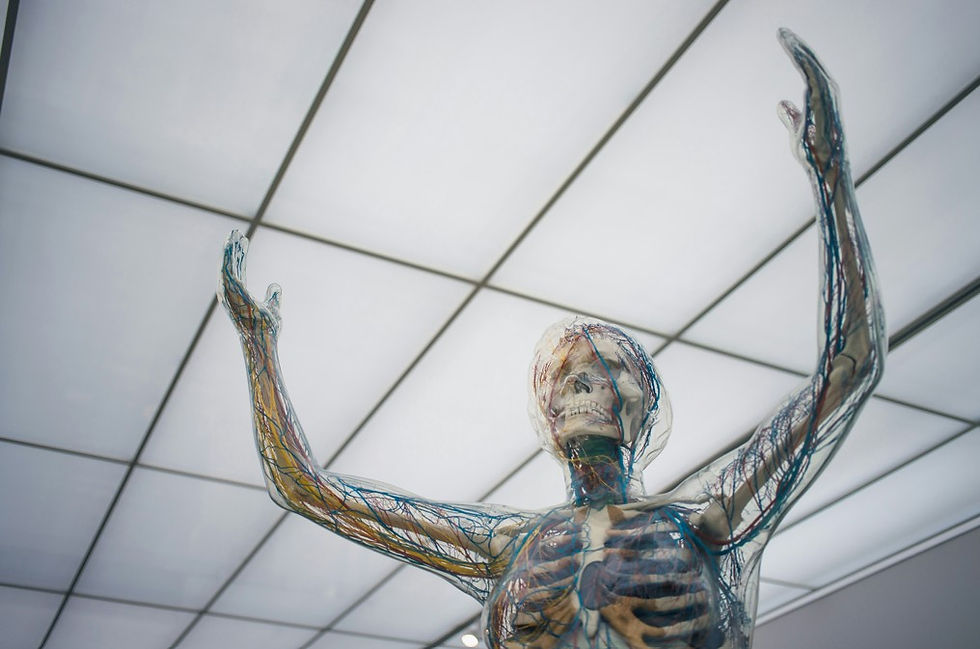
What is survival mode?
Survival mode is the ancient biological strategy that keeps human beings alive. It is not always dramatic. It is not always loud. It does not always feel like panic or chaos. Sometimes it is subtle. Sometimes it looks like being overly responsible, overly alert, or overly accommodating. When the nervous system gets stuck in survival mode, it is because it has learned the world isn't predictable enough to relax into. It has decided that vigilance is safer than softness. It has chosen activation over rest. This is not a conscious choice. It is a biological one.
The language of the nervous system. The body speaks in sensations long before it speaks in symptoms. When we have lived in survival mode for many years, these sensations feel familiar, so we label them “normal.” We may even stop noticing them. We build our lives around them. Yet the body always tells the truth. One of the earliest signs is feeling on edge without a clear reason. We wake already braced. Our breath stays high in our chest. Our shoulders lift without our awareness. Our jaw holds tension even when we believe we are relaxed. Another sign is emotional unpredictability. We may feel steady one moment and overwhelmed the next. Not because something significant happened, but because our system is already operating at capacity.
Conversely, there is the collapse response. Many people believe survival mode is only fight or flight, but freeze and fawn are equally common. We may shut down, feel foggy, lose motivation, or become overly accommodating. Our sleep changes. Our digestion shifts. Our pain patterns flare. Our tolerance for noise, mess, or unpredictability shrinks. None of this is random. It is our body saying it doesn't feel safe enough to turn off.
How did our system get stuck?
Our nervous system doesn't get stuck because we are doing something wrong. It becomes stuck because it has learned from experience. Perhaps we grew up in a home where emotional safety was inconsistent. Perhaps we lived through trauma that taught our bodies to stay alert. Perhaps we have carried responsibility for others for so long that our system never receives a true pause. The body remembers what the mind tries to outrun. When the body has lived in survival mode for many years, it begins to believe that activation is the baseline. The secret is simple. Our nervous system is not malfunctioning. It is doing exactly what it is trained to do.
Knowing when it is time to reset:
When our bodies are louder than our thoughts: There comes a point when our internal sensations speak more clearly than our mind. Our chest feels tight, our breath feels shallow, our muscles hold tension that does not release. When our body begins leading the conversation and our thoughts simply follow, it is a sign that our system is asking for a reset.
When rest is no longer restful: We lie down, but we do not settle. We sleep, but we do not wake restored. We take breaks, but our internal pace does not slow. When rest stops creating restoration, our nervous system is telling us that it has forgotten how to turn off.
When softness is elusive: There are moments when we long for ease, gentleness, and quiet, yet our body stays braced. Our shoulders lift. Our jaw tightens. Our breath stays high. When softness feels out of reach even in peaceful moments, our system is holding more than it can process.
When our reactions feel larger than the moment: Small stressors feel big. Minor frustrations feel overwhelming. Simple tasks feel heavy. When our emotional or physiological responses do not match the situation, it is often because our system is already operating at capacity.
When reactions interfere with our relationships: We notice that we are reacting instead of responding. We feel pulled by urgency instead of guided by clarity. We sense that our body is steering our day rather than partnering with us. When our nervous system feels like the one in charge, it is time to teach it what safety feels like again.
Path back to safety
Healing the nervous system is slow and gentle work. It is not about intensity. It is about consistency. Small cues of safety, repeated daily, begin to re-pattern the pathways that have been stuck in protection. This is the work of coming home to ourselves. This is the work of remembering that our bodies are not the enemy. This is the work of learning how to live from connection instead of survival.
If you are ready to begin your healing journey, explore The Nervous System Reset.
The deeper truth
The secret to knowing our nervous system is stuck in survival mode is simple. Our bodies have already been telling us. The tightness. The overwhelm. The shutdown. The irritability. The exhaustion that rest does not fix. The sense that we are living life from the edges instead of the center. Our bodies are wise. They have carried us through seasons we did not have words for. Now they are asking for something different. Not perfection. Not performance. Only safety. Only softness. Only a chance to turn off the alarm and remember what it feels like to be fully alive.
Start your journey today
If your nervous system has been stuck in survival mode, you do not have to navigate this alone. Begin your healing journey today by joining The Nervous System Reset Class.
Still not sure if your nervous system is stuck on? Explore self-healing tools with Unlock Your Innate Ability to Heal. For added support, join my online community and subscribe to our YouTube channel.
Read more from Emily Ross
Emily Ross, Certified Clinical Trauma Provider
Emily Ross, LPC‑S, is a trauma specialist and educator who embodies post‑traumatic growth by reclaiming the farm where her mother was murdered, transforming generational trauma into a regenerative homestead producing natural healing remedies and publishing self‑paced trauma recovery classes on embodied healing.
References:
American Psychological Association. (2022). Stress in America 2022.
Van der Kolk, B. A. (2014). The body keeps the score: Brain, mind, and body in the healing of trauma. Viking.
Walker, M. (2017). Why we sleep: Unlocking the power of sleep and dreams. Scribner.
World Health Organization. (2021). Stress and health. Full Article
Related article:







