The Root Cause of Your Back Pain
Updated: Sep 7
Written by Lisa Decker, Owner of Aligned Fitness
Lisa Decker has been in the field of posture alignment and biomechanics for 20+ years and has helped thousands of people free themselves from chronic pain. She is the owner of Aligned Fitness Posture Therapy & Qigong in San Jose, CA, where she specializes in many areas of holistic wellness.

Chronic back pain is a condition that drives most people straight to the nearest doctor in desperate search of a solution. Physicians may prescribe physical therapy to treat the symptom. However, if this doesn’t alleviate the pain, anti-inflammatories, injections or ultimately surgery are often suggested.

These recommendations may reduce pain at the affected site but do not address the source. There are cases that warrant injections and surgery, but we must recognize that chronic back pain is usually a symptom of musculoskeletal dysfunction. We can attempt to fix the pain by injecting the site, removing a disc or fusing vertebrae, but this does not address what caused the vertebrae to shift or the disc to compress in the first place. Consequently, many people experience relief only to have symptoms reoccur.
The true cause of your back pain
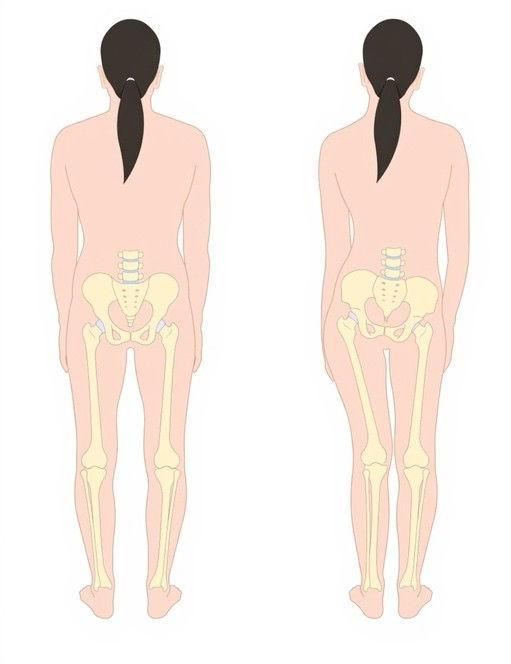
Outside of an acute injury, musculoskeletal imbalances are the cause of most back pain symptoms. Imagine someone with an elevated hip. This postural imbalance will cause a shift in the spine to accommodate the asymmetrical position of the pelvis. The misalignment of the spinal vertebrae over time leads to compressive forces on the discs. A disc may then bulge, irritating a nerve and causing sciatic pain down one's leg. Surgeons can remove the piece of disc pressing on the nerve, but this does not address the elevated hip and spinal imbalances. Therefore, it's quite common for pain to reoccur at the original site or elsewhere in the body.
Lucky for us, muscles move bones! When provided with the correct stimulus, we can make progressive muscular adaptations to restore functional alignment. When we prescribe exercises that lower the hip back to its neutral position, this reduces compensatory patterns and alleviates compression on the discs.
Surgery or realignment?
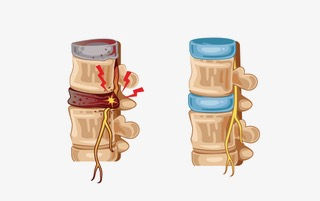
One of the most unbearable causes of back pain is a disc herniation. The disc acts as a cushion between the vertebrae. When it herniates, it gets squeezed until it bulges, pressing against a nerve and causing referred pain. For the majority of disc herniations, the recommended surgery is a microdiscectomy, where a small portion of the disc that’s pushing on the nerve is removed. Although the surgeon may tell you the success rate of this surgery is about 95%, what they are not telling you is that a significant percentage of people experience pain symptoms again within 1-5 years.
Why would this happen once the piece of disc is no longer irritating the nerve root? Once again, the symptom has been addressed, but not the root cause! The faulty curvature of the spine and misalignment of the hips, pelvis, and thoracic back remain the same. Until these postural misalignments are attended to, pain is bound to reoccur.
Compensatory patterns
We must understand that back pain can stem from compensatory patterns anywhere in the body. Previous injuries or imbalances at the feet, ankles, knees, hips or shoulders can ultimately lead to spinal injuries. I've had clients come in with knee pain that was resolved by treating their shoulder position. I've had others come in with lower back pain that improved by treating the position of their upper back. We must learn to treat the whole body rather than focus on the symptom.
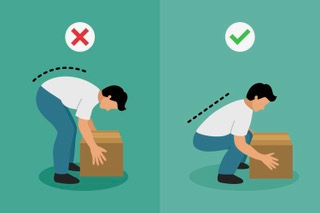
Compensatory muscular patterns will ultimately cause dysfunctional mobility. As a result, many people are unable to recruit their core hip musculature that is designed for heavy lifting and instead are forced to overuse their spinal muscles. These muscles are not meant for excessive movement and load. Over time, there is wear and tear until, pop, a disc herniates or bulges.
Does my symptom warrant surgery?
I’m not implying there is never a condition that warrants surgery. If the pain is acute, you should consult with a doctor, but regardless of whether you opt for surgery, it’s imperative to reestablish alignment of your load-bearing joints and restore functional mobility to reduce future wear and tear.
It's all connected
In summary, remember, you are not broken! When we restore alignment, strength and mobility throughout the body, we have the capacity to reestablish the optimal curvature of the spine, so it can once again act as a natural shock absorber. By increasing our awareness, educating ourselves, and restoring musculoskeletal balance, we can regain control of our body and alleviate current or future pain symptoms.
For a free half-hour postural analysis to determine what's causing your back pain, contact Lisa Decker at Aligned Fitness.
Read more from Lisa Decker
Lisa Decker, Owner of Aligned Fitness
Lisa Decker began her work 25 years ago as a personal trainer but realized quickly the importance of addressing dysfunctional alignment and muscular compensations before strengthening. She has a master's degree in Human Movement, a 3-year certification in medical Qigong, and multiple certifications in biomechanics, spinal decompression, posture therapy, breathwork, and corrective exercise. She is the owner of Aligned Fitness in San Jose, CA, where she specializes in helping others restore functional alignment and movement patterns to reduce chronic pain symptoms. Her goal is to educate and empower people to understand the root cause of their pain so they can safely and pain-free return to enjoying the activities they love.