The Psychology of the Spin and Why Marketing to Businesses Must Start Engineering Participation
Angelika Attwood is the Creative Director and Founder of DjE’KA Marketing, known for her sharp approach to neuromarketing and creative business-to-business (B2B) strategy. With an extensive background in advertising and marketing, she focuses on the key psychological triggers that drive human behaviour, interaction, and conversion.

Drawing on insights from research into reward anticipation and behavioural neuroscience, gamification offers business-to-business (B2B) marketers an opportunity to rethink how people interact with brands. While the attention economy fights for the prize, the real opportunity lies in the reason behind the decision to participate.
B2B marketers have a participation problem
In recent years, there have been more B2B marketers and brand strategists than the industry ever anticipated. With the ease of producing content on a mass scale, marketers using artificial intelligence have somehow become extraordinarily good at producing things nobody particularly wants to interact with. The prompted strategy will propose another gated white paper, industry report or drip campaign, most certainly promising to transform your operational efficiency.
Marketing technology has evolved enormously over the past 12 months. Artificial intelligence has made content production almost limitless and automation overbearingly intrusive and hyperpersonalised. Yet one fundamental commercial problem remains. How do you get another human being to stop, pay attention and voluntarily engage with a brand?
The category keeps investing in more sophisticated ways to distribute messages while overlooking a more interesting question. Why should anybody participate in the first place? This is where gamification becomes commercially interesting.
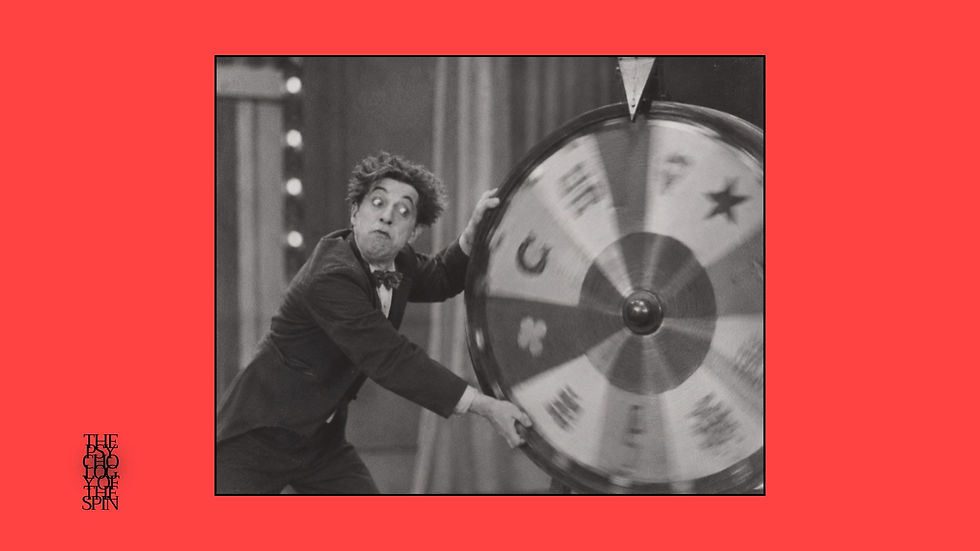
The humble Spin the Wheel. A promotional gimmick, something better suited to a retail competition than a sophisticated enterprise marketing environment. Or is it?
A spinning wheel introduces anticipation, uncertainty, curiosity and an active decision to participate. It transforms an otherwise passive promotional offer into an experience in which the individual becomes involved in discovering the outcome.
The future of B2B engagement will not necessarily belong to the organisation with the largest advertising budget and the most automated outreach. It may belong to the organisation that understands how to give people a simple psychological reason to engage.
The psychology begins before the reward
One of the most interesting aspects of gamification is that the unconscious experience begins before the participant receives anything.
In conventional promotional marketing, the recipient is presented with an incentive and evaluates its perceived value. A discount is a discount. A consultation is a consultation. The prospect can assess the proposition without becoming actively involved in the process.
A gamified experience, on the other hand, introduces an additional stage of anticipation. The participant encounters an opportunity, considers the potential reward, initiates the interaction and waits for the outcome. That interval between action and resolution is psychologically significant.
Research by Ernst et al. (2004), using functional magnetic resonance imaging (fMRI) and a Wheel of Fortune paradigm, investigated neural activity associated with reward anticipation and decision making. Similarly, Abler et al. (2009) examined how anticipated monetary rewards and uncertainty were represented in neural activity. Their findings distinguished between reward magnitude and uncertainty, demonstrating that these elements are not psychologically identical.
The commercial implication is worth considering. A guaranteed incentive communicates value, but an interactive incentive introduces an experience around that value.
This does not mean every uncertain reward produces a predictable neurological response, nor does it establish that a spinning wheel automatically increases sales or generates more leads. It does, however, provide a scientifically grounded reason to investigate how anticipation and uncertainty influence participation. For marketers, the opportunity is to stop thinking exclusively about what they offer and start considering how the offer is experienced.
The reward is not the strategy, the experience is
There is a fundamental difference between giving someone something and designing an experience around receiving it.
In a study published in the Information Systems Journal, Adam, Reinelt and Roethke (2023) investigated gamified monetary reward designs, comparing conventional monetary incentives with gamified rewards whose outcomes were either guaranteed or determined by chance. Their experiments provided evidence that gamified reward structures can influence website registration behaviour, with approaches that relied on chance proving particularly effective in their research settings.
The important insight is not that uncertainty should become the foundation of every marketing campaign. It is that the presentation of an incentive can influence how people respond to it. A £50 discount presented as a conventional promotional offer may be evaluated differently from an equivalent incentive delivered through an interactive experience. The financial value might be comparable, but the psychological journey of your prospect is not.
This is particularly relevant in B2B environments, where marketers frequently assume that professional audiences require interactions driven purely by reason and information. They don’t. Business buyers still experience curiosity, anticipation, uncertainty and emotional responses, and they are still subject to social influence, even when making decisions involving significant organisational investment.
The professional environment definitely changes the consequences of a decision, but it does not eliminate human psychology. This is a subject I have explored further in my Brainz Magazine article, Unusual Sensory Architecture and Subconscious Threat Detection in High-Stakes B2B Buyer Psychology. The principle applies equally to gamification. Professional engagement should be designed around the person, not merely the job title.
Why the B2B marketing industry keeps getting engagement wrong
The problem with much contemporary B2B marketing is that it overcomplicates the experience with technology. It relies too heavily on mechanisms that measure activity without necessarily creating meaningful participation.
Organisations celebrate impressions, clicks, downloads and registrations. Marketing teams are encouraged to increase volume, improve automation and optimise conversion rates. Yet those metrics don’t reveal the dark funnel behind the purchase decision. But how many of those interactions represent genuine commercial interest?
A prospect downloading an industry report is not necessarily interested in buying. A person completing a form is not automatically a qualified lead. An individual clicking through an automated sequence is not necessarily developing a relationship with the brand.
This is the wider problem with treating engagement as a numbers game. In The Billion Dollar Illusion: Why Enterprise Software Go-to-Market Strategies Are Fundamentally Broken, I explore how organisations can become trapped in systems that reward measurable activity rather than genuine commercial progress.
Gamification offers an opportunity to challenge that model, but only when it is designed with strategic intent. The objective should not be to make more people spin a wheel. It should be to create a relevant interaction that gives the right people a reason to engage, reveals something useful about their interests and creates a credible next step in the customer journey. There is a considerable difference.
The commercial psychology of unexpected rewards
Another important concept is reward prediction error. In behavioural neuroscience, reward prediction error describes the difference between an anticipated reward and the outcome actually received.
Using fMRI, Abler et al. (2006) investigated how reward probability and prediction error were represented in the human nucleus accumbens. Their research contributes to a wider understanding of how reward expectations and outcomes are processed.
Applied to marketing, the principle raises an interesting consideration. The perceived value of an incentive is not necessarily determined by its financial value alone. Expectation matters.
Imagine a marketing director who participates in an interactive campaign expecting a modest promotional reward but receives access to a complimentary campaign performance assessment. The director may evaluate the experience differently because the outcome offers something relevant to an existing professional priority.
However, the distinction is important. The cited neuroscience research does not prove that a particular promotional campaign will reliably produce a specific dopamine response or increase B2B sales. The useful commercial lesson is that reward expectations, perceived relevance and the relationship between anticipated and actual outcomes deserve consideration when designing interactive experiences.
This leads to a much more important question. What if the most valuable reward isn’t a prize at all, but access to something the buyer genuinely needs?
Stop rewarding everybody, start attracting the right people
One of the biggest mistakes in gamified marketing is assuming that a higher participation rate automatically represents better campaign performance. A generic gift voucher might attract hundreds of people with no commercial interest in the organisation. An assessment tailored to the industry might attract considerably fewer participants but generate conversations with decision makers who have a genuine business requirement.
For B2B organisations that sell products or services of high value, the second outcome may be considerably more commercially attractive. The reward should therefore reflect the audience. Consider these examples.
Information technology (IT) directors could receive a complimentary technology or infrastructure assessment.
Procurement leaders could receive a cost optimisation review.
Marketing directors could receive a campaign performance audit.
Business owners could receive a strategic growth consultation.
Existing customers could get early access to a premium feature or product upgrade.
Conference attendees could receive exclusive industry research or access to specialist content.
The incentive is no longer simply a promotional device designed to attract attention. It becomes part of the value proposition, an entry point into a more relevant commercial conversation.
This is particularly valuable in account-based marketing (ABM), where different decision-makers have different responsibilities, priorities, and motivations. A single generic offer cannot reasonably address all of them, but a strategically designed interactive experience can create different ways to participate, with rewards and subsequent interactions aligned with the interests of the intended audience. The distinction between promotional creativity and commercial strategy becomes critical here.
The spin is only the beginning: 5 commercial applications
The opportunity for B2B gamification extends far beyond a promotional wheel on a website. There are five particularly interesting applications.
Demand generation and prospect acquisition: Interactive experiences can introduce a more engaging way to participate in digital campaigns. Rather than asking a prospect to download another document, organisations can offer an assessment, consultation, product trial or resource tailored to the industry through an interactive journey.
Exhibition and conference engagement: Trade shows are environments in which dozens of organisations compete for a finite amount of attention. An interactive experience can provide a focal point, create an opening for conversation and connect physical participation with digital lead management through quick response (QR) codes and integration with customer relationship management (CRM) systems.
Account-based marketing: Personalised experiences can be developed around specific account segments and the responsibilities of decision makers. The reward becomes a mechanism for delivering a more relevant value proposition rather than another generic promotional offer.
Customer retention and expansion: Gamification can support product adoption, training participation, customer anniversaries, renewal engagement and advocacy programmes. The objective is to reinforce an existing relationship rather than train customers to expect continuous discounts.
Sales enablement and relationship development: Interactive experiences can create a more engaging introduction to product demonstrations, discovery conversations and specialist consultations. In this context, the game is not the conversion mechanism itself. It is the opening interaction that creates an opportunity for something more substantive.
Strategic integration is the common denominator. A wheel that operates independently of the wider marketing and sales infrastructure is simply an isolated promotional activity. An experience connected to customer data, relevant incentives, CRM systems and a structured plan for following up can become part of a broader commercial acquisition or retention programme.
The dark side of gamification: When engagement becomes a vanity metric
Marketing leaders need to recognise this uncomfortable truth. Gamification can generate activity without generating business value.
A campaign can achieve an impressive participation rate while attracting individuals who have no intention of becoming customers. It can increase registrations while damaging brand positioning. It can introduce friction into the customer experience or create an expectation that every interaction must be financially rewarded. If the reward is perceived as unfair, the experience can undermine rather than strengthen the relationship.
Research by Nazifi et al. (2025), published in the Journal of Service Research, examined the use of a prize wheel in service recovery. Their findings showed that gamified service recovery could improve customer satisfaction by increasing perceived enjoyment, but the effects depended on the circumstances.
The approach was more effective in circumstances involving relatively mild service failures, customer choice and full compensation or overcompensation. Conversely, negative outcomes could emerge when customers experienced severe failures, received only partial compensation or faced time pressure.
The lesson here is significant. An interactive experience does not automatically create a positive customer experience. A prize wheel should therefore never be used to disguise an inadequate offer, compensate for poor service or introduce unnecessary friction into an already difficult interaction. The experience must reinforce the brand’s value proposition without replacing it.
There are also practical considerations involving transparency, privacy, consent, promotional terms and applicable regulations. Campaigns in which rewards are determined by chance require a review of applicable legal and compliance requirements. Creative ambition and commercial responsibility must operate together.
The metrics that might matter
If gamification is to earn a legitimate place within the B2B marketing mix, it must be evaluated using commercial rather than purely promotional metrics. Measurement should extend beyond the initial interaction and cover the following areas.
Exposure. Impressions, unique visitors and audience reach.
Participation. Interaction rate and completion rate.
Data capture. Registration rate and valid consent.
Lead quality. Fit with the ideal customer profile, leads qualified by marketing and accepted by sales.
Sales engagement. Meetings booked, discovery conversations and responses to follow-up messages.
Pipeline. Opportunities created and associated pipeline value.
Revenue. Deals won, customer acquisition cost and return on marketing investment.
Retention. Renewal rates, expansion revenue and repeat engagement.
But there is one additional consideration that often gets overlooked. Did the gamified campaign generate additional commercial value, or did it simply change the way existing demand was captured? This is the question of incrementality.
The only credible way to investigate this is through controlled testing. Compare a conventional promotional offer with a guaranteed reward delivered through a game and a reward determined by chance. Use comparable audiences and equivalent underlying incentive values wherever possible. Then measure registrations, lead quality, sales acceptance, opportunity creation and eventual revenue contribution.
An increase in participation reflects marketing activity, while an increase in qualified pipeline is a commercial outcome. They are not interchangeable.
This distinction also connects to the wider attribution problem I explore in my article The Dark Social Attribution Trap and Why B2B Revenue Is Collapsing Behind Corporate Dashboards.
Conventional attribution models capture only some of the interactions that matter. Consequently, gamification should be evaluated within the broader customer journey, using appropriate CRM data, sales feedback and customers’ own accounts of how they found the brand, alongside digital analytics. The objective is to establish the campaign’s commercial contribution rather than simply produce another attractive dashboard.
Why experience design needs to break the pattern
There is another opportunity here that goes beyond the mechanics of a prize wheel. B2B marketing has become remarkably predictable. Brands compete for attention while frequently looking, sounding and behaving almost identically. Gamification offers a way to disrupt that predictability, but disruption without strategy is just content.
I examine why conventional corporate messaging can become invisible and why deliberate pattern disruption matters in modern B2B communication in my article The B2B Safety Paradox: How to Build SaaS Pipeline via Pattern-Breaking Messaging.
The same thinking can be applied to interactive marketing. The experience should interrupt the predictable rhythm of passive corporate communication, but it must still feel consistent with the brand. It should be distinctive without becoming chaotic, entertaining without becoming trivial and interactive without compromising the professional context.
At DjE’KA Marketing, this is part of a wider approach to understanding how sensory psychology, behavioural science and creative strategy can influence the way people experience brands. The aim is to recognise that professional buyers are people and that they respond differently to interactive experiences than they do to static information. That can be done without making B2B marketing look like consumer entertainment.
The future of B2B marketing is behavioural intelligence
For years, marketing sophistication has been associated with the ability to collect more data, automate more communications and personalise more touchpoints. Those capabilities remain valuable, but they do not fully explain why one person chooses to engage with one organisation rather than another.
The next stage of B2B marketing requires a more integrated understanding of technology, psychology, creative strategy and commercial behaviour. Gamification is one practical application of that evolution because it introduces participation, anticipation, feedback, perceived value and reward into environments that have traditionally relied on passive information consumption.
Yet the future extends well beyond spinning wheels. It includes interactive assessments, personalised challenges, experiential product demonstrations, digital rewards, customer participation programmes and new ways of making complex propositions tangible.
The organisations most likely to benefit will be those that understand the relationship between the experience they create and the commercial behaviour they want to encourage. They may be working with relatively simple technology.
The real opportunity is understanding the person behind the buyer
Perhaps the most important lesson is also the simplest. Business buyers remain influenced by curiosity, anticipation, motivation, uncertainty, perceived value and the quality of the experiences they encounter.
The neuroscience of reward anticipation and prediction error, together with research into gamified incentives and promotional behaviour, provides a valuable foundation for understanding why interactive marketing deserves greater consideration. But no game mechanic guarantees a sale, and no promotional wheel automatically produces qualified leads. Creative novelty cannot compensate for an irrelevant proposition.
The real opportunity lies in bringing behavioural understanding and commercial discipline together. Stop asking how many people can be persuaded to click and start asking what would make the right people genuinely want to participate.
I strongly believe that the future of B2B marketing will be defined by who can create the most meaningful reasons for people to engage. The sheer number of interactions an organisation can automate matters less. That is the real psychology behind the spin.
Read more from Angelika Attwood
Angelika Attwood, Creative Director & Founder
A creative mind decoding what actually drives human decision-making. With a strong background in advertising and marketing, she brings a sharp, strategic edge to understanding behaviour, persuasion, and conversion at scale. She focuses on the psychological and emotional triggers behind attention and action, turning behavioural insight into bold, creative strategies that move brands forward. Known for her clarity of thinking and leadership in the space, she bridges creativity and neuroscience to shape marketing that performs, not just communicates.