The Power of Leadership Coaching — How to Maintain a Positive Psychological Contract
Written by: Sruti Kanabar, Executive Contributor
Executive Contributors at Brainz Magazine are handpicked and invited to contribute because of their knowledge and valuable insight within their area of expertise.

Who knew 15 months ago we would all have to embrace some form of online and hybrid way of working?
It has been a big change, hasn’t it?!

Alongside this, I have had to review my own key stakeholders and their impacts on me and my coaching practice.
This exercise has led me to revisit the qualitative research I have previously carried out on psychological contract breach and violation within the workplace and how coaching is one of the key practices for leaders to mitigate the negative effects their employee’s experience so that a positive psychological contract can be reformulated and both parties can move on to working more successfully.
So, what is a psychological contract, and how can it be breached or violated within the workplace?
A psychological contract is a set of beliefs, values, and expectations that employees have concerning the relationship with their employer (Middlemiss, 2011).
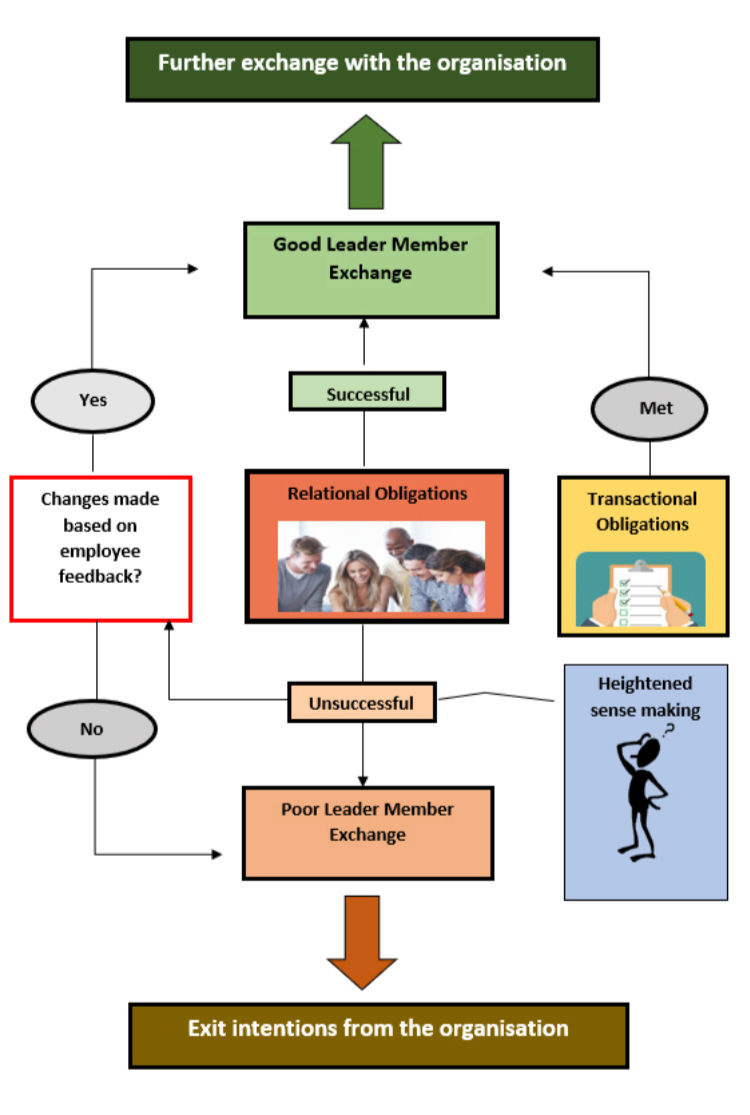
As such, they are abstract in nature and unique to everyone. The psychological contract can be breached when relational obligations are not effectively carried out, such as weekly coaching and monthly 1 to 1’s. Instances of a breach can also happen when there is a poor employee engagement strategy in place and a lack of high-performance work practices across the business.
When such instances regularly happen, they can lead to the psychological contract being violated, and at times great employees can leave the organization. The below diagram illustrates the different paths the psychological contract can take depending on whether it is greatly or poorly managed within the workplace.
So, which coaching principles, competencies, and skills can turn the situation around?
The truth is that as leaders, we can work on our skills as much as we want though if we do not work on having the right attitude, then we will not be effective and great within the leadership game.
As you can see within the diagram, the research found a feedback loop between the employee and their leader, which is highlighted in red. This implies there is a big opportunity for leaders to make some great changes if they find from their employees that a psychological contract breach or violation has occurred.
Here are some things to consider as a leader when you are running your next 1 to 1 or coaching session:
Embrace Vulnerability! You cannot expect your team to be open, flexible, and vulnerable themselves if you, as a leader, cannot create a psychologically safe space for them. Being able to embrace vulnerability helps us all to lean into fear and opt for growth, positive change, and innovation.
Coaching sessions are an opportunity for leaders to show how much they value the contribution and performance of their employees. It is especially important to provide positive, evidence-based feedback during a coaching session and even from the sessions before. You owe it to those you are leading to celebrate their success and help them uncover their strengths and resourceful selves before going into solution mode and exploring what improvements can be put into place.
Coaching sessions thrive when leaders go back to the basics. It is so important for a leader to build rapport, show they are actively listening, help the employee uncover their needs alongside the business needs, foster trust, honesty and maintain a non-judgmental attitude so the employee can grow and enhance their performance.
If this resonates with you, then you will love the leadership training that I am facilitating called.
“Leaders stop and ask yourself, where’s your head at?”
It has been created by leaders and forum theatre actors for leaders just like you by New Level Results Ltd and Acting Out Productions.
You can find out more by contacting me directly or emailing info@newlevelresults.co.uk.
Love,
Sruti
Sruti Kanabar, Executive Contributor Brainz Magazine Sruti Kanabar is a distinguished Life and Small Business Coach. During her journey with Depression and Anxiety, she has found her purpose in helping women accept that they are good enough to live the life and build the business they want. She transforms women by increasing their shame resilience, helping them heal from minor and major traumas from the past, and connecting to a great purpose in life. When setbacks, obstacles, and failures come, they are seen as a beautiful part of the journey than being internalized. She empowers women through wisdom and knowledge nuggets from multiple faiths and disciplines to get the right solution to their challenges in life.