The Power Of Human Connection In Life And E-Learning
Updated: Mar 8, 2025
Written by: Lauren Anders Brown, Senior Level Executive Contributor
Executive Contributors at Brainz Magazine are handpicked and invited to contribute because of their knowledge and valuable insight within their area of expertise.

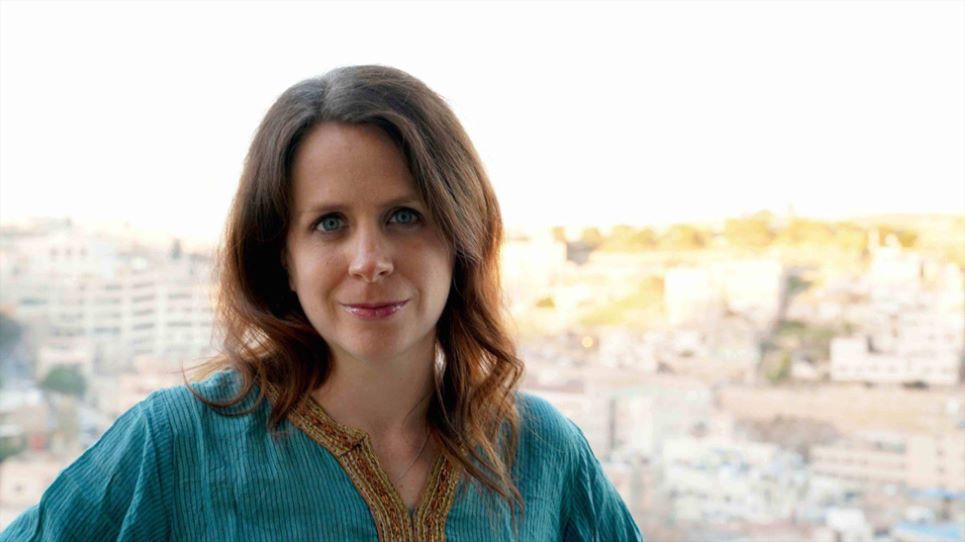
It was a very unusual winter in Jordan and my first time experiencing two snowstorms in the Middle East in my two-week trip. I was there starting to work on my new documentary and looking to interview Syrians who had escaped the conflict, but the snow and the cold naturally made nearly everyone in Jordan hibernate. Not willing to give up, I took to that well-built human human-connected platform formerly known as Twitter and began looking for potential contributors I could convince to come out for a cup of coffee despite the conditions. That’s when I met Ehab.
An unexpected connection
Ehab was a bright, young, energetic tech entrepreneur who was interested in connecting and sharing some of his stories and platform. He was eager to support my documentary in any way possible, so he and his friend Ali rented a car and drove us to his family’s home in the mountains so I could interview them. Ehab and his family were from Syria, but they prepared me the traditional Jordanian dish of Mansaf of chicken and rice that we all shared together seated on the floor.

While most of my footage from that trip didn’t get used in my final documentary, Ehab and I stayed connected without any agenda. I watched his startup grow via LinkedIn as I began my own startup journey with Gamoteca never considering our paths may cross again.
The uncalculated payoff of learning a new language
Back in 2020, I did what many did during lockdown and committed to starting a new language, and with my current documentary being in Arabic it seemed appropriate I began to properly learn the language. Even after the editorial process was finished, and I had no work lined up that would bring me back to the region I kept up with my classes learning to read and write levantine Arabic, the colloquial version used in Syria, Lebanon, and Jordan. Sticking with that language was about to prove one of my best investments.
In my job at Gamoteca, I primarily bring my storytelling skills to life creating TECAs (Technology Enhanced Collaborative Activites) but up until this past summer they had mostly been for the inspiration of our creators, not at the request of our clients. Long in the works since an initial hackathon in Jordan in 2020, the Norwegian Refugee Council Jordan has been in discussions about the potential to create a series of TECAs for economic empowerment and job preparation for Syrian refugees and also for Jordanian youth - all in Arabic.
Anyone who has ever had to translate something from one language to another can agree, that translation is very subjective. I’ve experienced this time and time again working with subtitles in my films. There is the literal translation of the words a person is saying, then there is the cultural meaning the person is attaching to those words, and finally, when translating it into English for example there’s the sentence structure that’s most easily understood and readable. Arabic is an extremely regional language, words spoken in Morocco can be incompressible to someone from Syria. MSA, Modern Standard Arabic is the language’s best attempt at unifying a single version of the language for international interpretation but for refugees with limited access to education, this can also be incomprehensible. NRC Jordan needed the TECAs to be in Levantine Arabic, so they could be easily understood by their learners regardless of their levels of education but they were aware the platform itself needed translation as well, and that would have to be in MSA. When I was asked to come onto this project, I was excited to put my hard-studied skills into practice and equally grateful I had kept up with my classes but the only problem was that I didn’t study MSA.
Building the right team to build the product
There were many humans I could connect with to deliver this work, and one of them was my Arabic teacher Ibrahim Othman who could switch from MSA to Levantine Arabic effortlessly. Arabic is subjective, and all it takes is one bad translation to disengage a learner or worse completely confuse them. In between classes, Ibrahim would help me screen-by-screen translate the entire user flow of the Gamoteca platform. All that was left was the creation of the TECAs.
The four TECAs were the core component of the project, their purpose was to prepare refugees looking to enter the workforce. Refugees have a limited scope in which they’re permitted to work in Jordan, and so the TECAs had to adhere to this scope focusing on soft skills that would be useful for jobs that were not client-facing, unless of course, it was a new enterprise. I had seen this before with Ehab, and so that connection I had made four years ago was called upon.

Ehab was my ideal audience but also my ideal co-creator in these Learning Experiences. We worked together remotely, him in Jordan and me in London to come up with topics and content that would be relevant and useful to other Syrian refugees. We began by creating storyboards and media assets in multiple languages, first in English and then in Levantine Arabic with Ehab self-recording a lot of the content and sharing his story as an Entrepreneur. The team at NRC was very responsive and decisive, both important assets when there’s a tight deadline and multiple iterations required when working in different languages. The entire process was putting into practice the importance of human connection, and how it can transcend borders and languages. After all that work though, would it have the impact we all hoped?
The positive impact of human-centered design
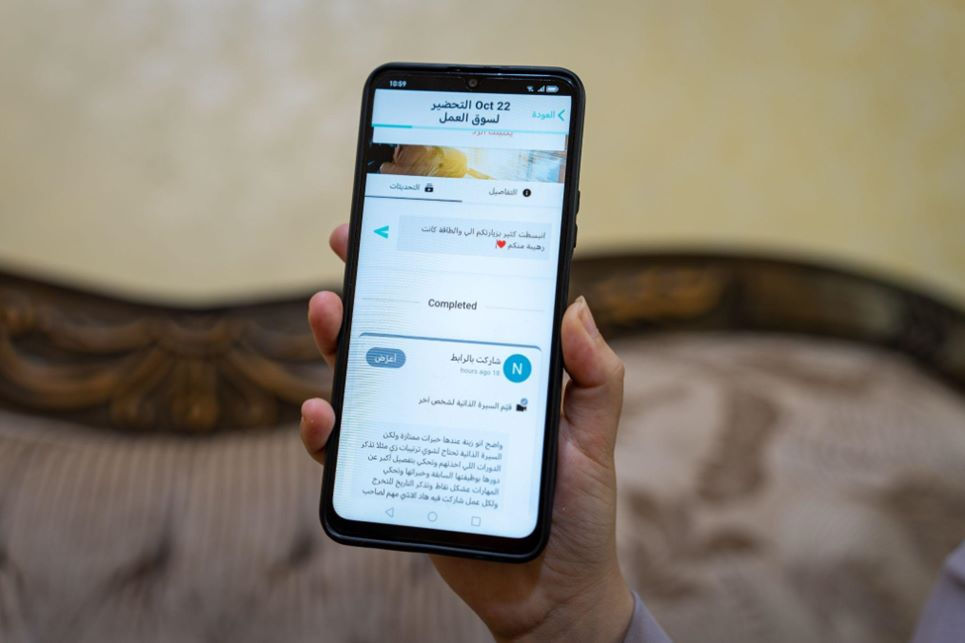
The four TECAs were incorporated into the NRC career coaching programme being offered to Syrian refugees. One of the first participants of the programme was woman named Nour. Nour fled from Syria to Jordan with her family in 2014. In time, Nour settled into her new life and continued to pursue her education. She completed her Tawjihi high school certificate, excelling in English class and winning governorate-wide competitions.
Now, at twenty years old, however, Nour feels lost.
“The reason I could not complete my university degree was because of financial pressure,” she says. “There are three of us in the family, all of university age. As refugees in Jordan, we either need to score highly on our Tawjihi exams, or we must pay international tuition fees, which places a significant burden on my family.”

Nour received a call from her current career coach, Wala’a, earlier this year.
“No one talks about how youth are being affected from a mental health perspective,” says Nour. “We are at an age where, having finished school and not having secured a job, we are feeling incredibly lost. What are we doing with our lives?”
After receiving the call from Wala’a Nour felt the first glimmer of hope and relief she’s felt in years.
“Before embarking on the career coaching element, I had this idea that it would involve the usual online training style; all the participants hiding behind closed cameras, and only one or two actively engaging with the presenter,” she says. “I was so shocked when I saw the platform, and I was even more shocked to see the coach directly addressing me.”
Nour appreciated the interaction and human connection.
“Because I am being directly addressed, I feel more accountable and more focused since I need to provide my coach with well thought out answers. Whenever my coach asks me a question, I spend a significant amount of time forming my answer, and clearly voicing my opinion.”
Even though Nour had previously volunteered with various organisations, NRC's programme provided her with her first glimpse into preparing for the job market. This included learning how to introduce herself as a potential candidate and put together a resume.
“When I finished high school and entered this period of, not necessarily being cut off from education, but facing a delay in my learning, I thought I would take advantage of this time by volunteering or signing up for various training courses.”
Upon completing each stage in the programme, participants earn a cash sum that they can put toward anything that helps them advance in their career search. In Nour’s case, she gifts her earnings to her mother to help ease the family’s burden.
“The responsibility of the house falls on my older brother’s and my shoulders,” she says. “We cannot burden my mother further, which is why I give her my earnings. That, in turn, eases my worries and I can focus better on what I have on hand.”

Nour hopes this is the launch of something new.
“At this age, I’m still quite young and I need a lot of guidance,” she says. “Alongside my career coaching and employment preparation, my eyes have also been opened to the possibility of becoming an entrepreneur.”
If you’re interested in learning more about the places I visited within these countries, here are some links to look at: Bangladesh, Lebanon, South Sudan, and Haiti.
Lauren Anders Brown, Senior Level Executive Contributor Brainz Magazine
Lauren Anders Brown is an award-winning documentary storyteller who uses film, photography, audio, and her writing to focus on issues of global health and human rights. She has captured content in over forty countries, including conflict zones, in order to amplify the voices of others and especially women. She produces work through her own production company colLABorate: ideas and images, works as a consultant for the United Nations, and is Creative Director of the e-learning startup Gamoteca. She is a true artivist: an artist who uses any and all of her available platforms to creatively advocate for human rights.