The Conundrum: What Does This Moment Require? An Interview with Marquisa S. Nash
Leadership rarely presents clean choices, especially at moments of transition. Growth can demand speed and structure, performance and humanity, autonomy and accountability. The Conundrum is Marquisa S. Nash's exploration of those tensions and the judgment required to know when to choose, when to sequence, and when to build for both. Marquisa is the founder of The HR Savant, a practice that brings together fractional chief human resources officer (CHRO) leadership, executive advisory, and coaching.
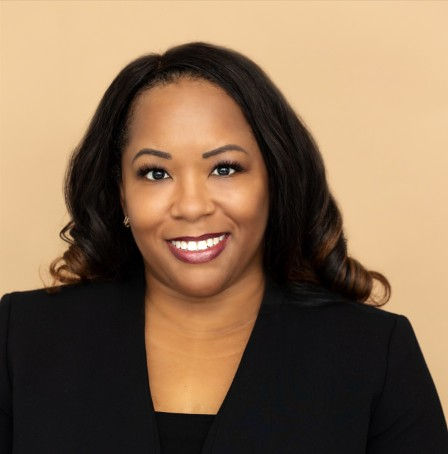
Marquisa S. Nash, Founder, Fractional CHRO, Strategic Executive Advisor & Coach
What inspired you to create The Conundrum, and what kinds of leadership tensions do you hope to explore through it?
The Conundrum began with a question I was asking about my own executive path. Why do I have to choose one or the other? Was I accepting a false choice?
I had understood the executive path as something defined in one way. Learning about portfolio careers expanded what I believed was possible. I realized I could continue contributing inside companies without limiting my career to a single role. Over time, that portfolio could include fractional leadership, executive advisory and coaching, board service, writing, speaking, and entrepreneurship. That realization still required choices, timing, discipline, and the right support system, but it challenged the assumption that there was only one legitimate path.
That personal question led me to a broader leadership idea. The Conundrum explores the tensions leaders and organizations are often told to resolve as either/or choices: speed or structure, performance or people, autonomy or alignment, growth or stability.
The goal is not to avoid difficult choices. It is to stay with competing requirements long enough to understand them, determine what the situation actually requires, and recognize when the answer may be an intentional "and."
What led you to establish The HR Savant, and how does your work help leaders navigate growth, transition, and organizational complexity?
The HR Savant grew from more than two decades of experience leading inside global organizations. I formalized the practice while living in Brussels, Belgium, on an expatriate assignment. Becoming involved in the local business and civic community deepened my global perspective, began my board readiness journey, and strengthened my interest in working between Brussels and the United States.
While there, I challenged myself to develop an executive transition plan. I used that process to upskill and intentionally redesign how I wanted to work and live. I wanted greater autonomy and agency, the opportunity to expand into non-executive board service, and the ability to serve organizations that may not have the HR structure or resources of a large multinational. I also wanted to make leadership development more accessible to people who may lack access to formal programs, sponsorship, or organizational investment.
Through The HR Savant, I provide fractional CHRO leadership, executive advisory, and coaching. I work with leaders and organizations whose growth, transition, or increasing complexity requires more strategic people leadership than their current structure was designed to provide. That can include working alongside an existing HR team, operational leaders, or external providers.
Drawing on your experience across global organizations, how can leaders recognize when the approach that once made them successful needs to evolve?
One of the clearest signals is that the role has changed before the title has. A leader may still rely on direct involvement, personal relationships, or individual expertise when the organization now requires broader influence, greater delegation, and decisions made through others.
How a leader behaves and prepares is a key differentiator because it sets the tone for the organization. People notice what the leader prioritizes, what they tolerate, how they respond to unwelcome information, and whether their actions match what they expect from others.
The leader's practices must evolve as the business and team grow. That may require shifting from solving every problem personally to creating the conditions in which others can exercise judgment, take ownership, and develop.
This is not as easy as it sounds. Delegating without clarity creates confusion. Adding structure without judgment can slow the business. Asking people to take ownership while continuing to intervene sends conflicting signals. The question is whether the leader's current practices are helping the organization become capable of what comes next.
Why do organizations sometimes struggle to turn agreement on a strategy into genuine commitment and action?
Agreement is not the same as commitment. Leaders may support a strategy in principle but interpret its implications differently once it affects priorities, resources, authority, or their own behavior.
Commitment becomes visible through choices. What receives funding? What work stops? Who has authority to decide? What happens when priorities conflict? What are leaders willing to do themselves differently? An organization can appear aligned while people continue operating according to different assumptions.
Communication and training may help people understand the strategy, but they cannot compensate for unclear sponsorship, competing incentives, or unresolved decision authority. Leaders must translate strategy into operating expectations and reinforce them consistently.
The plan becomes stronger when business, operational, financial, and people perspectives are developed together from the start. Genuine commitment requires leaders to confront the choices embedded in the strategy and create the conditions in which people can act on it.
How can growing companies maintain the speed that made them successful while building the structure and accountability needed for their next stage?
Most leaders are not resisting structure for its own sake. They are trying to protect the responsiveness and entrepreneurial energy that helped the company succeed. The challenge is to preserve those strengths while introducing the clarity and accountability the next stage requires.
As companies grow, informal coordination becomes less reliable. More people, customers, products, locations, and commitments increase the number of decisions and dependencies. Practices that worked when everyone could resolve issues through direct conversation may begin to create bottlenecks or inconsistent execution.
The right structure clarifies decision authority, ownership, management routines, and how issues move through the organization. It should make it easier to act, not simply create more steps.
Speed and structure are not necessarily opposites. Appropriate structure can protect speed by reducing confusion, rework, and dependence on a few individuals. Leaders must decide what is required now, what will be needed next, what can wait, and what should not be added at all.
When an organization is preparing for significant growth, how can its leaders assess whether their current workforce and leadership capabilities are ready?
Readiness should begin with the business commitment. What must the organization deliver, by when, at what level of quality, and under what constraints? Leaders can then determine which capabilities, roles, decisions, and management practices are essential.
In one global corporate role, I led the redesign of the talent management and mobility structure. We found that an existing succession planning process was not being applied consistently. We modified the process and standardized its application across a division of 7,717 employees. For the first time, we could confidently identify, track, and report 447 key positions globally. This increased visibility into leadership continuity exposure and related business continuity risks while supporting planning for the future executive pipeline.
That experience demonstrated that readiness cannot be determined by headcount alone. A company may have talented people and still lack the leadership depth, management capacity, workforce composition, or organizational practices its next stage requires. The purpose of assessing readiness is to make those risks visible early enough for leaders to act.
What draws you to U.S. defense technology manufacturers moving from prototype to production?
My interest in U.S. defense technology manufacturing is a natural extension of my experience across automotive, aerospace, chemicals, and furniture manufacturing. It allows me to apply what I have learned in complex industrial organizations to a growing market where companies are translating technical innovation into repeatable production.
The move from prototype to production creates a clear organizational challenge. A company is no longer proving only that its technology can work. It must develop the workforce, leadership practices, decision authority, and accountability needed to deliver consistently at scale.
This focus is one application of my broader work with leaders and organizations navigating growth, transition, and complexity. Similar challenges arise in other industries when business requirements begin to outpace existing leadership practices, workforce capacity, or people infrastructure.
Your guiding conviction is 'Do What Is Right and Treat People Right.' How does that principle shape difficult decisions when business performance and people's needs seem to compete?
The conviction does not mean avoiding difficult decisions or assuming every situation has an outcome everyone will welcome. It establishes a standard for how decisions are reached and carried out.
Integrity requires alignment between what leaders say, decide, and do. Transparency means providing appropriate context, explaining the basis for a decision, and being honest about what is known, unknown, or still being considered. It does not mean disclosing confidential information, but it does require truthful communication.
Doing what is right requires leaders to understand the business requirement, examine the evidence, consider the consequences, and act with courage. Treating people right requires dignity, respect, candor, and consistency. Fairness does not always mean sameness, and compassion does not eliminate accountability.
Business performance and people's needs are not always opposing forces. Poorly designed work, unclear accountability, and weak management practices can harm both. Leaders are responsible for results and for how those results are achieved.
What is the most important question CEOs and founders should ask themselves before leading their organizations into the next stage of growth?
The question is simple. Can the organization we have today support the business we have committed to becoming? That question opens a more useful conversation than asking only how many people to hire. It encourages leaders to examine workforce capacity, leadership depth, decision authority, management practices, people infrastructure, and the organization's ability to absorb change.
Where is performance dependent on a small number of people? Which decisions repeatedly return to the founder or CEO? Where are managers stretched beyond their capacity? Which capabilities will become critical as commitments increase?
Readiness does not require eliminating every uncertainty or building the full future organization too early. It requires understanding where the current organization may constrain the next stage and deciding which risks must be addressed now.
Leaders and organizations often accept a tradeoff as inevitable before fully examining what the situation requires. That is the kind of tension at the center of The Conundrum. In future articles, I will explore the tensions leaders face as their roles and organizations grow, and the judgment required to know when to choose, when to sequence, and when to build for both.
Read more from Marquisa S. Nash